
From the Archives: Approaching Infinity
Second star to the right, and straight on til morning.
Notice
I initially wrote this post in 2024 before starting my page. Most of these older posts will not be available for free subscribers, but I’m making an exception for those, like this one, that wound up being ranked in the top 10 of my favorite games from each year.
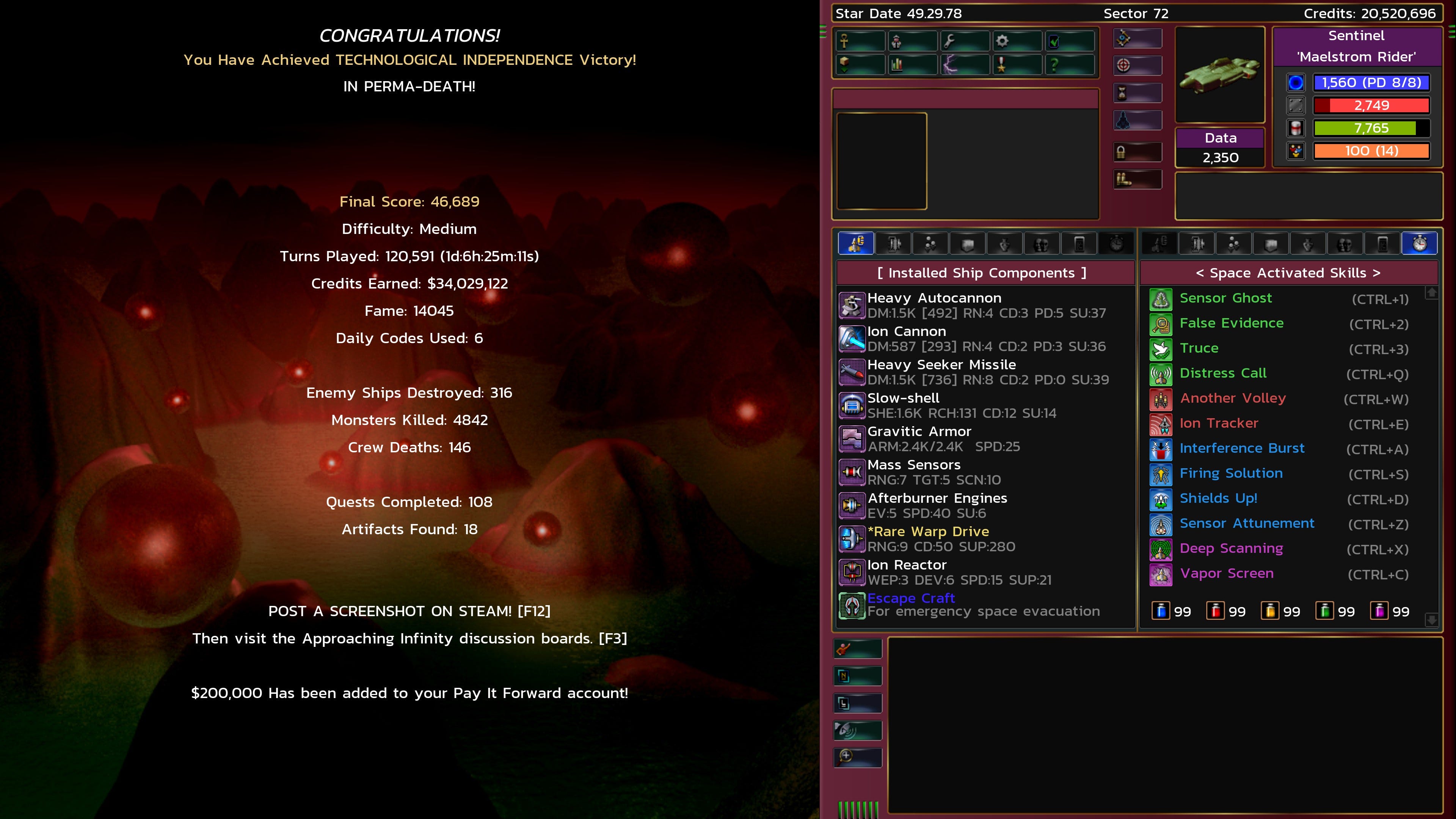
Approaching Infinity is the ultimate Early Access Indie Roguelike experience. Thankfully, the only decks you’ll build are on your spaceship.
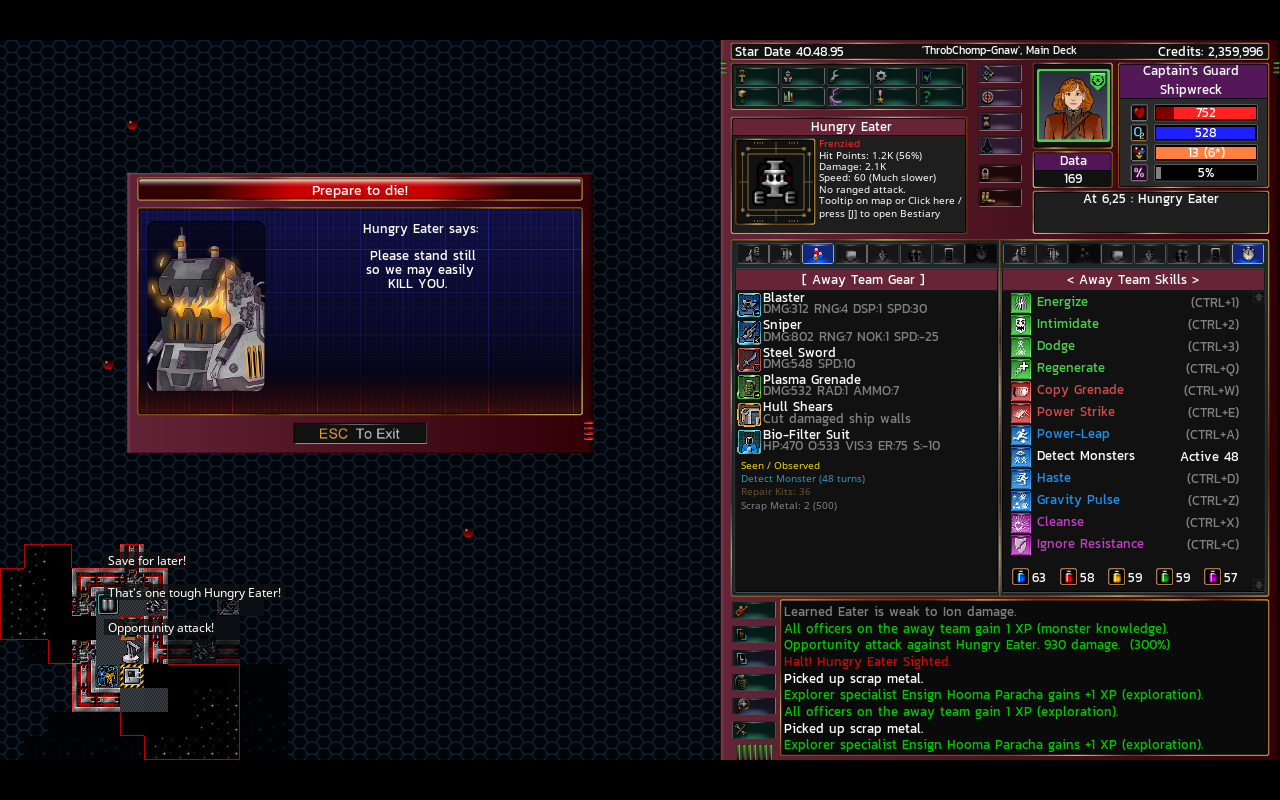
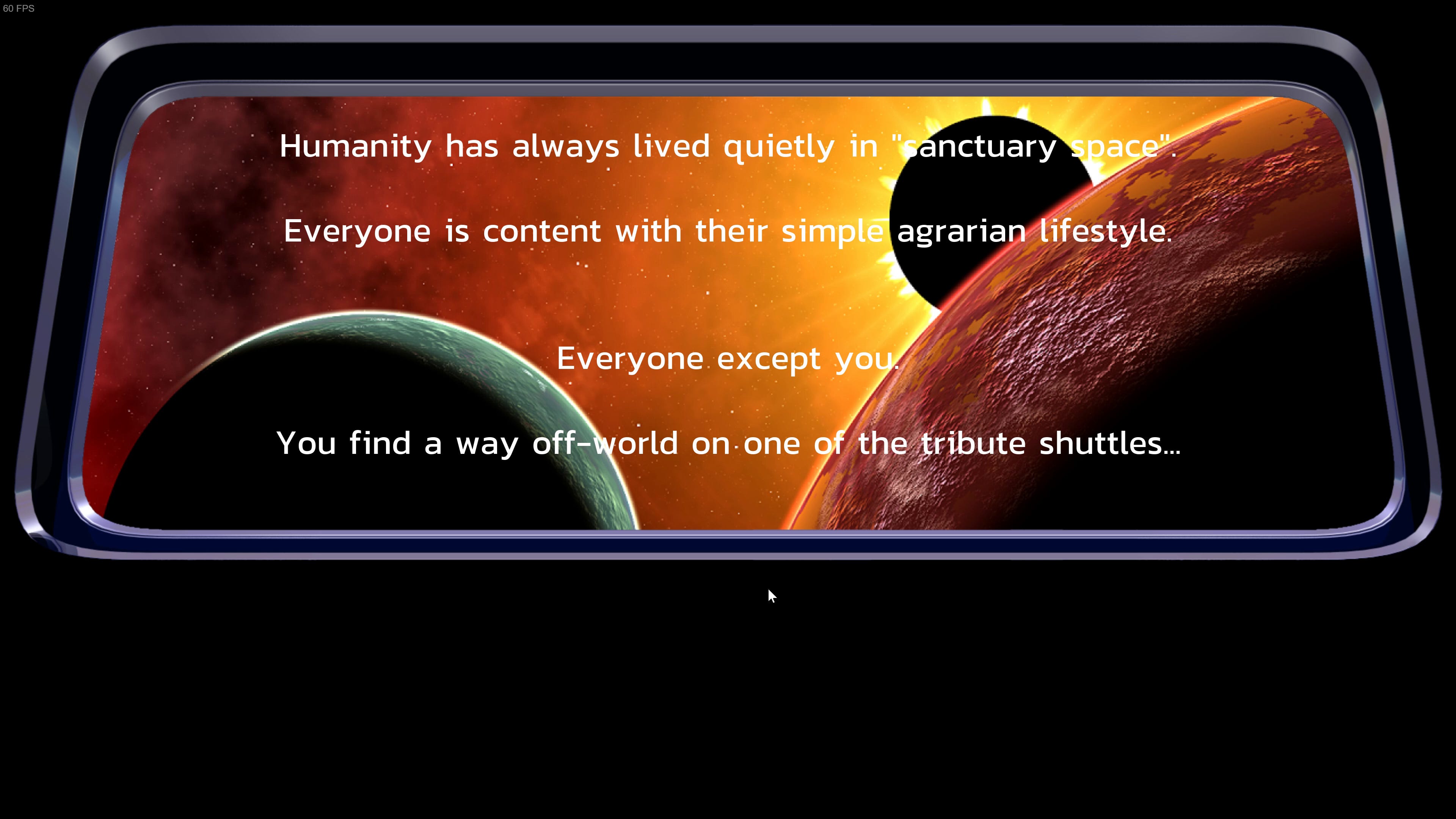
In Approaching Infinity you play as the human captain of a starship, sent on a mission to discover the truth of humanity’s fall, piece together the mysteries of the galaxy, trade goods, upgrade your weapons, and use them to kill everything that moves. To say it’s ripping off Starflight or Star Control would be appropriate, except that it’s ripping off a bunch of other games too. But Approaching Infinity does something special - instead of just taking a smattering of pieces from games the dev is inspired by and slapping them together, it melds them together into a whole greater than the sum of its stolen parts.
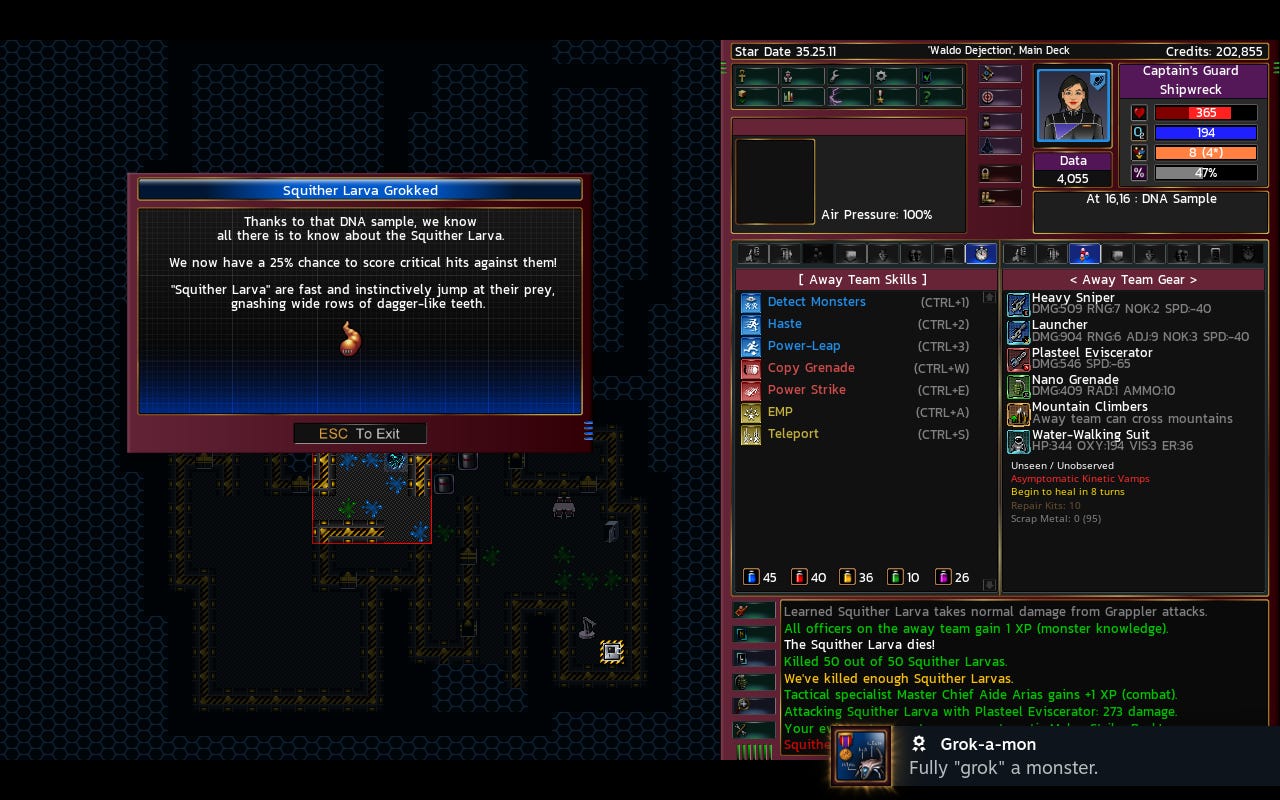
You start the game by deciding on the class of your captain and model of ship to set out with. The game has ten classes, split among five ‘types,’ and 20 starting ships, though most of both have to be unlocked for future playthroughs by following certain quest lines and earning achievements. The character classes determine both the active skills you can find and equip as well as the selection of passive perks you pick from when leveling up - the Explorer, for example, can get the ability to see where the stairs are in cave levels with Spelunking, while the Engineer can equip a radial Repair skill that clears damaged bulkheads and short circuits in derelict ships. The ships are similarly diverse, with their basic stats like hull strength and cargo capacity augmented by built-in perks, like the Star-Skimmer’s ability to draw Supplies [basically the food meter for your ship] directly from stars, meaning you never actually have to stop into a station to fill up. Once you decide all that, you get plopped down in Sector 1 and can go from there.
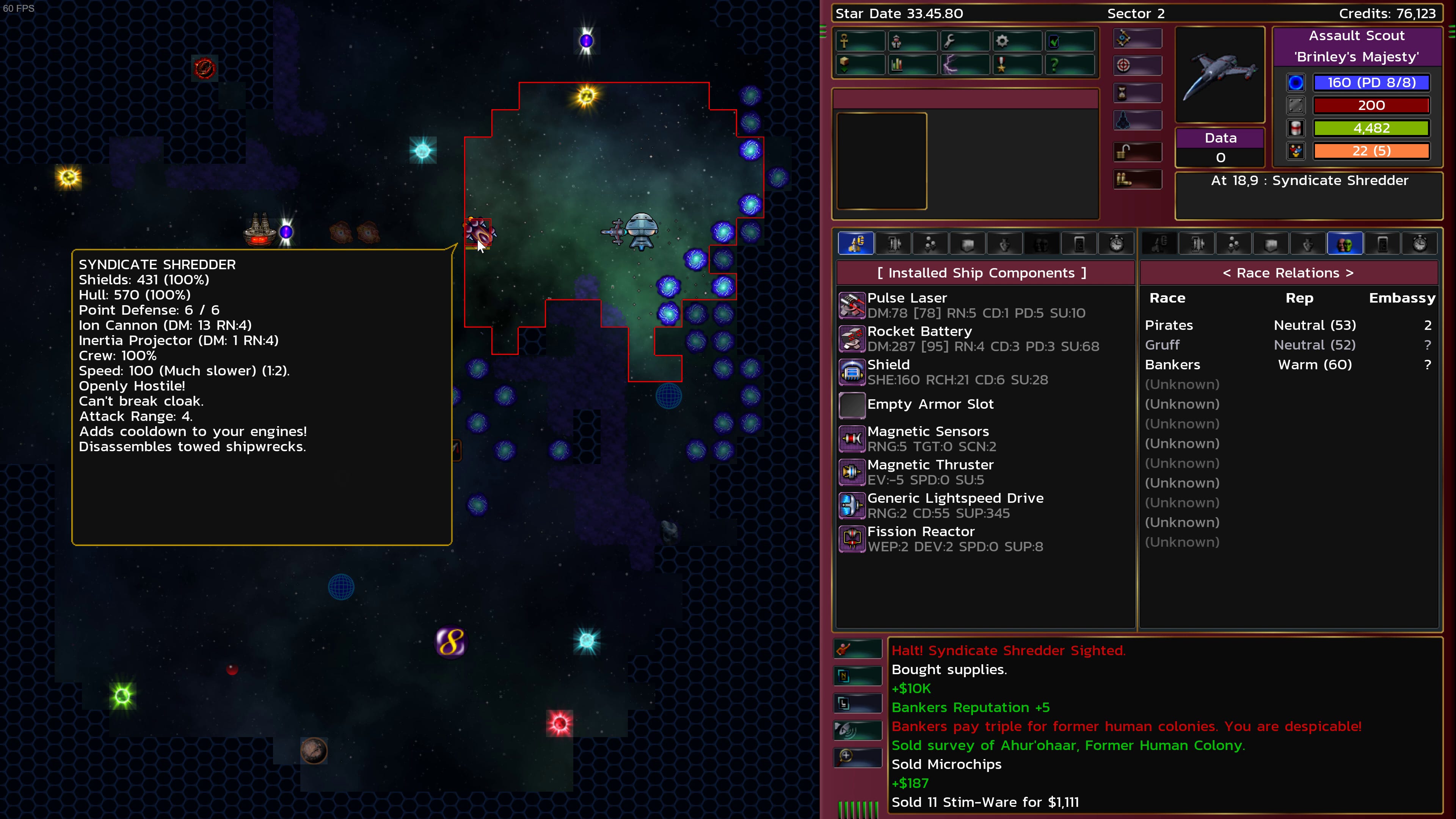
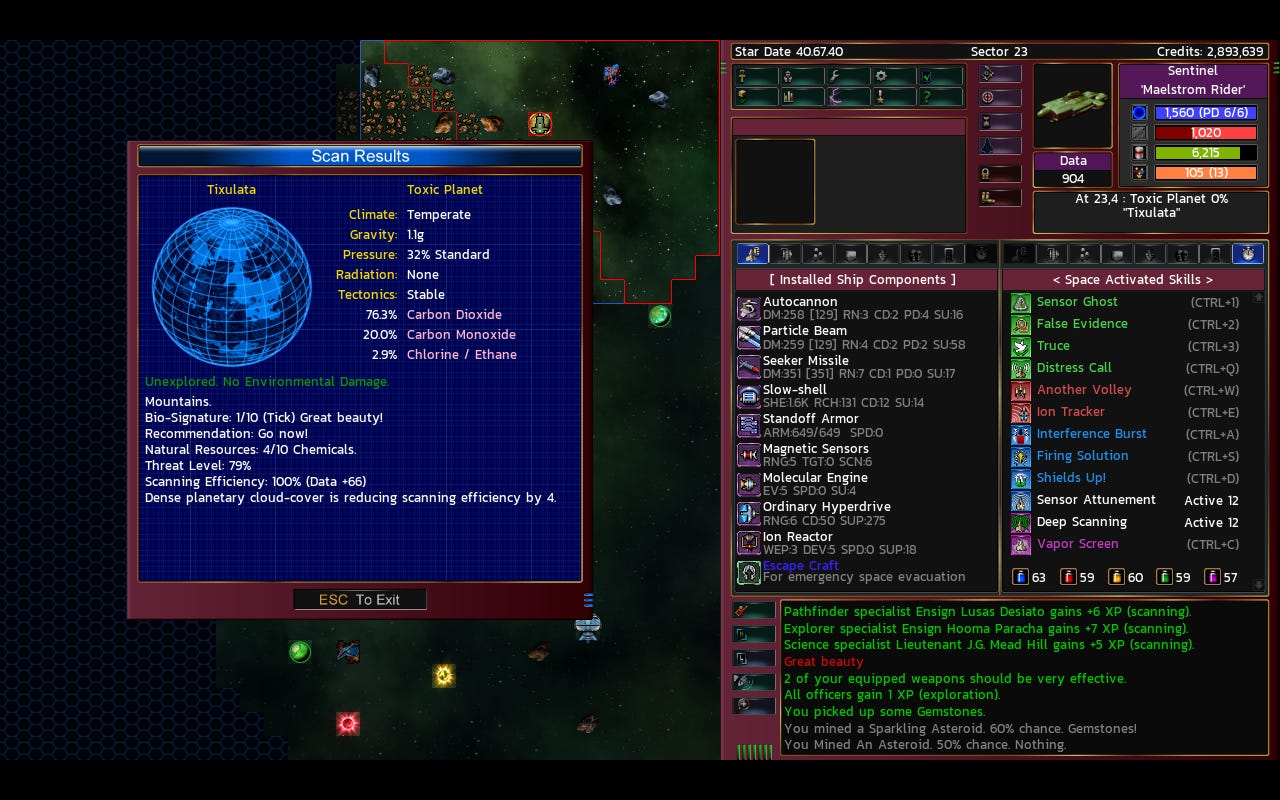
The galaxy you explore is divided up into a linear series of sectors, each one represented by a single screen grid of tiles. When you find the warp point, you can use it to jump as many sectors forward or backward as your warp drive allows. The linear nature of this system is a little silly in terms of galactic exploration, but it does allow the game to have a straightforward scaling, with ‘deeper’ sectors seeing correspondingly stiffer challenges and more impressive rewards. Throughout each sector, there are planets, space stations aligned to a particular race, hazards and features like nebulae and ion storms, and of course, other ships. Equipping yourself for space combat means picking your weapons, shields, and so on, attempting to stay at your sweet spot of range and out of your enemy’s, and making use of your crew’s active skills, all of which operate on cooldowns.
Space stations offer a place to fill up on Supplies, buy and sell equipment, buy up trade goods or offload any filling your hold, trade in your ship for a different model, and recruit additional officers. The officers can have any of the same classes available in character creation, though you only get one choice per station, and can’t even pick the perk they start with. You unlock additional officer slots as your captain levels up, capping at six, so while you can never cover every base, you do get a lot of broad freedom to build your crew.
Each sector has at least two stations, one of the omnipresent Banker faction, who generally act as neutral power brokers, and one for a different alien race. Every faction has their own quest line to follow, involving a variety of tasks like killing certain boss monsters, collecting samples from a specific type of planet, or attacking other factions directly. Through your actions, you can raise or lose your reputation with each faction, with some eventually turning permanently against you if you progress too far with their rivals, and that affects the disposition of their ships as well as your ability to land at their stations… although there’s always another way to get in even if they hate you. Other quests, not related to any one faction, can be encountered in other ways, like finding a distress beacon or confronting mercenaries in their underground lairs. There’s even a faction that allows you to build out your own custom stations full of the services and equipment wholesalers you want access to.
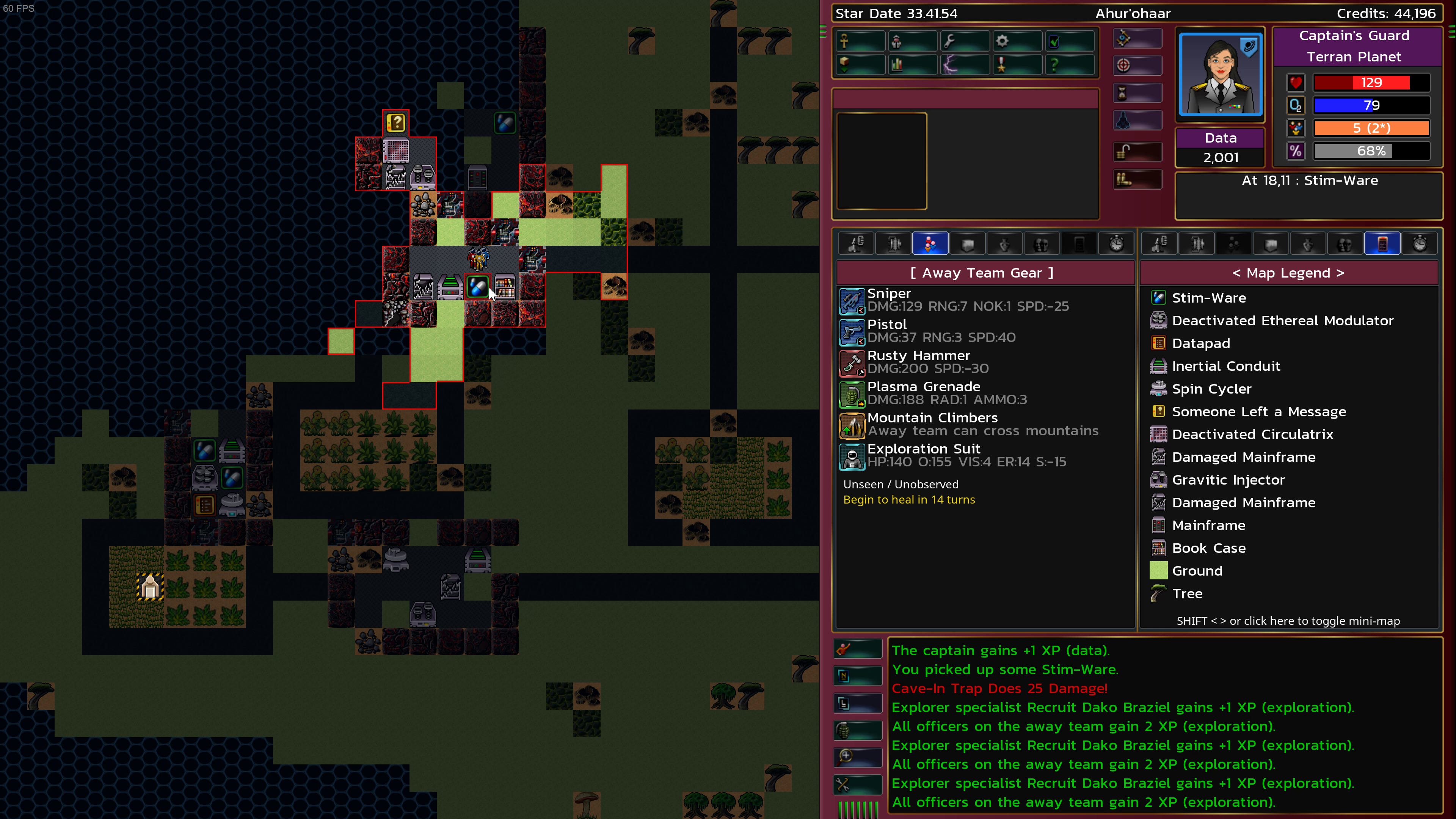
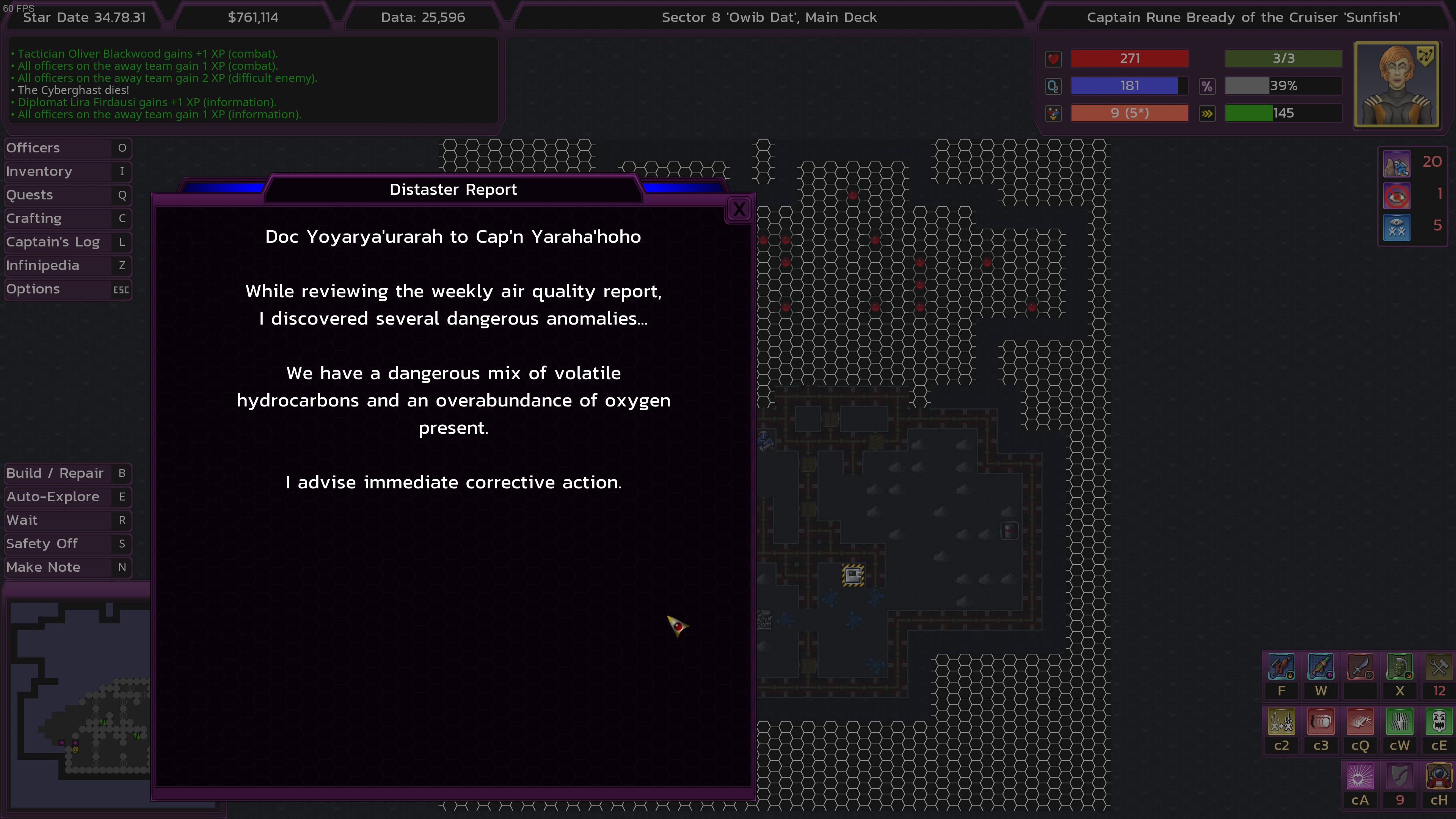
Most quests will involve you leaving your own ship and heading down to either the surface of a planet or the airlock of a derelict, and this is where the game really starts to show its depth. Initial outings are generally pretty quick and tidy - the early planets have a ‘surface’ of a single tiled screen just like the sector map, and you walk around shooting things with your sidearms and collecting resources lying about, with the ability to save a ‘survey’ of a planet you’ve seen every tile of, removing your ability to land there again, but transforming the probably now useless planet into a salable item. Derelicts, too, are smaller at the start, with a single deck for you to tromp around, full of consoles to scrape for data and corpses to flip over for loot. But as you get deeper into the game, both these expand massively - ships become multi-decked sprawls, planets get extra sectors reachable by walking to the edge of a connecting map, and the cave systems beneath the surface can go on for over a dozen layers. Much of this is complicated by your oxygen limit - most away-team missions start with your suits sealed and running on internal O2 stock, which depletes every turn. Returning to your away craft or airlock tops you off again instantly, but, especially at the start, it’s not enough to do more than scope out the surface of a small planet. Luckily, oxygen storage is one of the stats raised on more powerful suit equipment, there are accessories to raise it further, and caves usually have respawning algae which can be converted into a small burst of O2 to keep you diving. If you run out, and the planet’s atmosphere is technically breathable, you can remove your helmets and risk infection by alien diseases, or equip a filter that lets you run on native air without the worry, but otherwise, you had better leave yourself enough to get back home.
But there’s even more complexity in how you go about exploring these wrecks and caves, because the equipment system has a surprising amount of depth too. Every weapon is of a type and also element - normal rifles and short knives do piercing damage, for example, but you can also find more exotic items like guns that fire a beam of sonic energy, flamethrowers, and grenades that release a cloud of aggressive nanites to tear apart your enemies [and their surroundings] on a molecular level. Everything has its advantages and many have drawbacks - the nanites, for example, do impressive damage, but tend to leave behind small clouds of rogue nanomachines that may spread, destroying things you don’t mean to, causing hull breaches, and even congealing into aggressive swarms that attack you directly. Every enemy type also has a list of weaknesses, resistances, and immunities to various elements, and as you experiment you add them to your popup when hovering your cursor on them. One of my runs started with me finding a really strong rocket launcher, which let me hit groups of enemies, or blast through walls and rubble for free, but also put me in danger of destroying valuable items or causing explosive decompression when exploring ships. My more recent run included a beamer that fired corrosive particles, which I could use strategically to melt away doors to give me an angle on enemies I spotted with my motion sensor without having to barge in in melee range, and even dissolve clumps of broken crystal that could puncture my away team’s suits.
“Dying” while on an away team mission, from losing too much health, actually just sacrifices one of the nameless Star Trek redshirts who always tag along, meaning you’ll have to pull into a station in the future and stock back up on your Crew resource… until all of them die, leaving just the officers accompanying your party. You can toggle each officer and even the captain to away team duty, unlocking their skills and perks for use, but also putting them in danger - officers can and will get injured, putting their abilities on extended cooldown until they can recover, or die, and so can your captain, resulting in a game over… if you’re playing on permadeath mode. It’s not all for free, though, as letting your redshirts die a lot is one of the ways you build Infamy, which operates in parallel with the Fame you accrue by completing quests and taking on dangerous foes, and affects your relationship with various factions, even unlocking new content if you allow it to get high enough.
One of the coolest things in the game is the way exploring derelict and damaged ships plays out. Either by finding them spawned in a new sector, or creating them by crippling a hostile ship and boarding them, they have layouts and features just like you would expect from the various species, and a surprising amount of it is functional. With scrap metal you’ve collected from less salvageable wrecks, you can patch bulkheads, use repair kits and gadgets found from dismantling other equipment to repair the life support system if it’s damaged, and get the deck sealed enough for oxygen to fill the space again and give you infinite air. Consoles and mainframes can be checked for quest tips, data to sell, and bits of code that can be used to unlock a free item or rescue on a daily limit. After exploring enough of a ship, you have two basic options - set charges on the structural weak points as you leave, blowing it apart so you can grab the components that survive and scrap metal with your ship, or clearing it of life and towing it to a station for sale, usually a solid chunk of change. But once a ship has at least three decks, it is big enough to serve for your purposes more directly - patch all the holes, get every crucial system operational again, and you have the option to move your reactor and all your gear over. You get three choices for the stat spread the resulting ship will have, and can even pick your own hard-wired permanent perks as a customization bonus for making the effort.
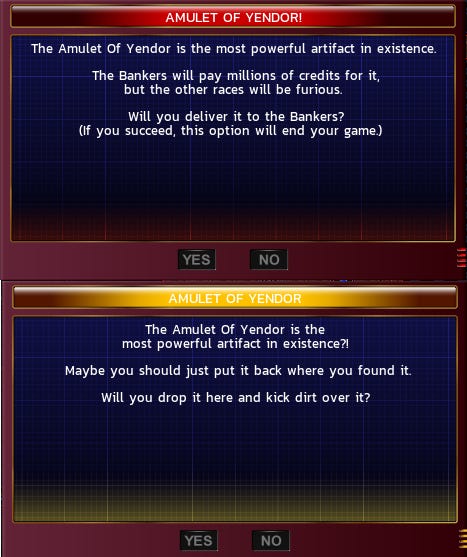
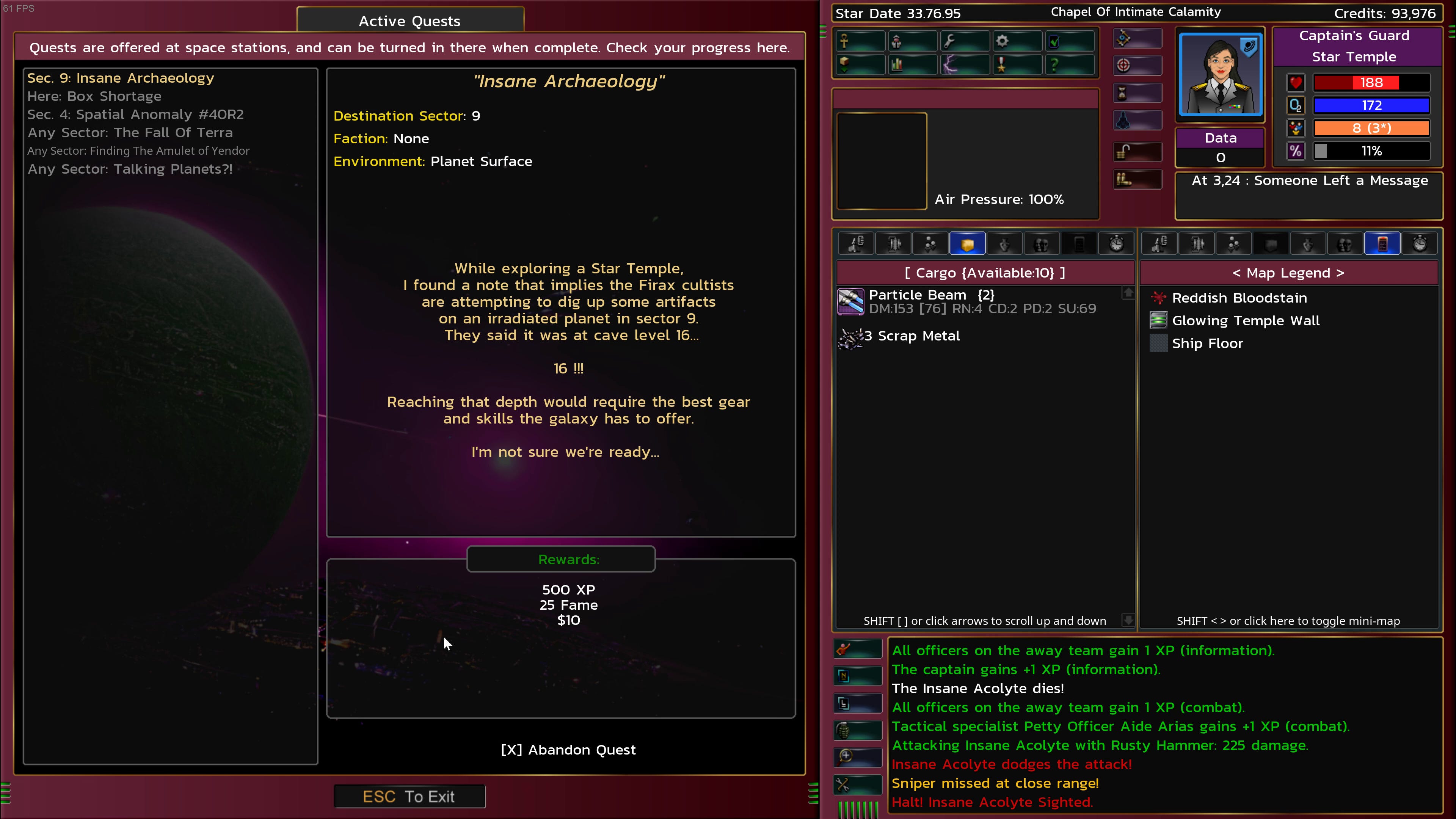
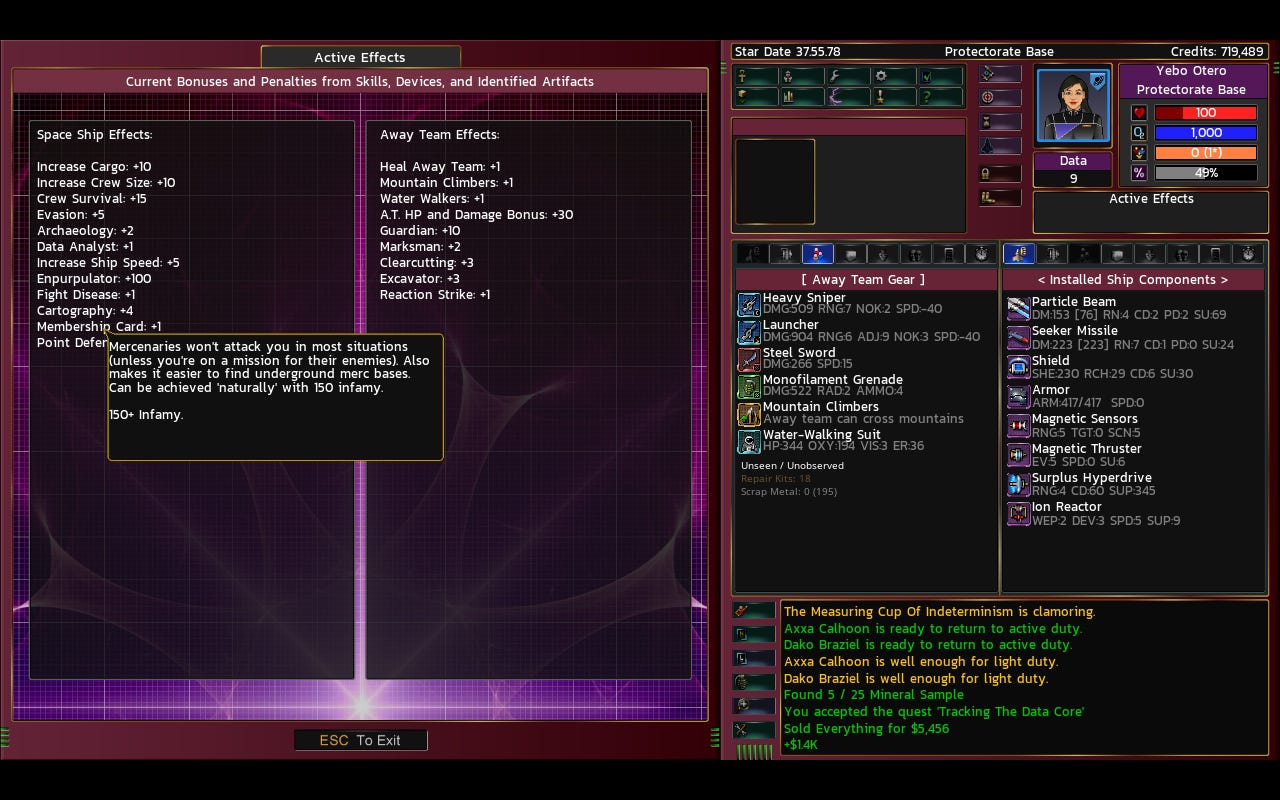
One of the big goals in the game is finding precursor artifacts, and you do this by finding ‘clues’ across the galaxy that, when combined, spawns a Star Temple that serves as a little mini-dungeon. Grabbing the artifact starts it’s self-destruction, and you have to escape the crumbling ruin to retrieve your prize - a special gizmo that passively does… something, so long as you keep it on your ship. Examining it gives you a multiple choice, along with hints for how to work out which effect it’s granting [positive OR negative], and if you guess correctly, the effect grows stronger [and made positive if it was not] and is permanently added to your crew’s knowledge. If you guess wrong, various temporary negative effects can be incurred, like losing a chunk of your ship’s hull, or having everything go on cooldown, and you have to wait to try again. Some effects are pretty obvious, or easy to rule out, but others require you to either do some guesswork, drop an officer that’s giving you the same ability with a skill, or apply some of the Data currency you’ve been gathering from exploring the galaxy and reading people’s emails to rule out an option. Some of them are big game-changers, like extending the firing range of all your ship’s weapons, or giving you the inherent ability to climb mountains and walk on water without needing skills or equipment. Others just kind of suck and can be sold for a high price. Keeping too many artifacts on board is also a problem, as they start to interfere with each other, occasionally causing them to become inert, or worse, temporarily reverse polarity, giving you the inverted effect.
Approaching Infinity really captures a lot of what made those old classic games engaging, along with making the most of its roguelike format. The exploration and ship combat and boarding brought back the fantasy of the Buck Rogers RPG, but with even more variety and agency. Interacting with the races, watching their little pitched battles, and finding out more about their backstory while bringing them the goods they covet reminded me of the hours I spent playing Starflight. Even the sprawling, multi-hour dungeon dives in a cave system that seems to never end, with the slowly dawning realization that I might not be able to find my way back out, recalled the endless labyrinths of Daggerfall. The combat and nonstop hoarding of greater wealth, to afford the tools to let me attempt even more audacious heists and adventures, put me in mind of roguelikes like Decker. But all together, it feels more complete, and more compelling than most of those. And it’s not even finished yet!
The Early Access has been going on for several years now, and the game was Kickstarted over a decade ago. The plan apparently is for the full release to come sometime around 2025, and the game is still definitely in active development. In fact, a massive UI overhaul that apparently took most of a year just came out the day after my first victory, with similar overhauls to the crafting system and more faction storylines in the works for the near future. The game as it is doesn’t feel particularly incomplete [aside from the new placeholder note in the crafting menu] and it’s definitely not abandoned, so I can’t hold its lengthy Early Access and decade old crowdfunding against it too much. I will say the new UI kind of sucks, or at least I got too used to the old Windows XP style to appreciate it fully, but it probably looks better on smaller screens like the Steam Deck now.
The game does have a few other problems too. Because it takes place over a linear series of sectors, each of which have a limited number of stations and celestial objects, the start of most runs feels pretty samey, because you’ll be encountering the same handful of starting quests and checking those boxes to get you going each time. Many active skills are pretty useless compared to others - Ignore Resistance lets you, well, ignore the entire resistance mechanic for a few turns, on very short cooldown, and with careful use can let you pick apart enemies you’re totally not geared for or even some that are supposed to be nigh indestructible. On the flip side, I don’t think I used some of them more than a few times, and was underwhelmed consistently enough to just disable them forever. The same goes for some weapon types or elements - disabling stuff with tangler or stun gear could be really cool, but the fact is a turn or two of keeping something out of melee range doesn’t outweigh shitty damage, and even if it did, you only have two ranged slots, one melee slot, and a grenade slot to give yourself an element spread that can handle whatever’s on any given away mission, and giving one up in exchange for stall tactics isn’t going to make your O2 last any longer. Death can come abruptly, even if you’re being pretty careful, and unless you follow a whole questline to unlock an escape pod for your run, losing your ship is an instant game over, and can be almost unavoidable if you jump into the wrong system inhabited by a faction that hates your guts. Speaking of aliens, I find it a little sad you can only ever recruit human officers - it makes a bit of sense with the backstory, but one of my favorite parts of the Starflight games in particular was trading your crew out for exchange officers of the various races you could encounter, and it feels like a missed opportunity to have that absent.
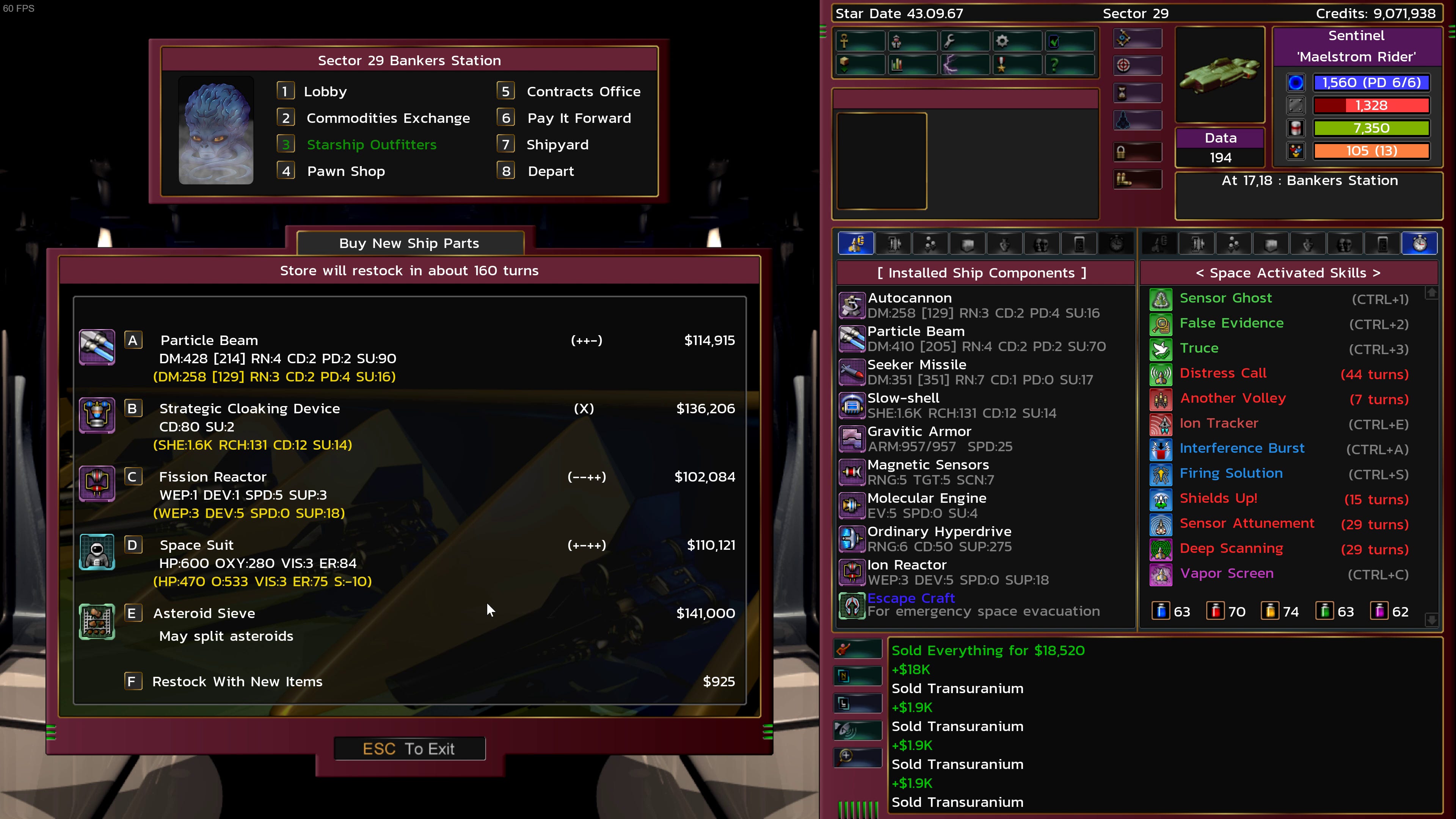
But none of that really kills Approaching Infinity for me, and I’ve put more time into it than a lot of finished games I’ve bought. It just strikes all the right notes for me - a massive adventure, broken up into perfectly portioned chunks, easy to pick up and drop, tactical but not obnoxious, tense but not tedious, and with a sense of humor that isn’t lame or grating. It’s described on its store page as a passion project, a life’s work, trying to capture and harness a little of what drew the dev to gaming in the 90’s, and that all hit home with me. I’ll look forward to the future updates, hopefully more UI options, and whatever the dev works on once this project is behind him, but in the meantime, I’m going to keep exploring, naming every ship the Maelstrom Rider, and throwing redshirts into the Endless Pit of Gnashing Teeth. Finished or not, I think it’s absolutely worth the full price if you like this sort of game.
Afterward

Approaching Infinity left Early Access in 2025, but was already my game of the year for 2024 by a pretty wide margin. And even after being my GOTY, after coming out of EA, it kept getting bigger and better.
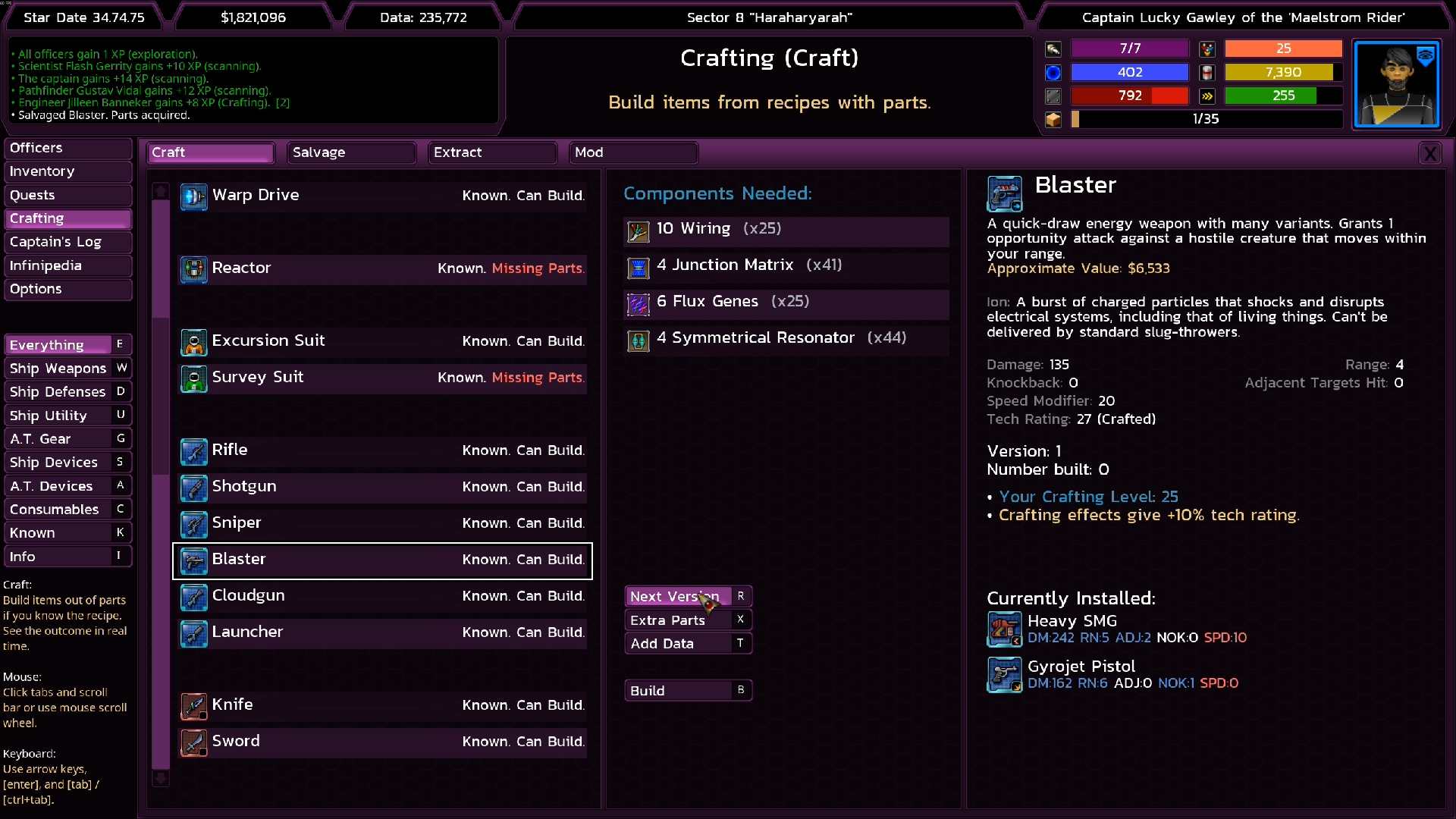
Nearly every little nitpick I had with the game in this write-up has been addressed at some point in the two years since I wrote it. Alien factions that don’t have ‘victory’ questlines of their own now show their appreciation for devoted allies by unlocking totally unique Officer classes of their own, like the Gruff Hunt-Leader who can tame hostile lifeforms, or the Limoquee Marshal that can cuff and arrest pirates and mercs and drag them off to allied stations to claim their bounties. There’s a new cryo-tube feature you can unlock that lets you put Officers on ice to swap them out without permanently replacing them. The crafting system has been completely overhauled, and gives you a lot more control over your weapon properties and even learn how to make important modules yourself for rare edge cases without keeping them rattling around your cargo hold. It also lets you upgrade the active skills, making some that I was less impressed by far more useful than before. Then there’s a ton of new consumable items, which can all be crafted, like oxygen cakes and seismic stabilizers to give you an edge in difficult situations.
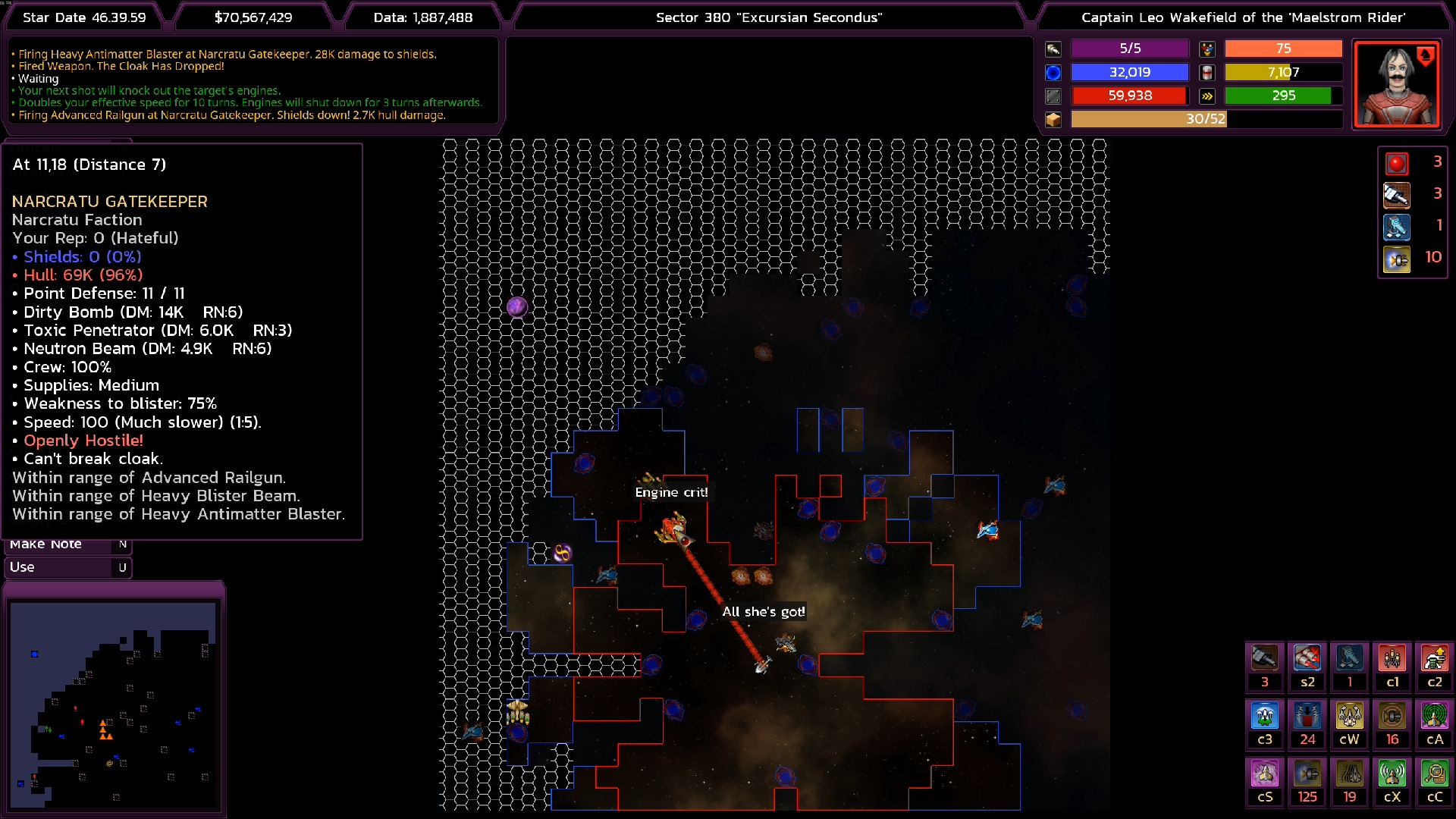
And then there’s stuff I hadn’t even considered that the dev added post-launch that expands the game even more. There are new major questlines that can pop up as a result of your actions, like the Nanopocalypse that begins if you leave your rogue nanites gestating on a planet too long. Explorable ships now have components and even storage on their outer hulls, giving you more reason to bring along magnetic boots. You can capture lifeforms and shop them around to different races, each of which has a preference for certain types. You can let the Tentaculons extract your knowledge of an enemy type, forcing you to go through the process of ‘groking’ them again, but earning extremely substantial rewards at the same time.
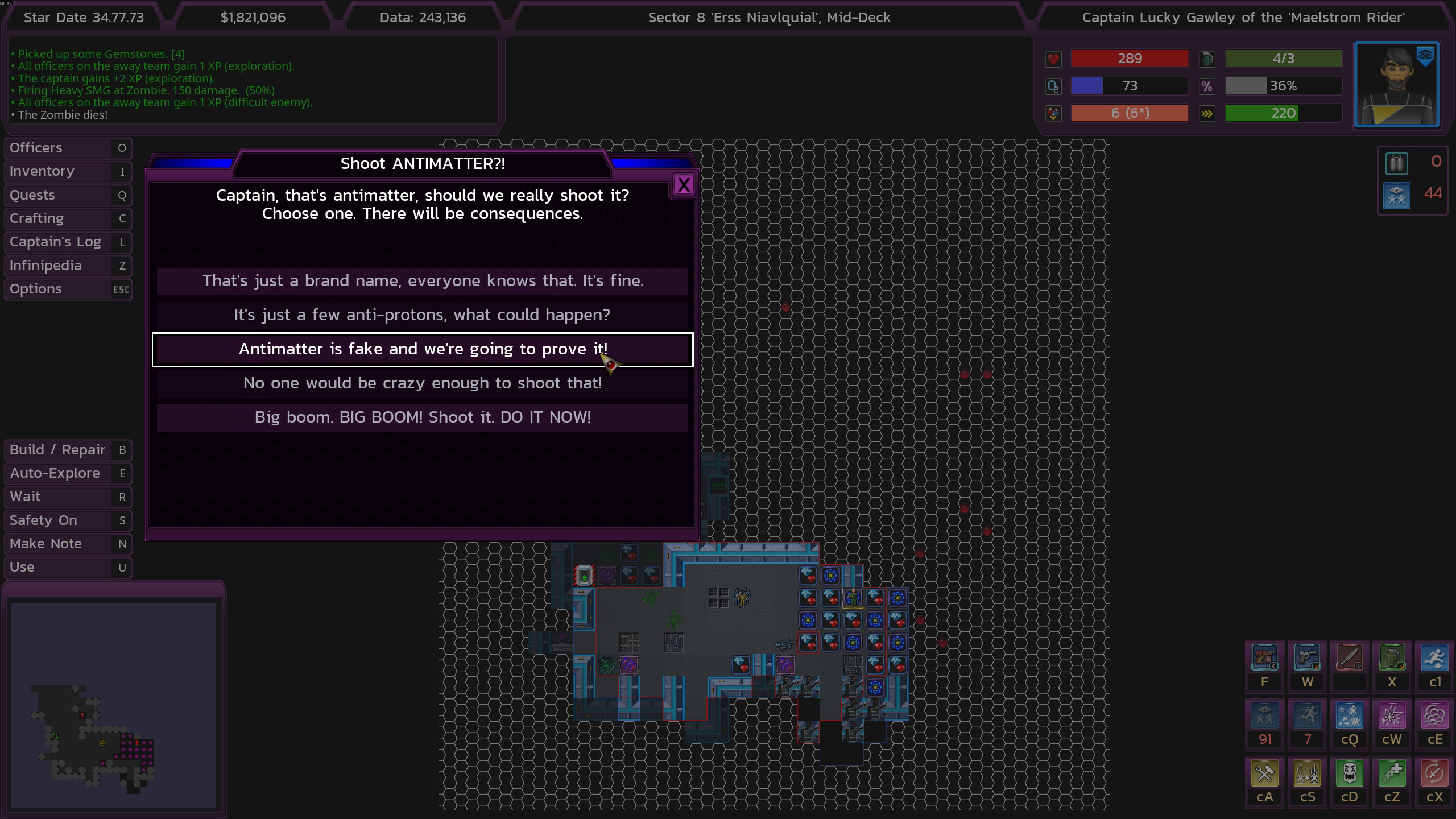
And THEN there are the DLCs. The two post-launch DLCs are excellent additions if you’ve already played the game to death and are looking for more. The Shipyards DLC lets you start every run with a totally custom, fine-tuned ship of your own design, or share build codes with people online. It even includes a new meta-gaming goal, with every 5-deck ship you tow in to sell giving you the option to forgo the standard credit payout and instead get a token that permanently expands the starting stat points your custom ships can use up. The Galactic Disasters DLC adds a bunch of optional modifiers that you can toggle onto runs, like starting in a galaxy already ravaged by the Nanopocalypse, or a totally new, galactic-scale plague called The Blight.
Hell, if I just listed out every single new reason to get excited about Approaching Infinity since I wrote it up in 2024, this afterward would probably be longer than the original write-up, and if I’d re-ranked it for the year it came out, it’d probably be my GOTY for 2025 too. I even think the new UI is good now. Just go try it.
Approaching Infinity can be purchased on Steam.
Speaking of roguelikes, huh? I think I bought Approaching Infinity when it first released on Steam, enthralled by the idea of a sci-fi Trek-ish roguelike. I got a few hours into it but eventually dropped off due to excess work.
I've been meaning to get back into it, specially after seeing you mention the game a few weeks back - guess I might as well do it now!