
February 2026 Next Fest, Day 4
At least we're going to die having fun!

Got my second wind, baby.
BOOST VECTOR EX
A racing game that feels a bit like the over-the-shoulder bits in a 3D Sonic game, but with baaaaabes!
This game looks incredible, the music is fantastic, just great style all around, and then on top of that, it’s maybe a solid racer! Maybe. I’m not very good at these, and I get the feeling a ‘good’ run will probably look like the depraved drift wiggling from modern Sonic speedruns, but it felt pretty good, the racers have different abilities, and most importantly, they’ve made multiple laps actually interesting for once.
Throughout the courses, there are a plethora of boost pads and rails for you to hit and keep your speed up, but there are also gems scattered around, including breadcrumbed along shortcuts, alternate paths, and so on. The gems also give you a significant amount of boost juice, and are a big part of what makes those alternate routes and sidetracks worthwhile – and they don’t respawn, at least not fast enough for the next time you come around. That means you don’t just have to plot out the fastest route, or the fastest route you can reliably do, but at least two routes, or just adjusting how you approach a route to nab gems you’ve left behind.
The game’s got some rough edges, and I’m not familiar enough with the genre to really get into the gritty details of how good it is as an arcade racer, but the style is all there and I’m impressed with how much variety there is just in the short demo.
Starvester
Let’s get this out of the way right off the bat – this is Cookie Clicker. That’s what it is. But… no, wait, hear me out here. BUT! It’s actually good.
You play as a recent arrival to a new star system, ready to start gathering resources, turning them into drone miners, and iteratively scaling that operation until your swarm is a Kardashev Type II civilization by itself and can move on like interstellar locusts. As you gather resources, you slowly gain the momentum to strike out and make outposts on other bodies in the local system, each of which provides a different set of bonuses to your budding supercolony.
It’s important to point out that, although the game starts with you clicking a planet 30 times, so you can unlock the ability to buy drones that effectively click the planet for you, there’s genuinely a lot more going on than the Clicker formula you’re used to. Every outpost requires drones to operate, all manufactured on your starting planet, and at a scaling cost, meaning that over-investing in early colonies can leave you starved for labor at the fringes once you get there. Many of those later facilities themselves then boost the production of earlier ones as their primary function, meaning that good balance can result in much greater potential long-term feedback.
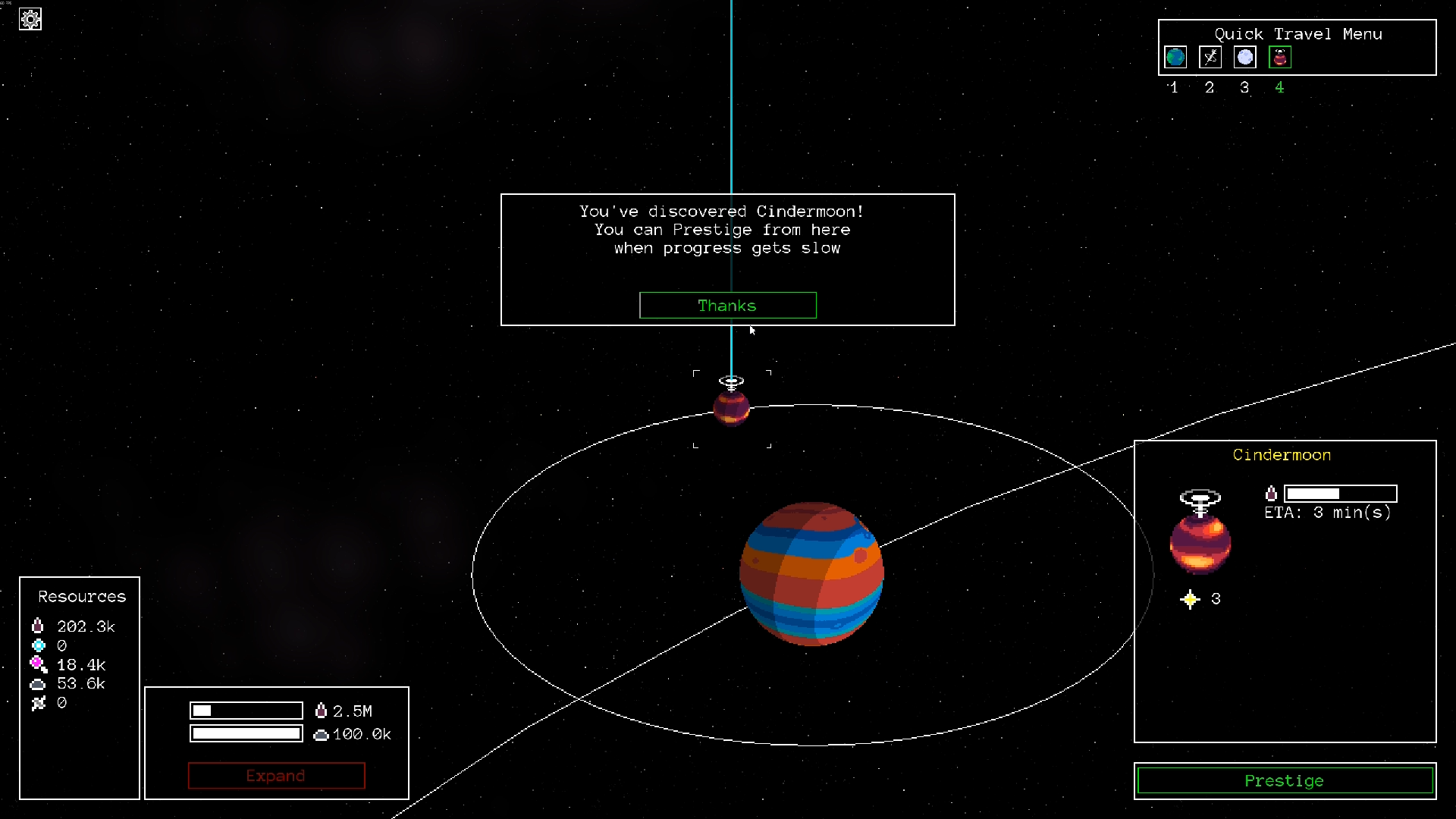
And you are meant to screw things up a bit – the game also differs from a typical Clicker in that the loop is relatively short, and includes a prestige system that rewards you for canning a run and coming back fresh. The prestige points you earn for hitting resource thresholds can unlock a variety of boosts to particular resource accumulation rates, and not at some petty scale – just a couple points can turn what took five minutes in your first run into more like ten seconds. Now, there are still moments where you realize there’s not much to do but wait and watch numbers go up for a while, but this is a rare game in the genre where I don’t feel like the winning play is to just leave your computer running for a couple hours while you do something else.
I really liked the audio and visual effects too – zooming out, seeing the little dots of drones carting resources from a gas giant to another planet, satellites accumulating energy and firing lasers at a distant facility, swarms stripping an asteroid belt dry.
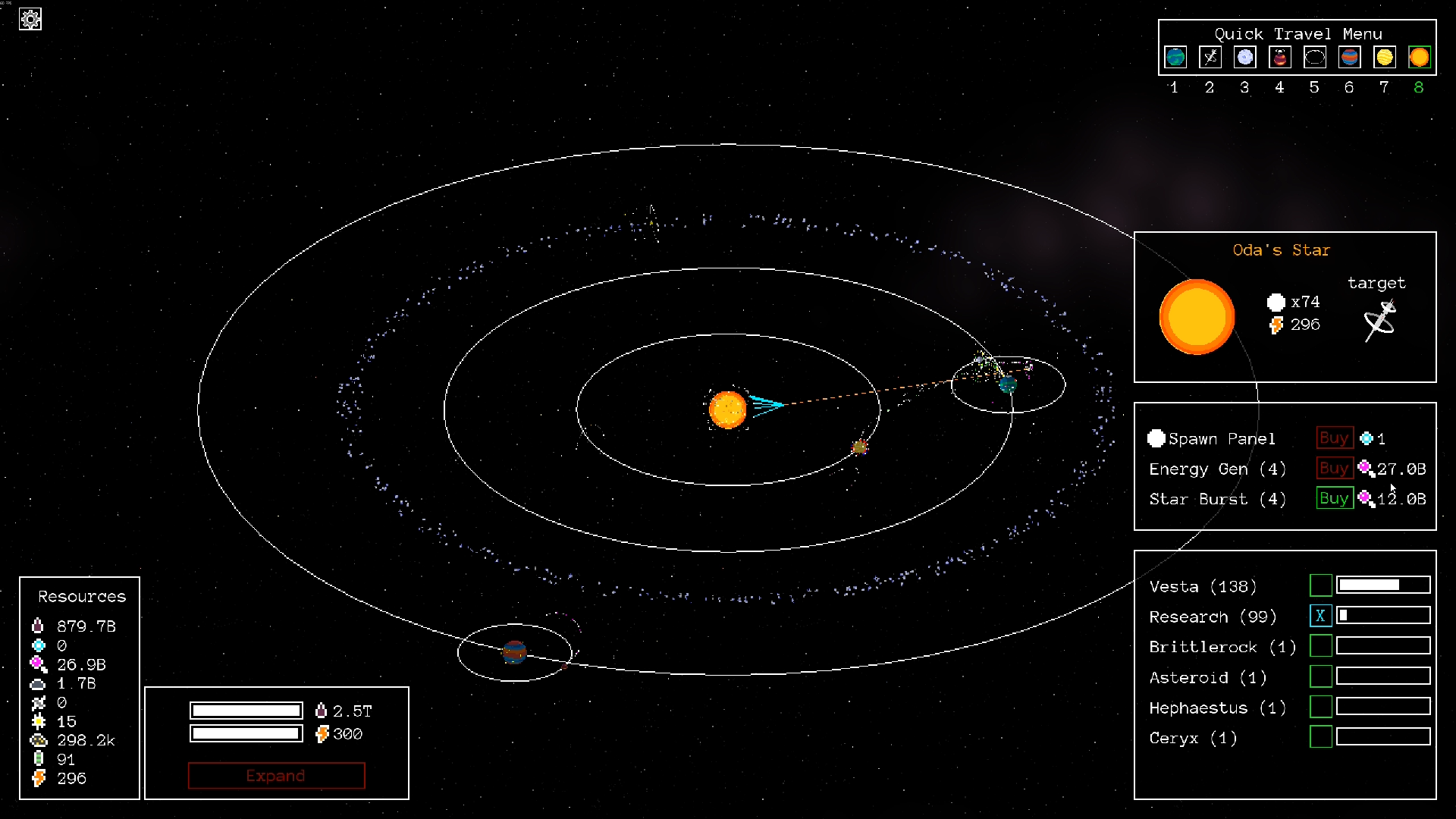
I lost an hour into Starvester before I realized what had happened to me, and before the night was over I went back and spent another 30 minutes getting a victorious run on the lone star in the demo.
Cathedral: Crow’s Curse
I played the original Cathedral several years ago, and could sum it up as a relatively challenging but not particularly memorable Wonder Boy-like. It was fine, and this also seems like it will probably be fine. This sequel, or rather prequel, seems to be emulating Blasphemous a bit more than you would expect from the first game, with honestly kind of brutal, albeit bloodless, killing animations for parry ripostes and backstabs. Even the fact that there’s stealth and backstabs in a 2D sidescroller is kind of weird.
The game seems really focused on parries in particular – ranged attacks can be parried and then hit back, killing the offender, and the automatons in the dark citadel I awakened do a three-hit combo you can parry and then tap once to open up for a visceral attack. It didn’t seem bad, but it was… kind of boring, and when I took a break I wound up just moving on to a different game rather than continuing with this one.
The Last Salvage Squad
The first thing I thought of when I saw this game was ‘this is either from The Citadel’s dev or someone inspired by them.’ Having played it, I still feel that way, although I couldn’t find any real evidence of a direct connection. Now, don’t get too excited – there’s no gore or eroticism whatsoever, so however you feel about the, uh, things seen in my Beyond Citadel write-up, that’s not relevant here. Nor is there much of the other big feature of the Citadel games, the granular gun handling mechanics.
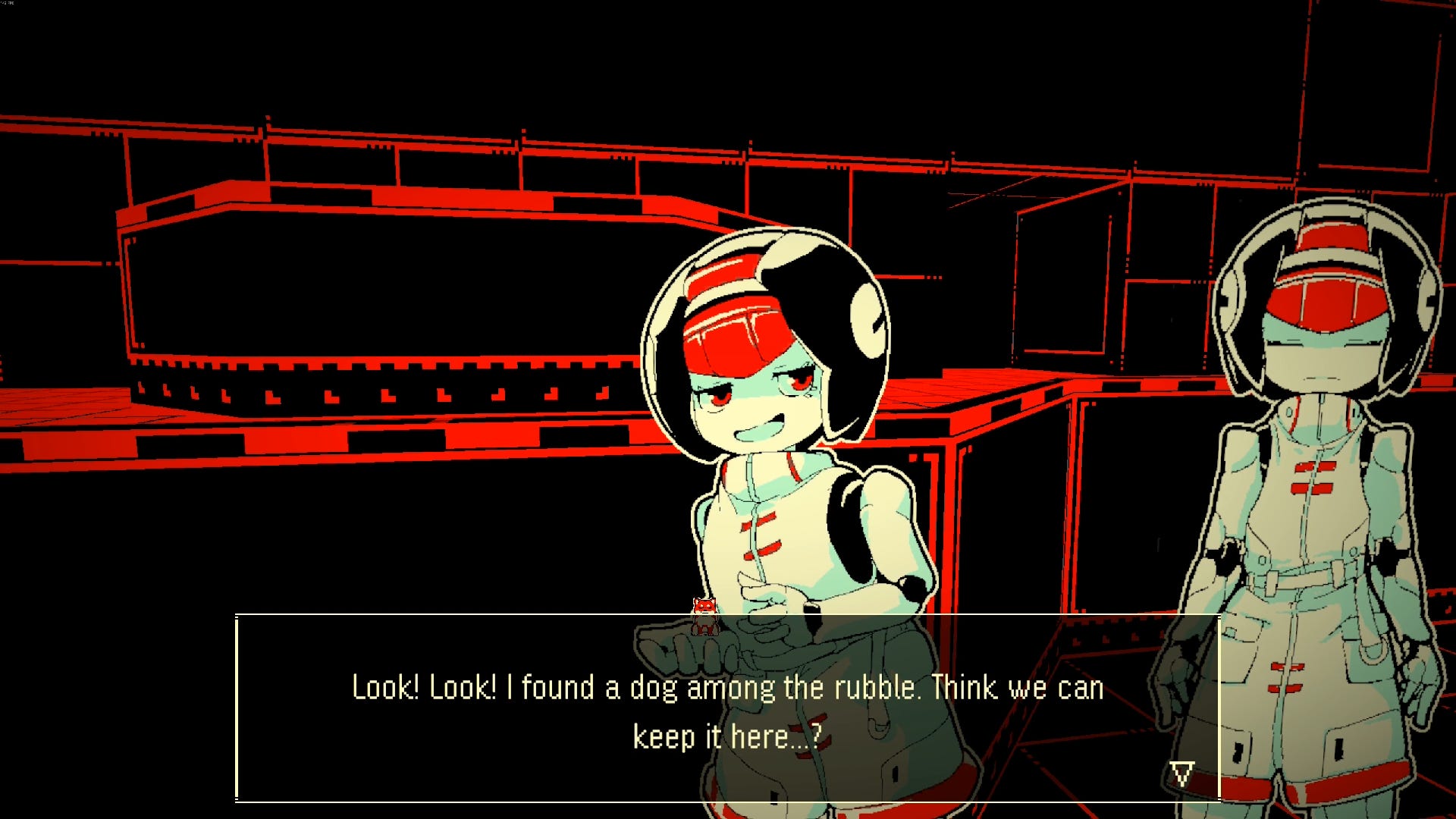
Instead, the inspiration seems to be stylistic – 2D sprites in simple 3D environments, all very expressive and readable, big enemies firing slow-moving bullets as you blast them, and a hub full of cute robots trying their best to vindicate humanity’s sacrifices. As far as gameplay, it’s more in the vein of Earth Defense Force – each mission is relatively short, contained in a small neighborhood of destructible structures, and a few waves of enemies warp in and start wrecking havoc until you can bring them all down.
After a few introductory stages you get skipped ahead to mission 20-something, and can finally pick from a few weapons that aren’t the default assault rifle, including a katana, which, obviously, was the one I picked and immediately regretted because it overheats if you swing it too much. Still pretty cool, though. After beating the demo you unlock what I assume is an infinite spawning endless stage where you get to dual wield the default guns and the reload animation is pretty slick.
The game’s style really carries it – I love the cute robot designs, I love the character’s face framed in the log like a rear-view mirror, and I really like the enemies stomping around over and through buildings on their tripod legs. The environmental destruction isn’t very important, at least in the missions I played, and the guns could stand to be a little more interesting, but depending on how the full game fleshes this out it could be really good.
Shalnor: Silverwind Saga 2
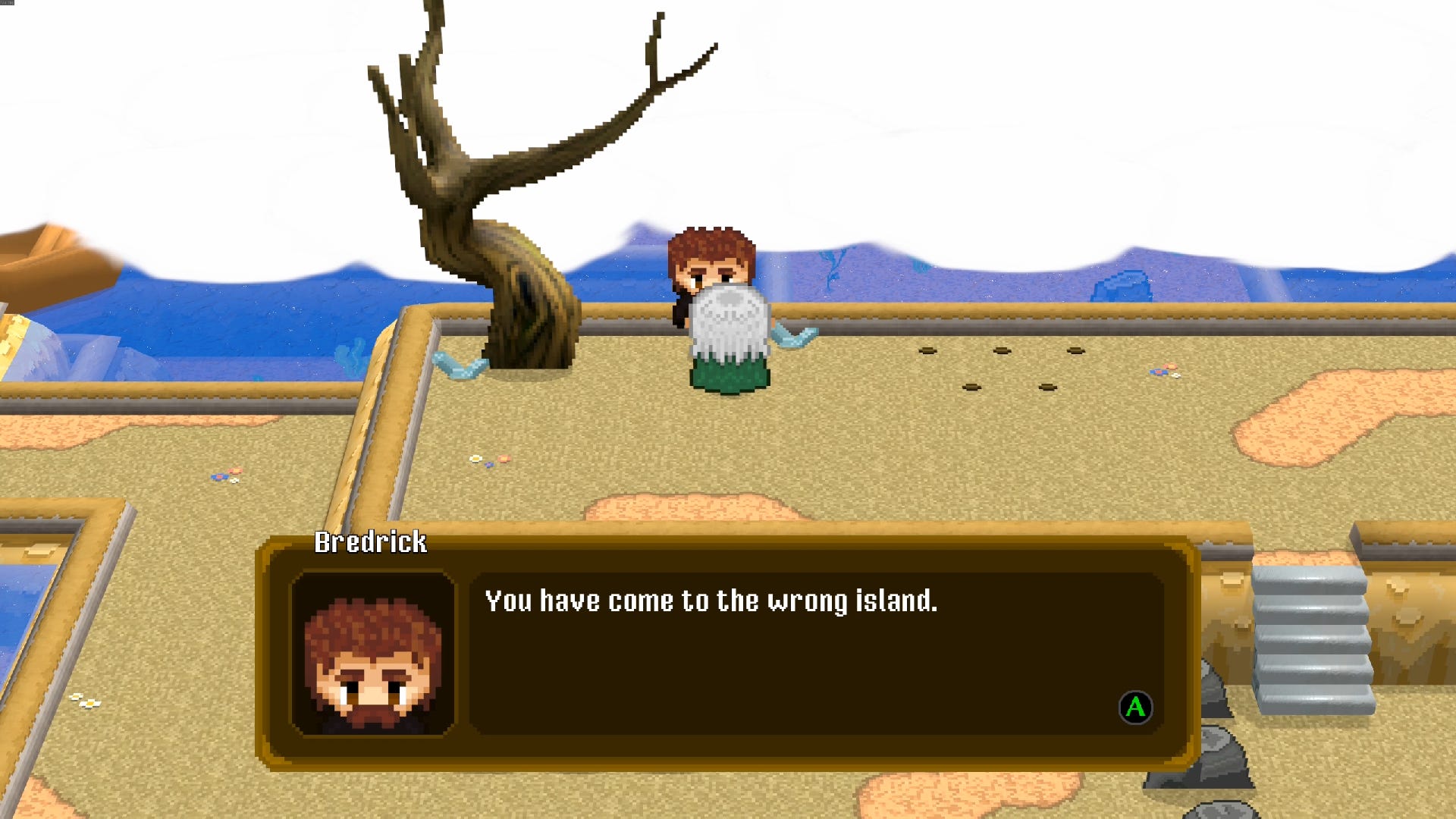
I have a bit of a history with the Shalnor games, and I really wish I didn’t. This developer has been cranking one of these out every couple years, and yet somehow, despite each game having very slightly more work put into the graphics or a new feature or two, they are all of roughly the same overall quality. Which is not good.
The Shalnor games are all pretty bland, exhausting, and frustrating Zelda clones, and having played a few actual Zelda fangames through ZQuest, I think those are generally better and this whole series would probably be better as a ZQuest mission.
This demo has reassured me that I’m not wrong to have vowed to never pay for another Shalnor game after Legends 2. It has all the same annoying shit I remember from earlier games – tedious puzzles where you wait out spike floor cycles going both directions, enemies that swarm you, and my favorite, an encounter where you’re forced to kill shit with only your ranged spell, which you have to stop using occasionally to let your stamina recharge.
Oh, and the last enemy can just kind of sit at the corner where you can’t hit it. I guess I can’t complain too much – that was the format for the first boss in Legends 2, which took like 30 shots to kill. I don’t know if that’s true for the boss here, because I finally gritted my teeth and gave up.
Interdimensional Lili
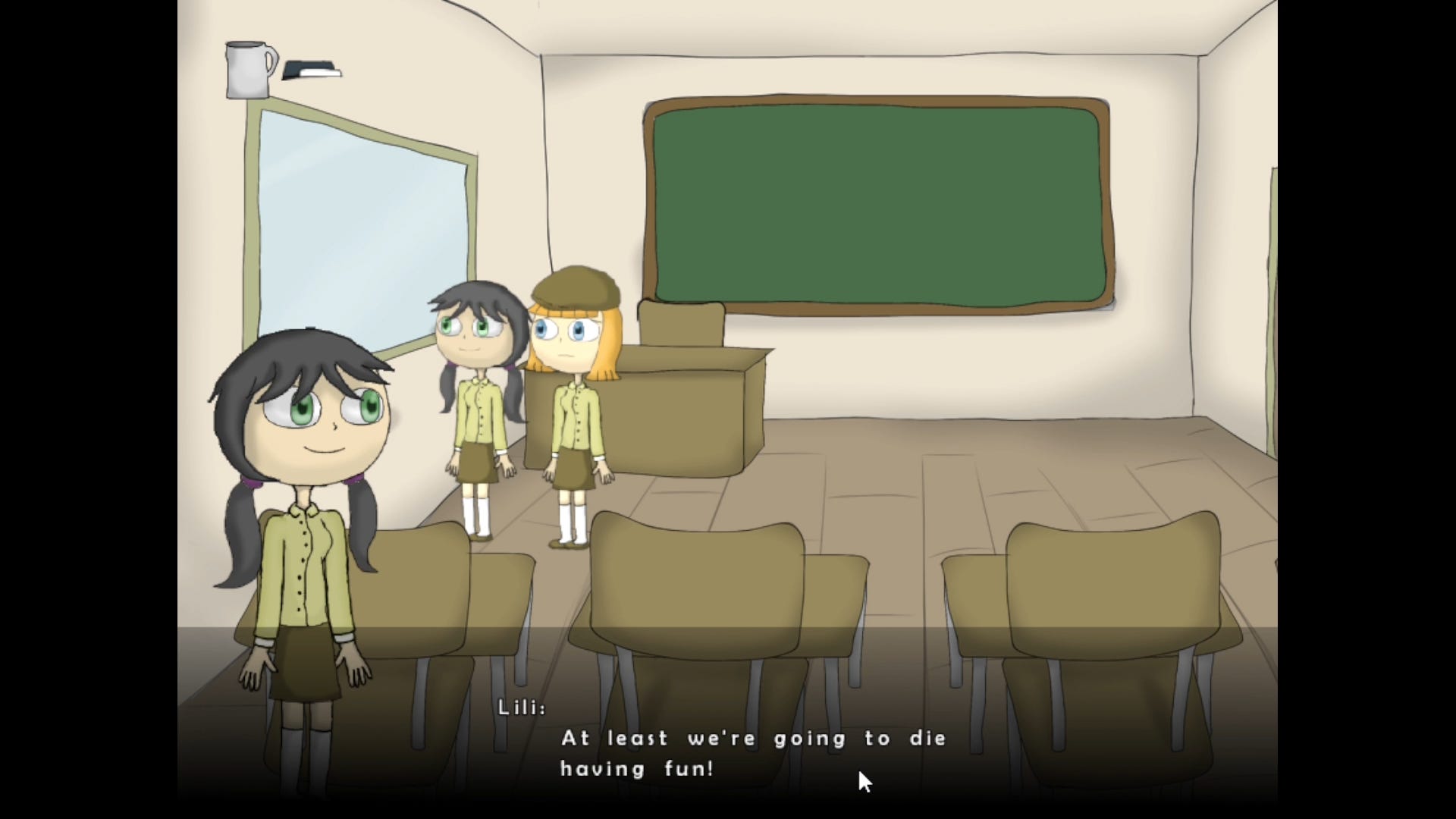
Point and click adventure starring two college [?] students who go to class and end up in an interdimensional portal. The art style is bizarre enough that I was willing to see what was up with this, and, maybe not unexpectedly, the answer is ‘not a lot.’
The game mechanically is pretty cumbersome, with click-to-walk and even double click to run, but paths from one screen to the next are handled with popup windows that ask for confirmation, and your cursor doesn’t change or anything to indicate where those transition points are, so while they’re pretty obvious, I can see that being a problem. There are two items I found and could pick up and keep in the top left corner but there seemed to be no way to use them and they didn’t have any function I could discern. There’s a jump button, but nothing to jump over that I found.
I thought I was stuck right at the start because I couldn’t find anywhere to go but in and out of the empty classroom, but eventually I stumbled on what I assume is an invisible trigger [I hope it’s not a timer, because I was there for several minutes] and wound up in a big, mostly empty series of bland rooms strung together. I walked to one end, talked to a classmate, walked to the other, talked to a second classmate, and then took the third path and talked to a giant poorly drawn plant. And then I quit.
The whole experience made me feel slightly unwell. I don’t know if it was the droning music, the ‘jokes,’ or the smile snapping back onto Lili’s face, but I did get the sense I was exposing myself to a Videodrome signal of some sort and wanted to bail before I started trying to claw a gun out of my own guts.
Dverghold
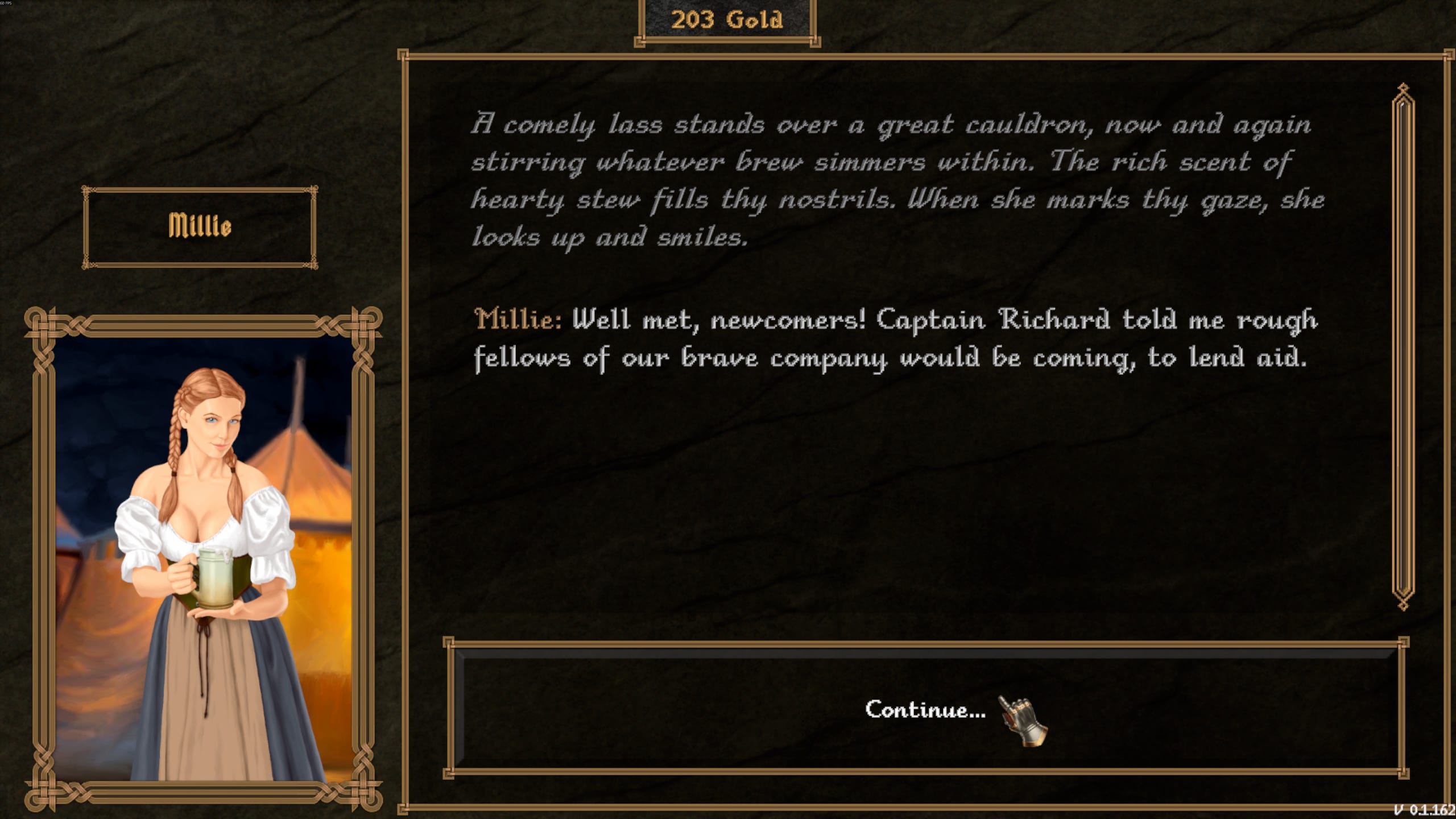
A turn based dungeon crawler with 3D environments and enemies. I don’t have a whole lot to say, because I’d just be, uh, describing what a dungeon crawler is, but I really liked it. Each character has enough variety in things to do in combat, but it’s not real-time like Grimrock so it doesn’t feel as spammy and square-dance focused. Exploration seems respectable – I especially liked that you can dig through certain walls and collapsed doorways to get into new rooms or open shortcuts.
I died to a weremole, which was an enemy design that cracked me up, and didn’t go back in. I’m considering trying again with a wholly different party composition, but I think I’ll not bother trying to thoroughly map out the level – I’ll save that for release.
Slaughter Void
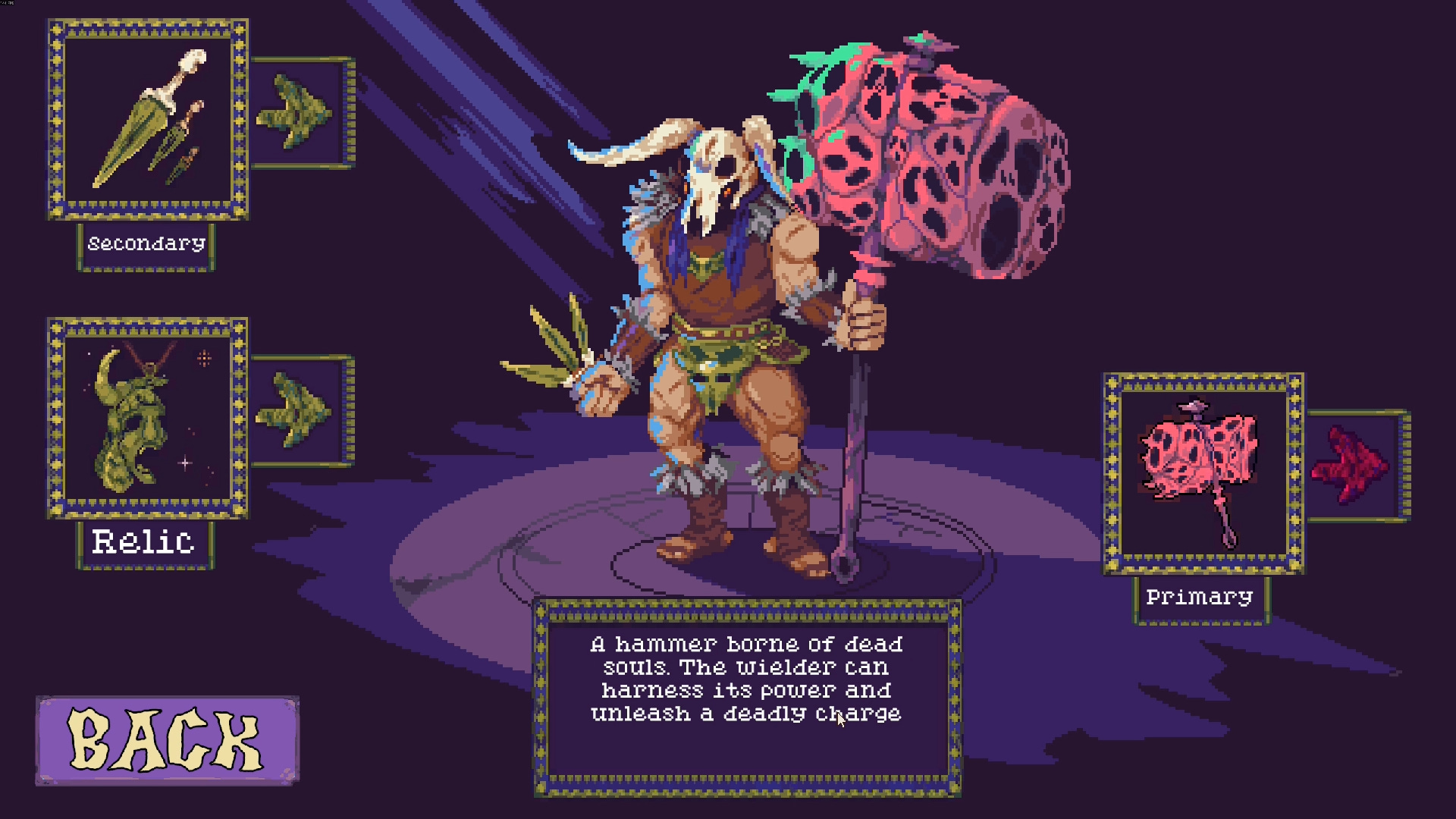
A scalp-cam action game that plays a little like Hotline Miami meets Gauntlet. You smash your way through maps full of little monsters and spell-slinging cultists, all at a break-neck pace, and once you kill everything, you get to move on. It’s got some environmental gimmicks, like doors you can kick open to splatter something on the other side and barrels you can kick into enemies, but for the most part you’re just running through slashing shit and occasionally throwing out a knife.
You die in one hit, unless you’ve earned yourself a shield with a killstreak, and can reset the stage nearly instantly with a single button press, making replays quick and painless. There are four ranks of par time to chase on each stage, and I had little trouble getting the top two consistently – actually, I was a little surprised at how sparse the leaderboards seemed, as I was around the teens globally pretty much the whole demo.
You eventually get the ability to unlock an alternate weapon with its own attack pattern, and it appears that the full game will have even more gear you can swap out to give yourself some bonuses and other effects, but I don’t really see how you can expand on this super meaningfully outside of appealing to hardcore speedrunners. There’s no weapon grabbing or throwing, enemy behavior is extremely one-note, and it all moves so fast that your reaction speed is probably going to be useless for anything more complicated than clicking the attack button. I did really like the art, music, and trailer though. Who knows? This might have legs.
Valerie
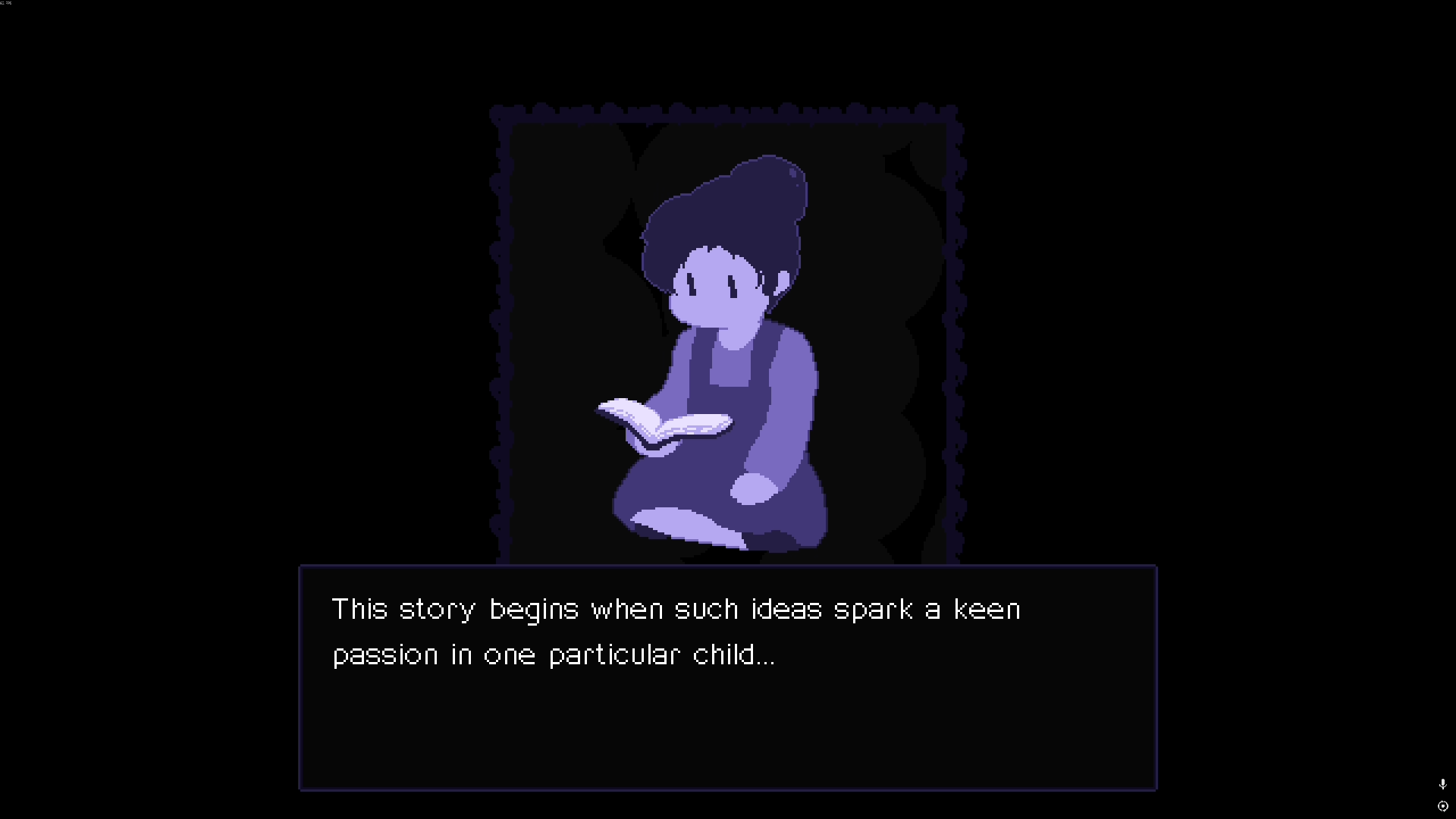
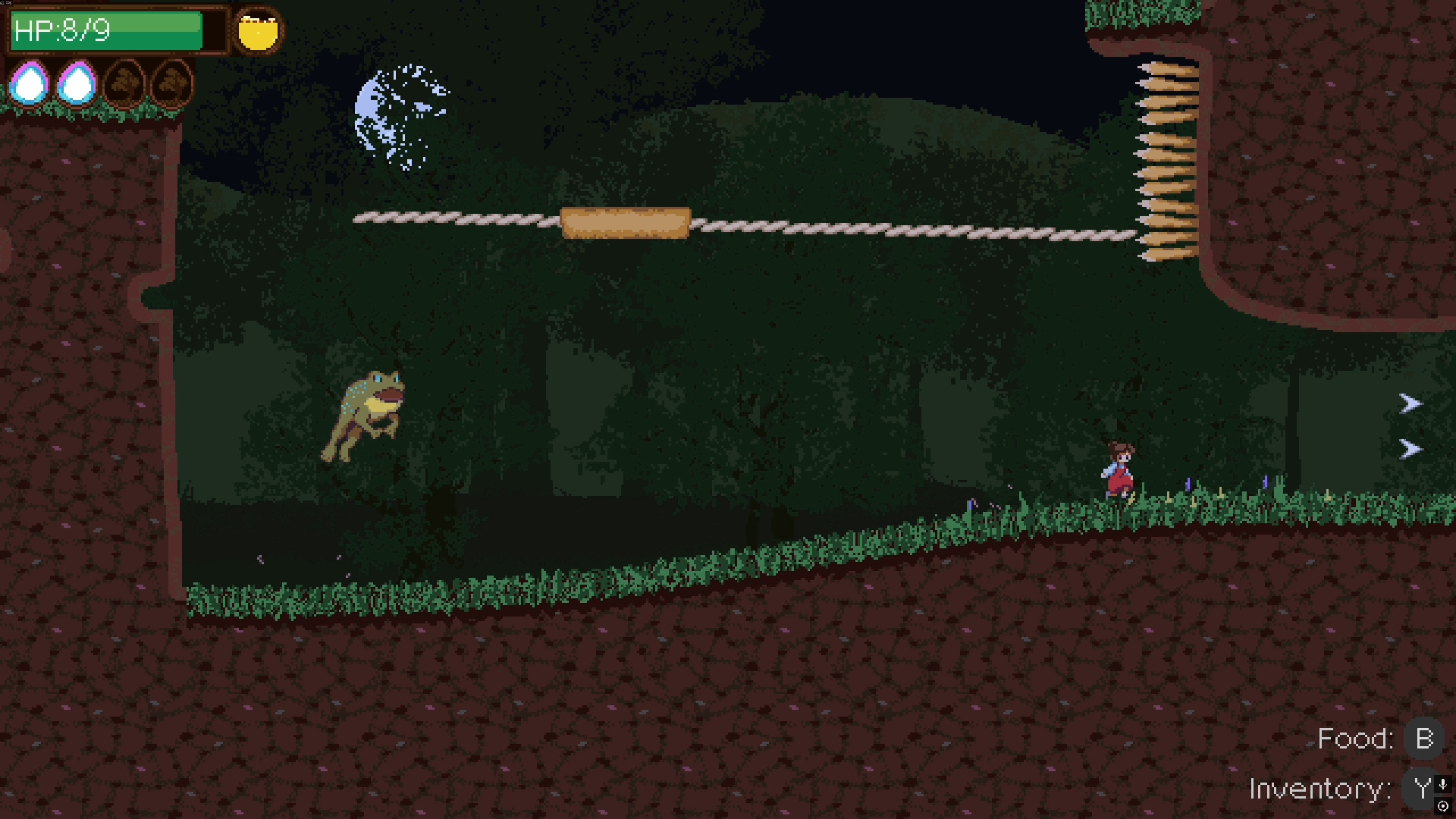
This one is pretty unassuming in screenshots, but wound up probably being my favorite of the night. You play as a little girl who has read too much of The Secret and is now trying to join a real life secret society after learning to do magic on her own.
The game is primarily a platformer, and it’s actually a lot more fluid and engaging than it probably looks at first glance. You have a good amount of momentum and speed that you can build up on down slopes, but the game’s not annoyingly strict about jumps or positioning. After a bit of exploration, you unlock the first magic ability, the bubble shots, and the game really picks up.
You can fire bubbles at enemies to weaken them and eventually trap them in a big, coherent bubble, which you can then use as a bounce pad. As Valerie is an innocent child, she doesn’t kill or even actually harm any enemy she does this to, so you can fire more bubbles to free them, so you can freeze them elsewhere if you need to, without needing to wait for a respawn or something.
Bouncing off the bubbles, exploring the screens, and finding little trinkets that give you various boosts like Hollow Knight badges got me so excited I actually intentionally stopped playing, not out of frustration but anticipation – I’ll be getting this on day one when it releases for real.
A few real potential gems turned up today, and I’m in a pretty good mood. I read a bunch of other people’s Next Fest roundups yesterday, and wound up putting together a list of interesting things I hadn’t really marked on my own - enough to probably round out one full day. Maybe I’ll do that as a special feature for tomorrow.