
Void Stranger
You’re telling me this blastocyst already has a soul?

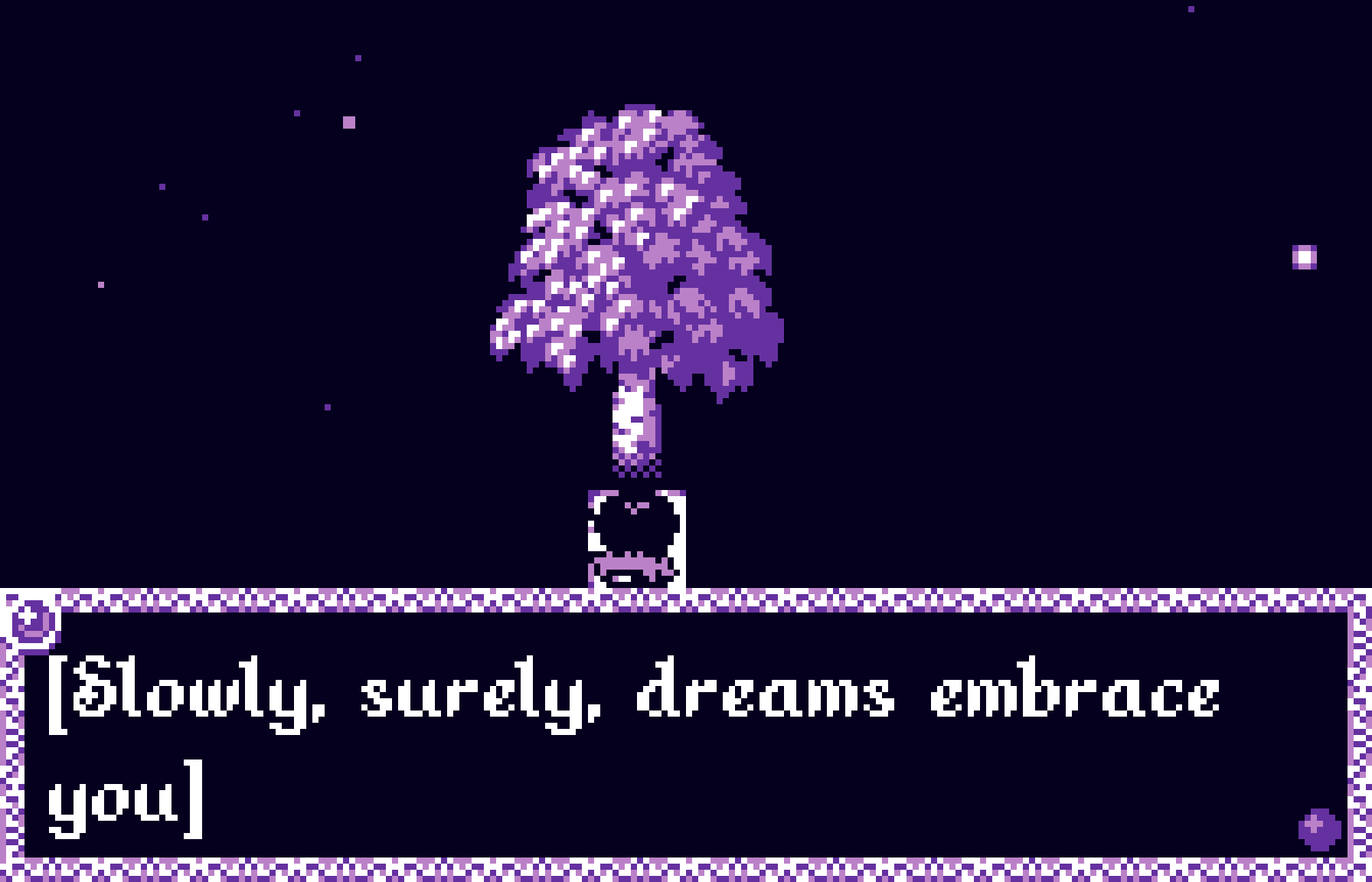
Void Stranger is a puzzle game, and more specifically, one of the ones that benefits a lot from going in mostly blind. To respect that, I’m going to try to refrain from getting particularly specific about any one aspect of it throughout this post, and divide the write-up into two parts, the first in which I’ll describe the game to anyone interested in trying it themselves, and the second where I’ll get a little more in-depth for people not planning on playing it and people who already have. I’ll also be uncharacteristically forward right here - I really liked it, and I think anyone with an appreciation of recontextualization, satisfying puzzle design, and great art and music who hasn’t yet should probably close this out and give it a shot when they get a chance.
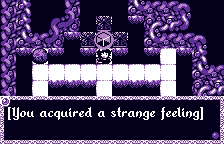
With that out of the way, let’s get to the game itself. You play as a little pixel woman who lands in a mysterious dungeon and almost immediately finds a magic rod. The rod lets you pick up and then drop floor tiles, moving the ground around the single-screen top-down floors until you can reach the stairs down and progress. As you might expect, you start pushing things around after a little while, and so the core of the moment-to-moment gameplay is essentially a twist on Sokoban. As you parse each room, you learn to pick up on the shapes and layouts that mean different things, like walls that will trap a pushable object if you shove them that far, since you’ll never be able to push them away from it. Every few dozen floors or so the game adds fresh elements, like enemies that move in a set way every turn, new things to push, new floor types, new tricks to learn. Each distinct region also has its own music, most of which is fantastic.
The story is primarily told through cutscenes, viewed by resting at the checkpoints bookmarking each distinct series of floors. The story in general is surprisingly good - nothing earthshattering, but it keeps pace with the gameplay twists and has some good character and worldbuilding moments. There are also a handful of NPCs you can run into while exploring the dungeon, each with a little more to add but nothing really essential to solving the puzzles.
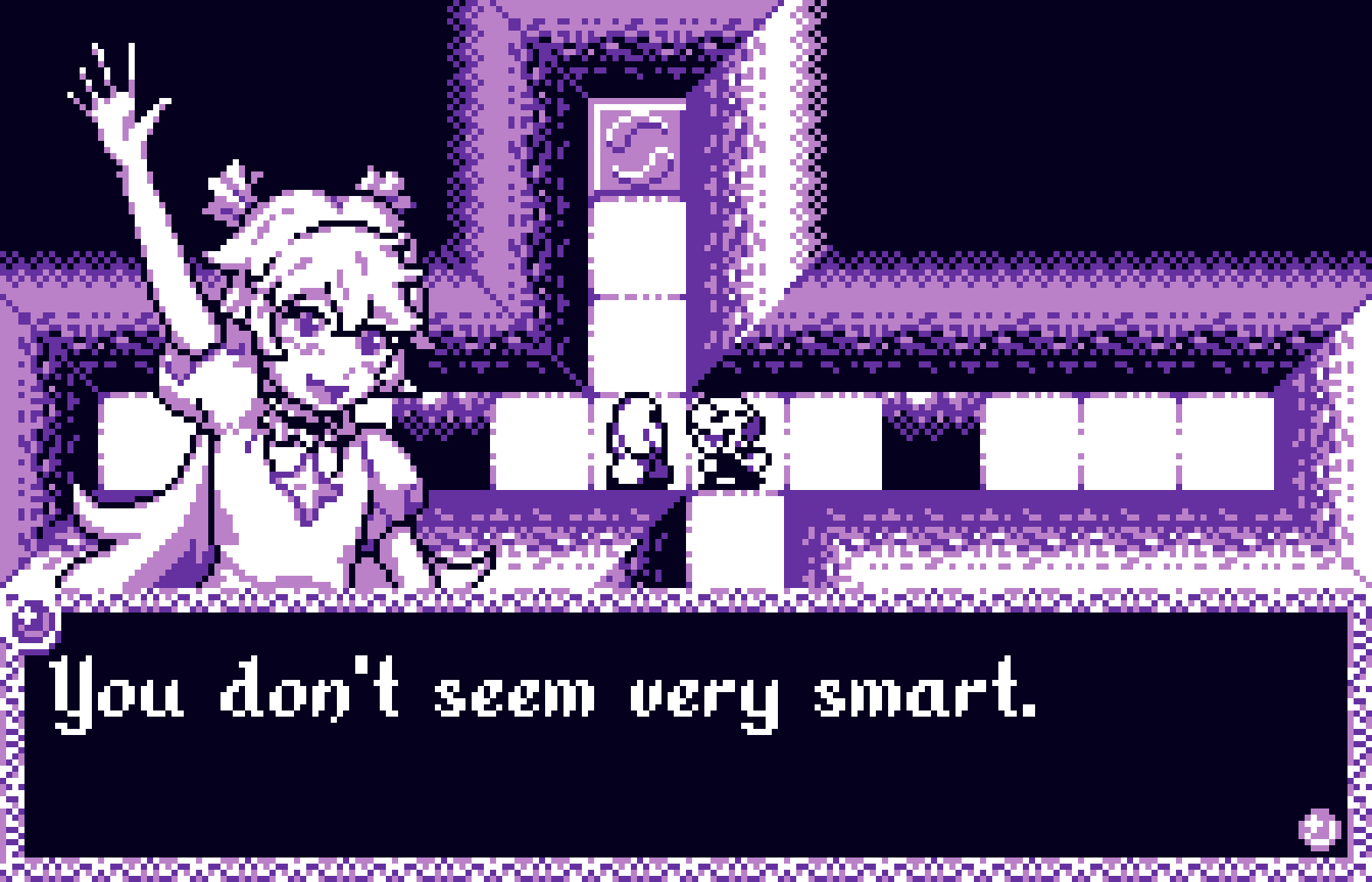
The puzzles are the main draw, and they’re generally very good, rewarding to piece together, and well-integrated with the core gameplay. To avoid spoiling any specific solutions, I’ll fall back on a list of likely inspirations and comparison points - Outer Wilds, La Mulana, Toki Tori, Tunic, and Tower of Druaga. Void Stranger clearly lifts some things you’ve seen before if you’re a fan of these kinds of games, but the developer has been deliberate in trying to pick out only the best bits, and fit them all together about as well as possible.
Before I turn and start possibly spoiling surprises, I want to drop two hints - these are things I would have really appreciated just knowing about when I got to them. If completely stumped on the ‘tail’ puzzle, just look up the solution. And if someone seems to break the most important rule, you don’t have to fight fair either. I don’t think ‘solving’ either of these legitimately is really worth the effort, for reasons a bit too revelatory to get into in this write-up, so know that I don’t consider them ‘spoilers’ per se.
Do not read beyond this point if you plan on playing Void Stranger any time soon.
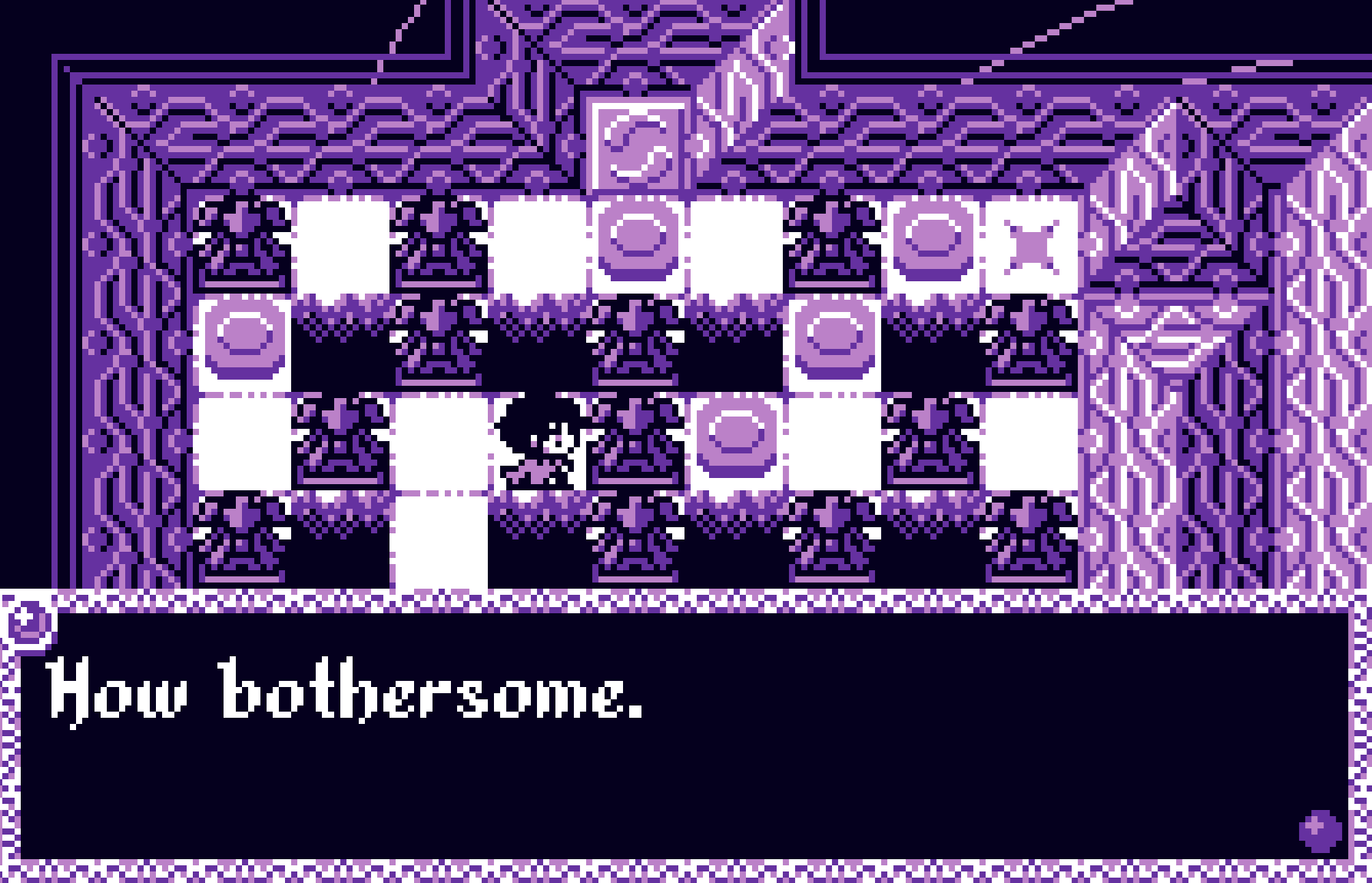
After getting far enough, the game lets you in on some of the deeper mechanics, like ways to ‘reset’ a run, access secret interstitial floors, or skip ahead. These are all crucial because eventually, you’ll run out of rooms, and after a short musical sequence, be forced to reset back to floor 1 anyway. You loop back to the start of the dungeon multiple times, and as you learn more, and eventually gain some semi-permanent ‘abilities,’ new things about familiar rooms will pop out to you. It’s an extremely well-done example of my favorite videogame theory term, recontextualization, and the pacing of the hints and signs keeps the repeated trips through a couple hundred puzzle floors feeling less like a slog and more like you’re steadily honing in your senses in the investigation. Every loop, I was able to flip through my notes [primarily handwritten] and pick out a handful of things that demanded attention this go around, or add a couple more that seemed suspicious enough to potentially become relevant later. The repetition is also alleviated significantly by two main factors - first, the puzzles required to simply progress to the next room very rarely require much in the way of forced moves, and are generally lenient enough that once you know the lynchpin, it’s easy and quick enough to feel your way through in a couple seconds each time you swing by. Secondly, those ‘abilities’ you get can completely demolish the intended structure of a room, leading to totally novel and ruthless solutions that shave the time-per-floor down even more.
The game has multiple endings, and most of them unlock further variants of the base game, which then lead to their own endings. One of them, which is essentially the ‘hard’ mode, completely remakes most of the floors to make them significantly more challenging, strict, and exhausting - luckily, it has no conditions that require you to respect the ‘limited lives’ system the first phase does, so you can die and retry at your leisure. Some endings are hidden behind even deeper layers of meta puzzles, though like almost everything worth discovering in the game, they are as far as I’m aware totally accessible purely through information delivered in-game - no annoying ARG or secret file editing shenanigans this time. Each also significantly expands the story, leading to a lot of… kind of unnecessary tangents that still feel like they mostly add to the narrative, or at least don’t totally detract from it.
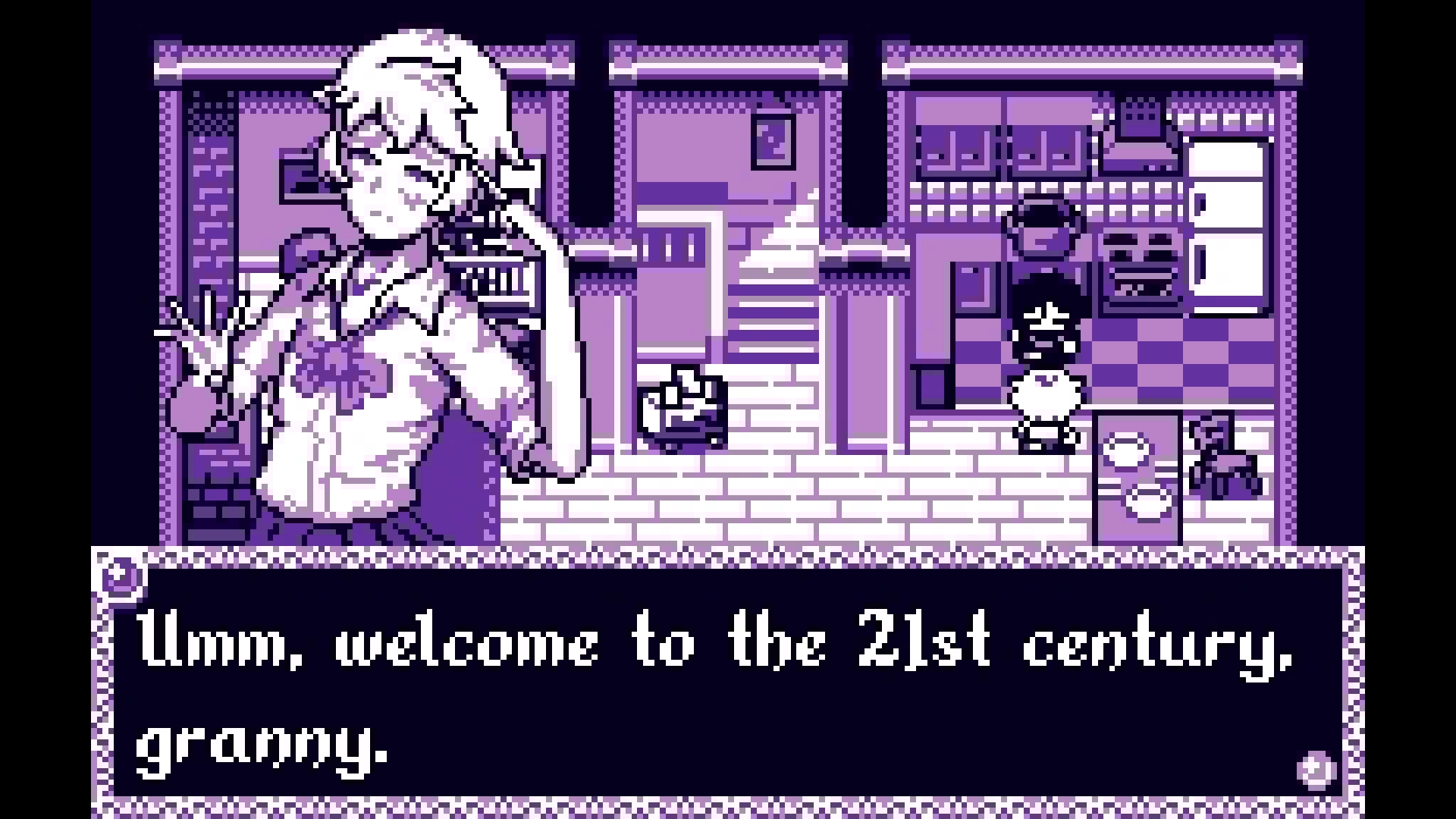
Probably my only big gripe with Void Stranger is that playing it and solving the puzzles under your own power all but requires a lot of screen capture - if you aren’t religiously screenshotting every frame that looks remotely suspicious, and ideally running some kind of recording software so you can catch things that happened before you realized they were out of the ordinary for later frame-by-frame analysis, it’s easy to feel like you’ve let something important slip through your fingers. Now, I do tend to religiously run screen capture for most games anyway, for purposes of capturing representative moments or memorable scenes, but for SOME reason, Void Stranger kept completely breaking it. I think it has something to do with the way the game likes to close itself at certain points, or maybe because of the way I was running it windowed so I could easily pull up reference material, or it could just be because my screen recording software sometimes develops a grudge with a particular game. Whatever it was, my greatest moments of frustration in Void Stranger had nothing to do with getting stuck on a particularly tricky Sokoban puzzle, or running into a seemingly impossible boss, or being confused if I’d just accidentally undone all my hard work with a single wrong move - it was hitting my ‘save last 5 minutes’ hotkey and not seeing any confirmation popup. I punched the edge of my desk once or twice over that. And while that’s not necessarily the game’s fault, it is something I think could have been handled better, perhaps by integrating some kind of ‘screenshotting’ feature into the game itself.
Apparently there are all kinds of extra easter eggs, secret endings and modes, and other… stuff to sift through if you get to the point where you’ve gotten every intended ending and want some more, but even getting to where I managed felt like plenty. I don’t want to manipulate an invisible ‘karma’ counter to find a handful of extra expository encounters, I don’t want to beat the game 17 times or whatever, and I especially don’t want to play a fucking shmup. For one thing, I think the game delivered plenty and was worth what I paid for what I accomplished, and for another, figuring out any of that crap essentially requires data mining, or at least looking up what data miners have uncovered.
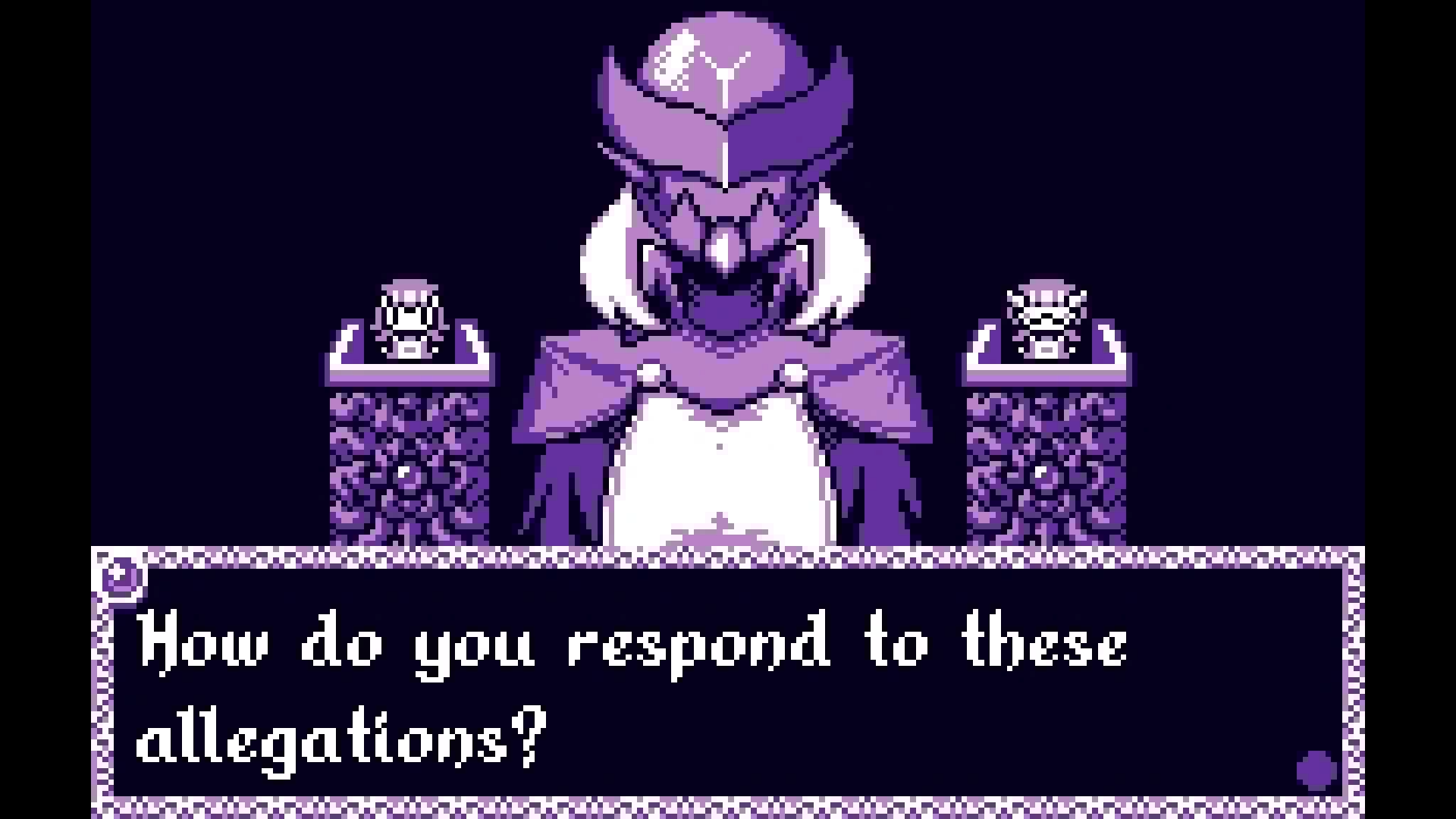
Void Stranger is a genuinely remarkable game, building on a relatively simple base, then building on some meta-puzzle elements that it elevates beyond mere trickery, all the while patiently encouraging you to continue. It’s not [until the post-post-post-game] at all adversarial in its design, and though it appears at first glance to be too obtuse, too repetitive, or too clever for its own good, if you stick with it, you’ll almost certainly find yourself won over. Now enough of all that SHIT. CHECK OUT THESE BABES.


