
The Deep for ZQuest
The Deep?! It’s only two floors!

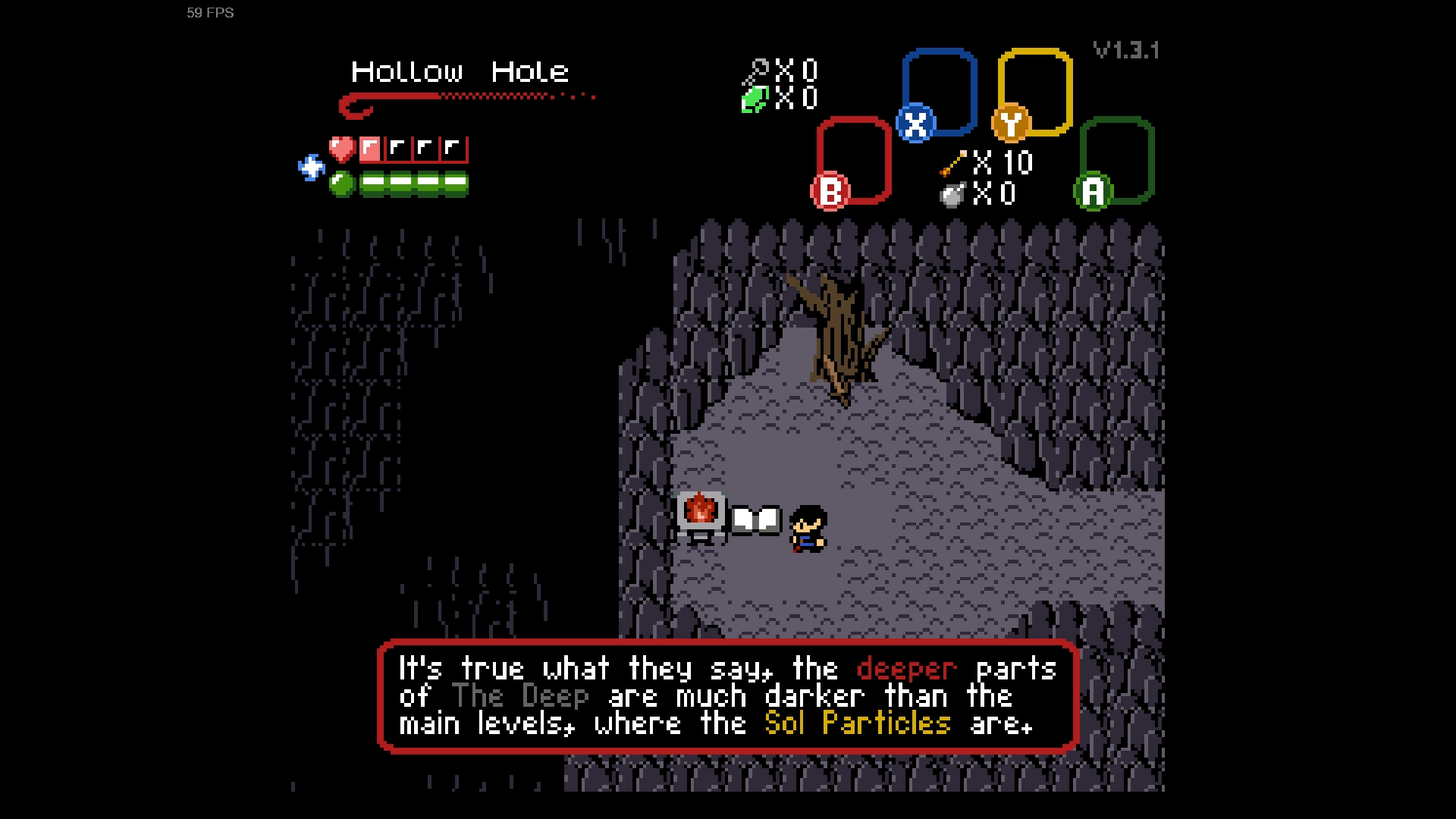
ZQuest Classic is the current incarnation of a long-running open-source engine project primarily for making Zelda fangames. There’s a lot of history [and even drama] which I’m dimly aware of, but not informed enough to mention here. I also gather that it’s generally an impressive and notable project, spawning dozens of ‘quests’ over the decades that are free from the restrictions of romhacks and the workload of fully independent games. For one of the latest major update releases, the community working on the engine held a contest, and the winner would get their quest packaged as a default example with the engine download. The winner, Joaish, submitted this quest - The Deep.
The Deep is a top-down adventure that sticks mostly to the look and feel of an NES game, but uses some sprites and mechanics from later games, like Link’s Awakening and even A Link to the Past. It takes place over a large map with two layers, each having separate distinct regions to explore. The quest is of decent length and complexity, with a lot of items being useful both for combat and new forms of traversal or puzzle solving, and it’s also relatively open-ended. Each region has a fast travel point to unlock, new enemies and gimmicks, and plenty of secrets.
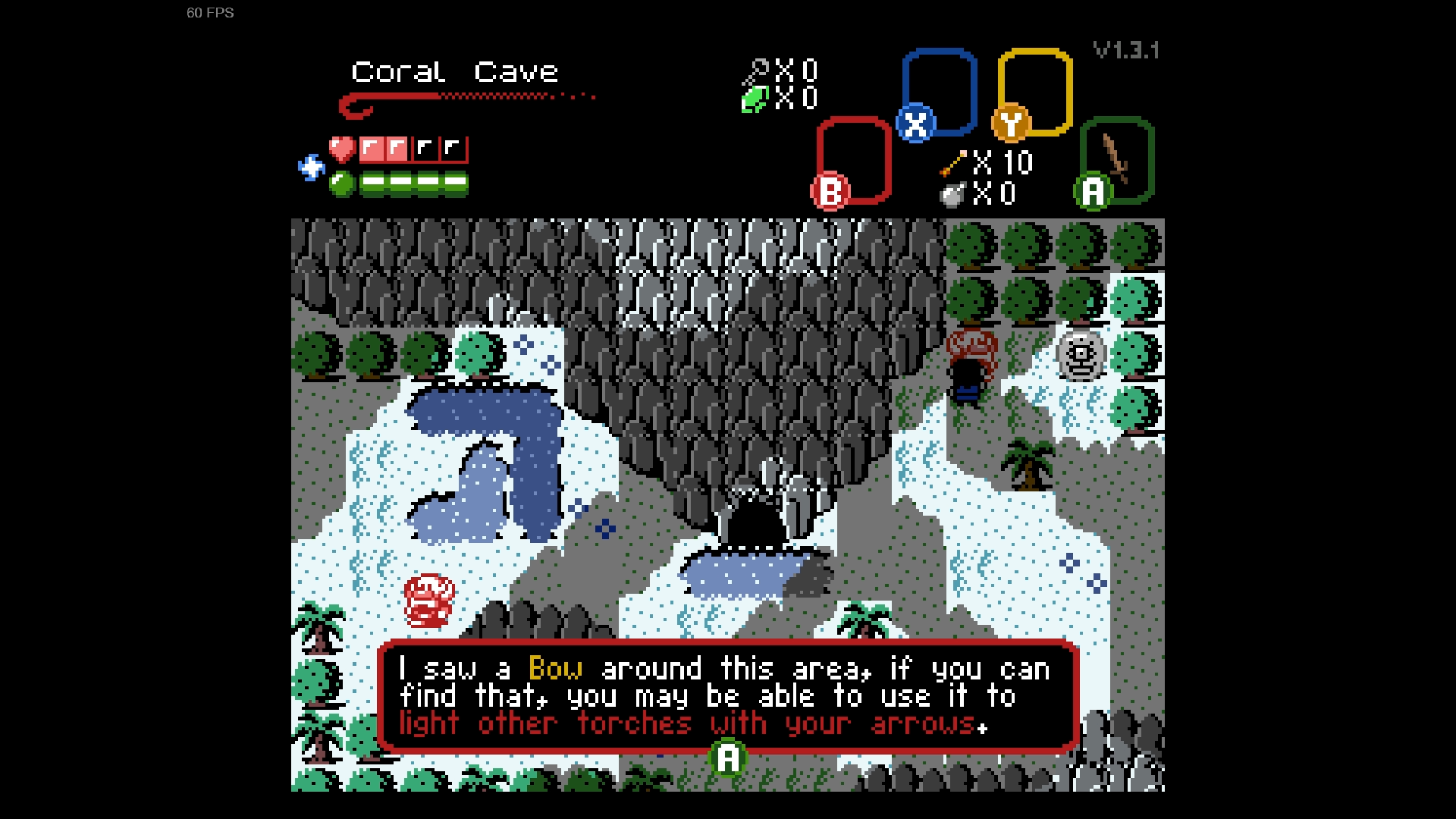
There is an element of metroidvania style progression blocking, with many items and some areas being locked behind finding new equipment, and the quest does a remarkable job making the most of some fairly straight-forward abilities. Early on, for example, you have to solve puzzles that involve tricking arrow-shooting traps into lighting torches for you, eventually leading you to a bow that gives you the ability to light even more torches on your own. The elemental magic rods return, each having a different attack and ways of affecting the environment. The boomerang is the only item capable of being launched diagonally, and is used to swap places with any green object [or enemy] struck, in addition to its usual stunning and bat slaying properties.
There are a surprising number of boss fights, all with a bit more to their design than in Zelda 1, and are at a pretty good balance of difficulty. There’s a potion shop, bottles, and bug net for catching fairies, so despite the lack of a shield and relatively small health limit, you can prepare a bit for a tough fight without completely steamrolling any of them. There’s even a few optional upgrades hidden around, like for the bow and sword, which can give you more of an edge. Interestingly, even the bombs are completely optional - I wound up beating the quest for the first time without ever picking them up, but on a quick replay I realized you can get them almost right off the bat.
The quest uses the engine to include some significant quality of life features over the games it’s inspired by. Bombs and arrows have a small stock that is depleted on use, but regenerates slowly on their own, so you’re encouraged to use them regularly but not exclusively in normal exploration and combat. You respawn with your full current max health, and not the starting max health like Zelda 1 and even many legacy quests did. You have four ‘weapon’ slots available, which is more convenient for modern controllers. The map is essentially just a full screenshot of the screen layouts, which you can zoom in on to see the tiles and features in full resolution, and even pick out cracked walls and missed items without needing to physically backtrack. Unfortunately, the map does use the current palette of your location, which sometimes clashes badly with the area you’re examining.
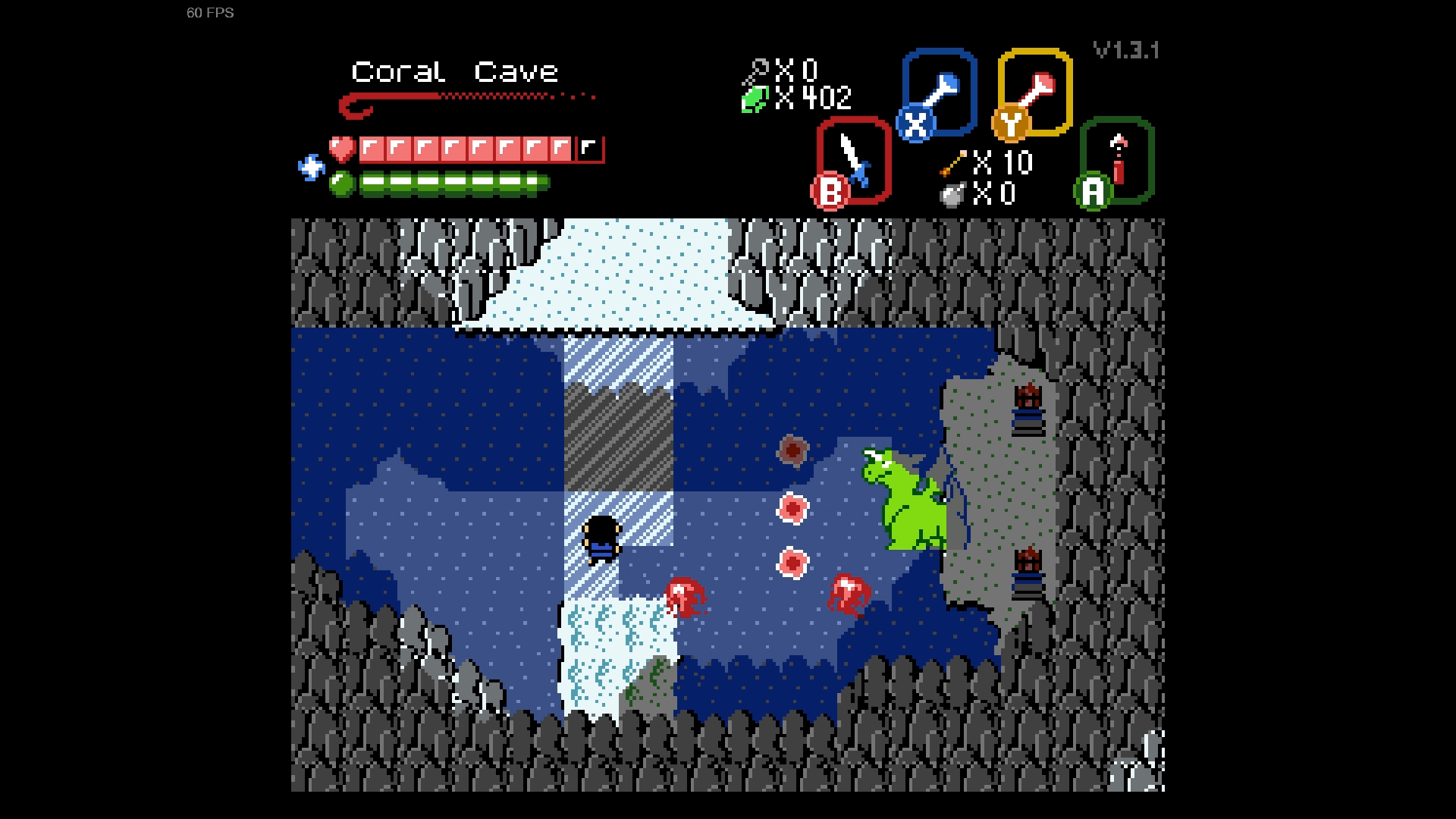
Speaking of the palette, the quest is actually very visually appealing. Despite being somewhat chromatically muted compared to typical 8-bit graphics, it makes good use of the more subdued colors to keep areas visually distinctive and help important items pop while maintaining more of a grim tone than a real Zelda game typically rides at. There are little touches of idle motion livening up the scenery, like torches flickering, water gently rippling, and cave moss glowing, which go a long way to making the environments feel more like real spaces. The overworld even has light piercing through from above, leaving large shadows across the ground, giving me the initial impression of clouds, though in the quest’s lore I guess it is supposed to be a higher level of caverns.
There are a few things about it I didn’t like, though. The start of the quest involves a lot of bumbling around underground with extremely limited vision, and despite the lantern that alleviates this being one of your first visible goals, you actually have to make some overworld progress and get the bow first before working your way to it. The combat is a little stiff and sometimes frustrating in a way similar to but distinct from Zelda 1, especially when it comes to enemies that spawn or wallclip in front of you like Leevers and Wizzrobes, who always seem to pop up right inside you if you just try walking straight through any room they spawn in. A few too many rooms have keys or progress gated by the ‘puzzle’ of killing all enemies, which isn’t always obvious, especially since some enemy types are better avoided than fighting with. Makes me wish they’d brought in the compass chime from LA. I mentioned not getting the bombs on my initial playthrough - the main reason for this is that the game uses little dot switches to trigger certain elements, like shortcuts and puzzle solutions, and their activation is sometimes a little finnicky and also doesn’t necessarily have good feedback. Sometimes you will get bounced into one by an enemy, and whatever changed happens in a single frame and it’s not always obvious what you triggered, and other times you’ll visibly walk over one but not aligned properly and it won’t activate.
My last gripe is less with the quest itself and more with the way saving works in this program. I had started a file on this quest a while back and when I picked it back up and got an hour or two of progress, I realized I’d forgotten how to save. Now, when you die in The Deep, you actually respawn at your last used zone transition point without losing anything, even if you’d picked up a new item or some money, for example, just like continuing in Zelda 1. I didn’t see any ‘save game’ option in the file menu for the program, so I assumed that meant the game was autosaving, but it doesn’t. It turns out you actually have to go to ‘quit game,’ which brings up the Zelda 1 ‘save/continue/quit without saving’ death menu, and that’s the only way to save. Luckily it didn’t take me long to get back to where I’d left off with foreknowledge, but it is a bit too obscure and might be discouraging enough to make some people just drop it altogether if they make the same mistake I did.
If you’re nostalgic for classic Zelda or just want a solid little adventure game that isn’t particularly demanding of your time, The Deep packs enough creativity into a tight package to really be worth checking out. It’s short, but despite going over my clear file pretty thoroughly, I’m still missing a few major items. On loading up a fresh file, I found that despite there being an intended order to most of the progress, you can get a few things a lot earlier than I thought, so I might actually replay it sometime in the future. It has also impressed me enough in general to download a few more promising looking quests from the ZQC community. Hopefully at least a couple of those hold up to The Deep.