
NINJA GAIDEN: Ragebound
Two throwing star crossed lovers do with their death bury their clans' strife.

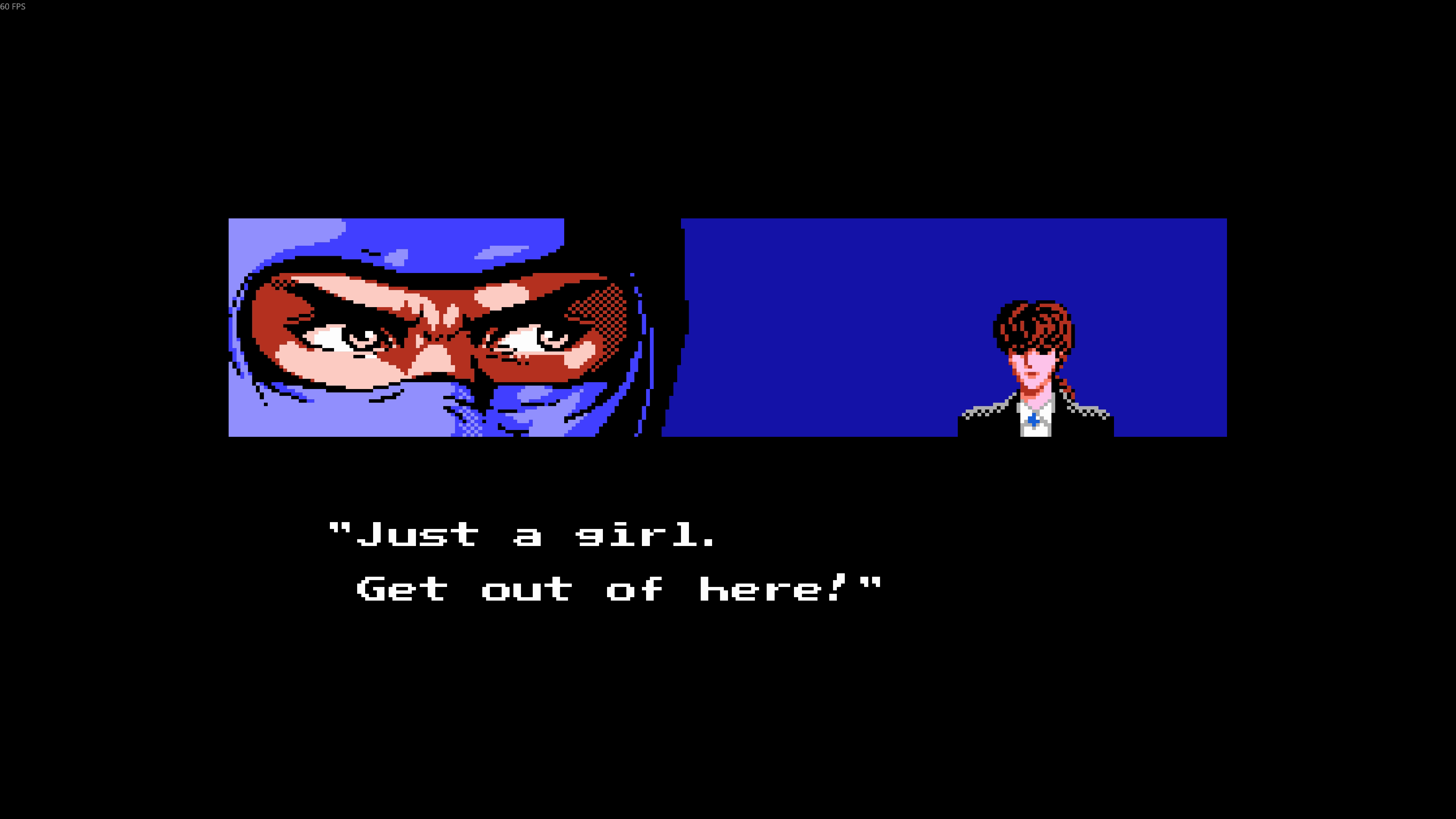
Before Ninja Gaiden made the leap to third person character action, the series was already legendary. The NES Ninja Gaiden trilogy remain some of the most memorable and well-regarded games of the console's life, with a level of storytelling and stiff but relatively fair challenge that was rare in the 8-bit world. The characters, the music, and the brisk gameplay help them hold up in spite of some frustrations, and they're indisputable classics of the era. It's a shame, then, that since Y2K there really hadn't been an attempt to recapture some of that 80's energy, the way Mega Man 9 and 10 did, for example. At least, not until now.
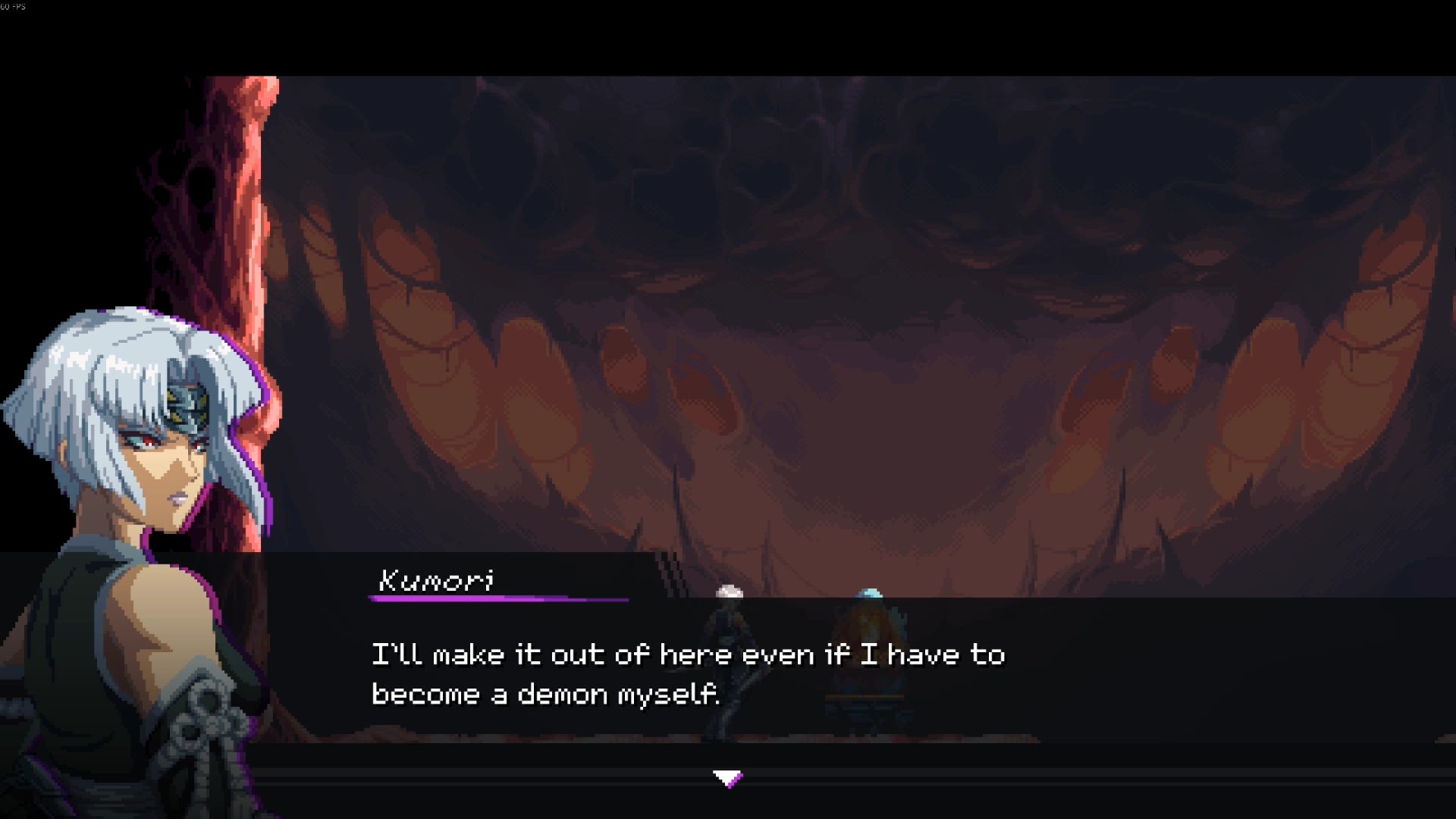
Ragebound is a sidescrolling platformer spinoff of the original Ninja Gaiden trilogy, contracted out to The Game Kitchen, a Spanish developer best known for the Blasphemous games. You play as Kenji, a young Hayabusa Clan ninja, cleaning up the mess Ryu leaves as he heads to America. Along the way, he teams up with/gets possessed by a member of the rival Black Spider clan, Kumori. Together they just slay the shit out of everything moving between them and whichever magical MacGuffins the demons are all hot about this week. Typical ninja stuff.
The very first thing to say about Ragebound is that it is drop-dead gorgeous. The Blasphemous games were certainly stylish, and featured grotesquely detailed sprites and animations, but in a way that felt very stiff and canned. Ragebound is a very different game, with a very different art style, but the same amount of effort [or more] has been put into every single visual detail of it, and it's paid off. The backgrounds are detailed without being distracting, the enemies and attacks are vivid and distinct, and the player character looks great without feeling locked into an animation. Enemies lose limbs, explode in geysers of blood, and split apart before vaporizing in a sizzle of demonic energy. There are tons of tiny details I didn't even fully pick up on until I started editing clips, like the way enemies splatter blood onto background objects dynamically. It's remarkable how gory it actually is without feeling edgy or overdone. What's even more impressive is how readable the game stays even when the action becomes truly hectic.
The gameplay generally cleaves pretty close to the original trilogy, at least at its core. You run and jump along, swinging a sword so fast it's just an oblong blur that explodes most demons [and humans] unfortunate enough to be anywhere within several feet in front of you. Like the original games, you can climb walls, but unlike the originals, it's true of any surface that isn't very obviously coded as hurty, and ceilings too, making it feel a little more like Strider. You also get some new moves, including a roll that lets you swiftly dodge through enemies and attacks, and more importantly, the guillotine boost, which is a kick you can do while airborne to bounce off of enemies, projectiles, and scenery. You can use it to avoid damage, pogo across a gap, or just kill something very slowly and painfully.
One of the new mechanics the game revolves around is Hypercharge. Killing certain enemies gives you a temporary aura, and your next attack becomes massively empowered, extending your attack hitbox, guaranteeing an instakill no matter what enemy it hits, chunking boss hit bars, and usually even stunning them. Every enemy dies in a single sword slash or kunai EXCEPT a few, but nearly every time those heavier opponents do show up, a popcorn enemy carrying a Hypercharge isn't far behind. Explaining it like this might undersell how well it works at maintaining a constant forward momentum. Not only are you moving and attacking in a rhythm to cut down the flak hurled your way, you also are constantly identifying and adjusting yourself to catch a Hypercharge so you can blast through the next roadblock enemy. There are alternatives - say you missed your opportunity, don't want to wait for a generous donation, or blew your Hyper on something else. Every enemy you're intended to split apart in a burst of Dragon Sword energy can also be defeated normally, albeit with a bit more positioning and time. Or you can just stand still for a second and sacrifice a bit of health to charge a free Hypercharge manually - this technique is also key to mopping up bosses quickly in a satisfying balance of risk and reward.
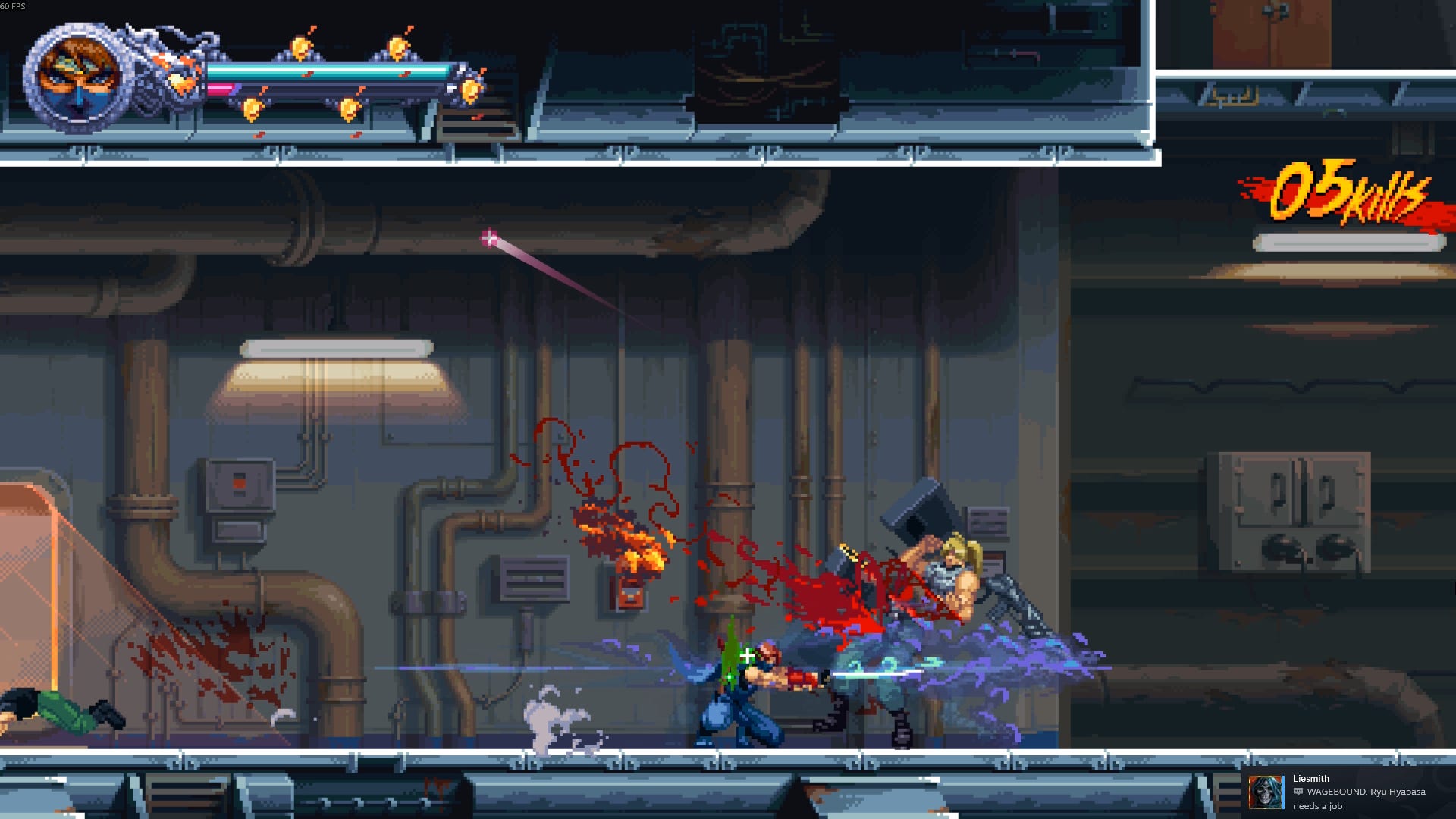
The two tricks the game plays with this mechanic are that Hypercharges can be chained, and there are two different auras that empowering enemies can have. Blue auras must be killed in melee, with your sword or guillotine kick, while red auras must be killed via sub-weapons. Often, the late game stages will have layered encounters, with otherwise sturdy enemies presenting in patterns that you glance at, read, and then pick apart with smooth precision. Other times, you'll be charging through a long path, bouncing off the monsters hurling themselves at you, catch a charge along the way, and hold onto it until you find some real resistance. There are also more powerful spells, which are charged up by getting chained Hypercharge kills, and can be swapped out between stages the same as the subweapons.
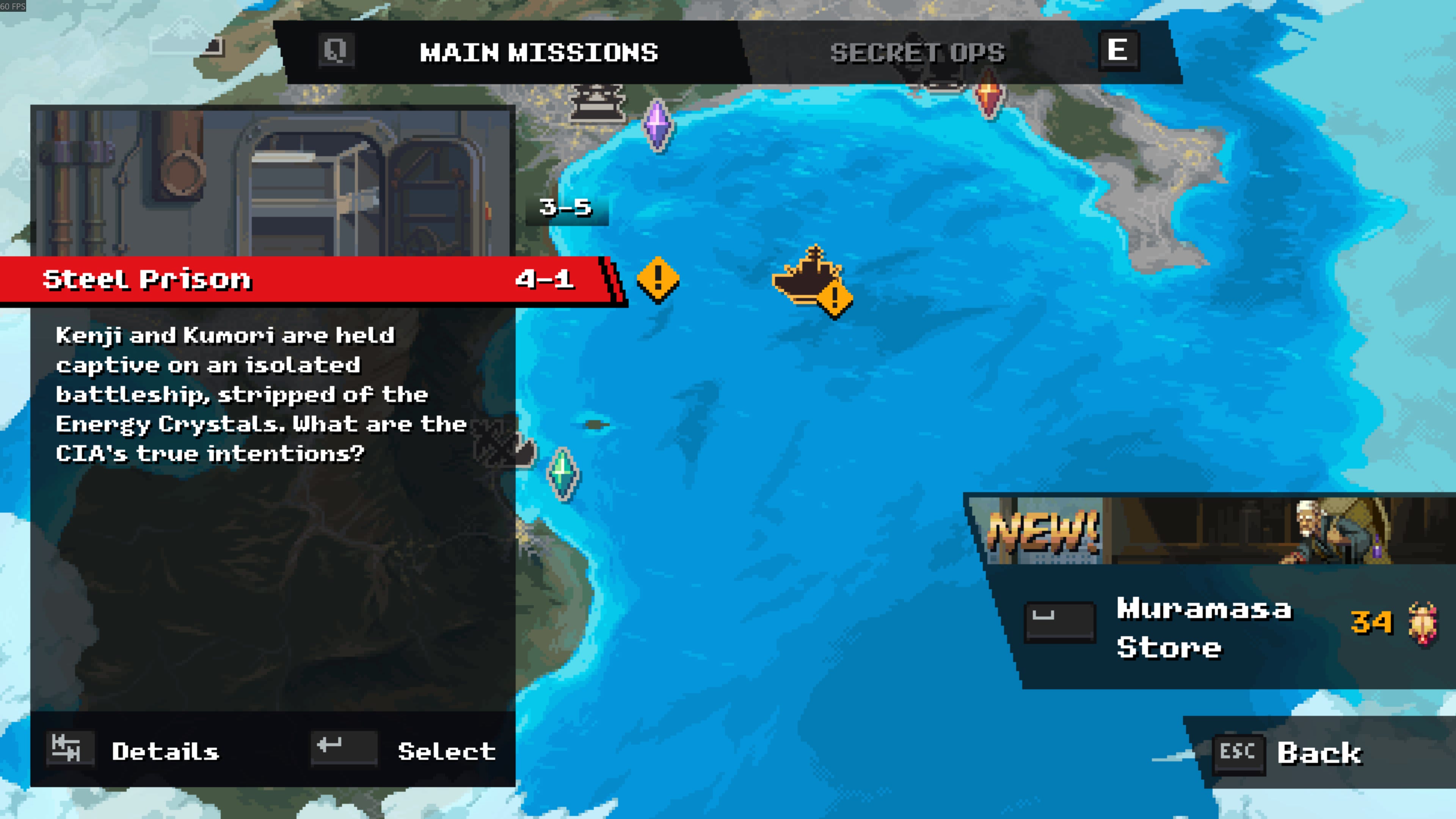
The game is spread across well over a dozen levels, each with their own set of collectables, optional challenges, and bonus areas, which contribute [along with your time and kills] to your earned rank. It takes some pretty intense focus, and maybe a bit of planning, to manage an S-rank, but you don't really have to bother if you don't want to. Some rank thresholds for each stage do unlock new subweapon options and equipable perks, which let you customize your playthrough a bit. If you really want to chase ranks, though, you can go even further than S - some of the perks are actually additional challenges, like losing mid-level checkpoints or removing all healing items. Each one you take [there are two perk slots] give you a bump in rank, letting you go for an S++ of each stage if you're a bit of a masochist. Finally, there are eight secret stages to unlock and play through with their own rewards. The stages all look great, have their own gimmicks, and even the auto-scroller sections don't feel obnoxious or overstay their welcome.
The music is another high point. Each track fits the area or scene extremely well, and are catchy without, again, being distracting. This is one of the few modern game soundtracks I'd legitimately listen to on its own, and the sheer number of songs is impressive. Even the tracks that aren't… shall we say, totally original feel like they've been adapted thoughtfully.
Now, if I had to complain about anything, I'd say the game is a bit too easy in general - enemies and obstacles don't do a whole lot of damage, there are plenty of checkpoints and health refills, even late into the game, and you thankfully have infinite lives. Once you get into the flow of the movement and combat, it might be ages before you die to anything but a bottomless pit, and it does start to feel a little soft on the touch. Luckily, you unlock a hard mode after beating the game on normal, and the difficulty [mostly] increases in the ways you want - rather than just giving enemies more health or damage, Hard increases the number of enemies, including recolored variants that move faster, are more aggressive, and even have more projectiles or altered behaviors. It ramps up the chaos an almost perfect amount for a second playthrough, and I think this is the first game like this since Gravity Circuit that I've immediately and happily done a harder replay as soon as the credits rolled.
It's not all perfect - the bosses DO get a massive bump in tankiness, which means bursting through their second phase is off the table, and you absolutely must learn their new patterns. Many boss arenas also have more damage zones and restrictions on where you can go - the first boss in particular is much more annoying, and it could put you off from doing the mode, which is a shame because the rest are not nearly as bad. They did all take me a lot of attempts, though.
Oh, I guess I can think of one other minor complaint. The different sub-weapons actually occupy a separate button from your default kunai, which are the main way you'll kill red-aura'd enemies for a Hypercharge. You can use the sub-weapons for that, but the sub-weapons themselves aren't empowered by a Hyper like the sword and kunai are [though that means you can use them without blowing a charge]. In the end, I wound up rarely using them, aside from the bomb, which is a good panic button for taking out certain enemies that don't die in a single hit. The same is mostly true of the perks - I spent most of the game with the ones that gives you health for combo and reducing the amount of self-damage manual Hypercharges cost. The rest didn't feel like they offered anything I felt better about, and to be honest I barely remember most of the options. I don't know what I would have preferred instead… actually, I do. Bring back the flame spell and doppelganger from Ninja Gaiden II. Those were sick. Maybe in the sequel.
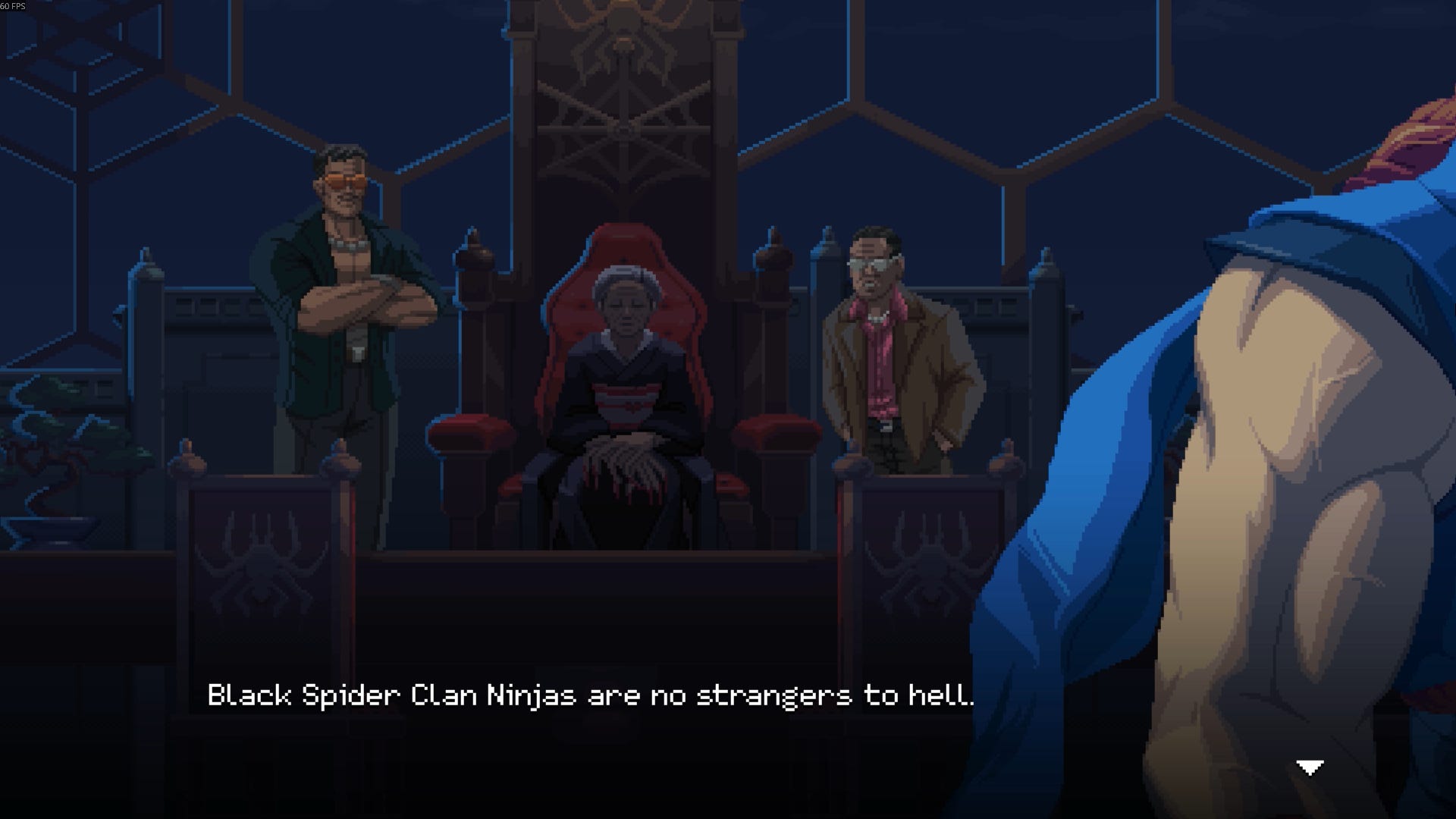
NINJA GAIDEN: Ragebound is an absolute must-play for anyone who likes action platformers. It's one of the best action games of the year, or maybe longer, and is just a wonderful spectacle on top of being a blast to play. The developers' love for the series really comes through, and I hope this isn't the last time the Game Kitchen get to do a Ninja Gaiden spinoff. I'm not of the temperament to go for S++ ranks on every stage, but I will definitely be playing through the game, probably even on hard mode, every time I get the itch in the future.