
Metroid Planets
A funny thing happened on the way to Mother Brain.

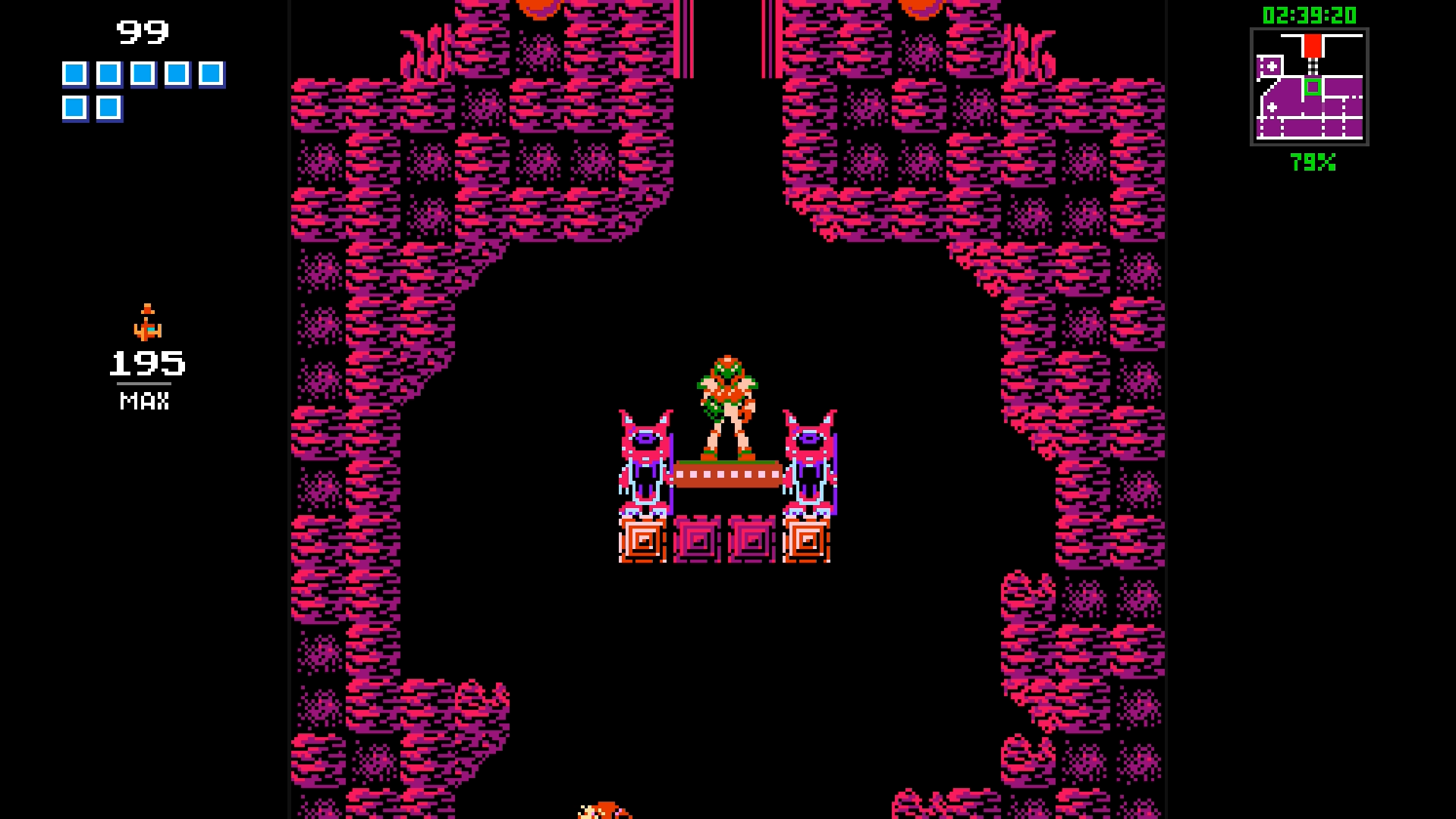
Metroid is one of the most important games of all time. It was the foundation of a vibrant and endlessly iterated genre, the bubbling organic soup that gave rise to what are now known as Metroidvanias. It's also just not a very good game, frankly. Among early Famicom/NES titles, it's passably playable, but compared to just about anything further along post-1983 gaming crash, it's rough.
Metroid Planets is a fan-developed game that essentially works like a source port for Metroid 1, keeping the design and movement intact, but updating the graphics, the physics, the menus, adding quality of life features, but most of all, fixing the performance. Playing the original game through Planets is a vast improvement - the controls feel smoother and more reliable, the movement is snappy and satisfying, the combat is less of a crapshoot, and the functioning map slightly relieves the mind numbing confusion of Metroid 1's interminable indistinguishable hallways and stairwells. You can enable missile swap tied to held shoulder buttons like the GBA games, which I love. Even the ability to carry and swap between beam types makes a huge difference, and respawning at full health/ammo means you don't have to spend 10 minutes farming after every death or restart.
But that's not the real reason to download Planets. Along with the faithful recreation of Zebes [1986] is Novus, a hand-crafted reimagining of the original game, but with actual thought put into the design and navigation. Novus is a genuinely impressive feat, a sort of alternate universe take on a Metroid: Zero Mission style reboot, with twists of its own. To say it's more fun than the base Metroid experience, even with all the fixes and extras, is an understatement. It also treats you to some new music… well, 'new' as in covers of tracks from better games, like Super Metroid and Metroid Prime. It genuinely looks pretty good too - you might be nostalgic for CRT blurring and flickers, but more distinct tilesets and readable sprites are great, especially since this version of the game is able to maintain a consistent framerate.
Finally, and maybe most importantly, Planets includes an extremely robust and customizable randomizer. This is how I first found Metroid Planets, via randomizer race videos. More than just an item shuffling, the randomizer builds out whole new game maps by stringing rooms along, and is even able to create coherent secret paths, treasure caches, themed areas, and diverse progression. The rooms are all custom built and shared by users, and you can weight the seed generation with tags, authors, and theme when you make a new planet. There are a ton of options in general, and you can even opt to start a run with random or particular items already equipped, enable new features like the ability to return to your ship to reveal the location of your next necessary progression item, and more.
Getting through a randomized run, at least at the default difficulty, doesn't require you to have any 'advanced' techniques like infinite bomb jumps at your disposal, though you can still use those to take shortcuts and peek at areas you're not supposed to be in yet - who knows, you might even find a major item early. But you probably do need to have some familiarity with the concept of game randomizers to make steady progress. By that, I mean you need to understand the way an algorithm will place obstacles to produce a 'logical' sequence, and be able to remember which loose ends you've visited and intuit which new equipment will let you continue. You also need to have a good instinct for how Metroid games in particular hide secret paths. Otherwise, you're basically guaranteed to get stuck bouncing around for hours at some point, unsure of where to go. Even I ran into this in one seed, spending the better part of an hour combing through dozens of rooms I'd searched thoroughly already, trying to find my bombs, all because I'd misinterpreted a room as requiring them when it didn't.
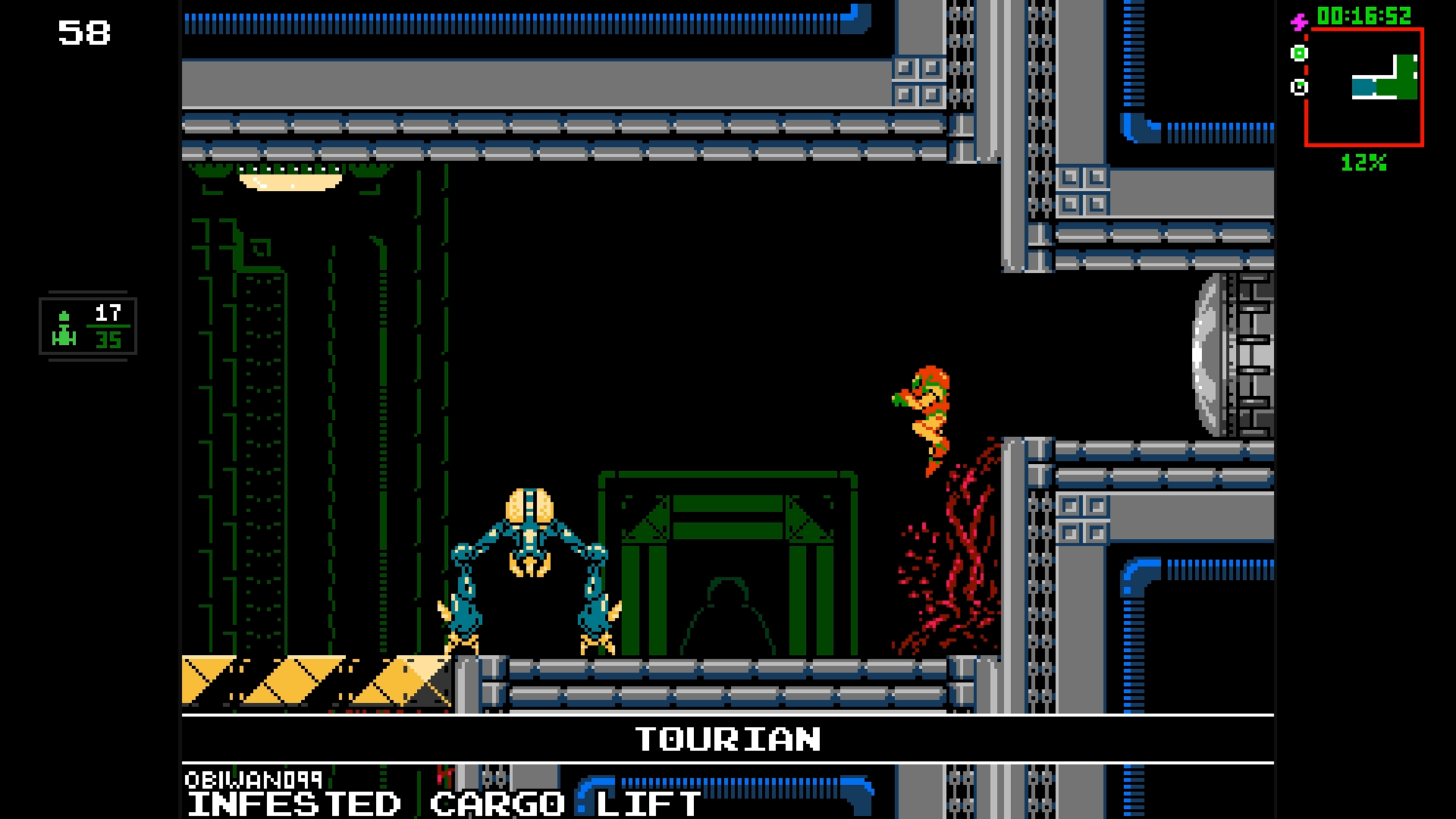
But if you do have that minimum level of competence, it's a blast. I downloaded a massive, curated pack of rooms [called Infinite Mission] that advertised quality control and style specifically reminiscent of Super Metroid and Zero Mission, and everything I saw through four runs fit the bill. It's impressive how many ways the developer and room designers have come up with to devise gating mechanisms for certain equipment, letting you make Spazer Beam [one of the few added items] or High Jump separate requirements from Wave Beam or Space Jump, for example. The randomizer even has new equipment, called Cores, which function as toggleable perks, much in the vein of Hollow Knight's badges. You can only use one or two at a time, but with new effects like negating damage knockback, slowing enemies and projectiles in a radius, or revealing destructible blocks, they can add just a little bit more personal preference or edge to a run. Another neat addition are map scanners, which reveal a small radius of the map, and recharge every 15 minutes.
Once you beat any of the modes, you're treated to a thorough breakdown of how long you spent in each area, how much damage you took, and dozens of other stats. Then, you get to watch a replay of your run from the map overview, complete with a tracker for each item and even timestamped notes for deaths and reloads to warp back to the elevator. You also earn some meta-currency based on your performance, though the only thing you can spend it on so far are randomizer modes for the original Zebes map. As if you'd ever want to play through THAT crap again.
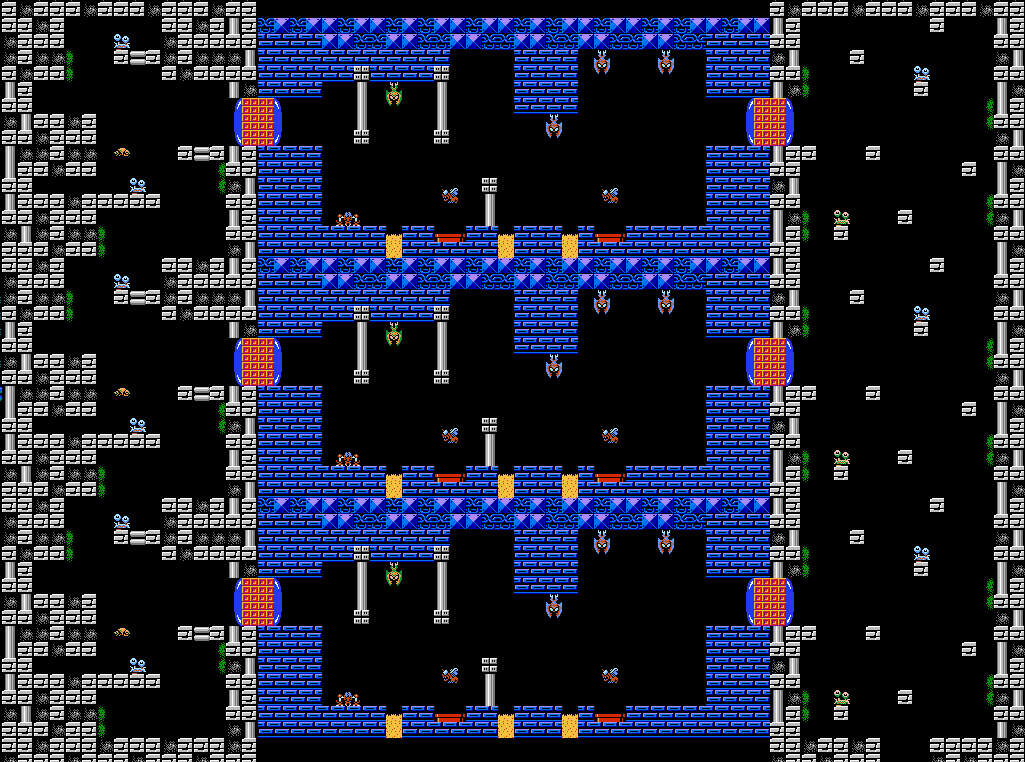
Not everything's perfect, though. Novus is a mixed bag in a few ways. The Ridley zone in particular is a frustrating maze of secrets - and then you'll realize there's actually a deeper layer of secrets in it and Kraid's lair you're forced to find. The payoff does wind up being worth it in both cases, though. The bigger problem is that you have to download an old and outdated version of Planets to play it - the current build has the mode disabled, and there's no word from the developer about when it might be re-incorporated into an up-to-date version. Thankfully, everywhere you can download Planets notes this and provides a link to the last Novus-supported version, but having to download two different iterations of a fan game to play all the content is probably stretching what most people will put up with.
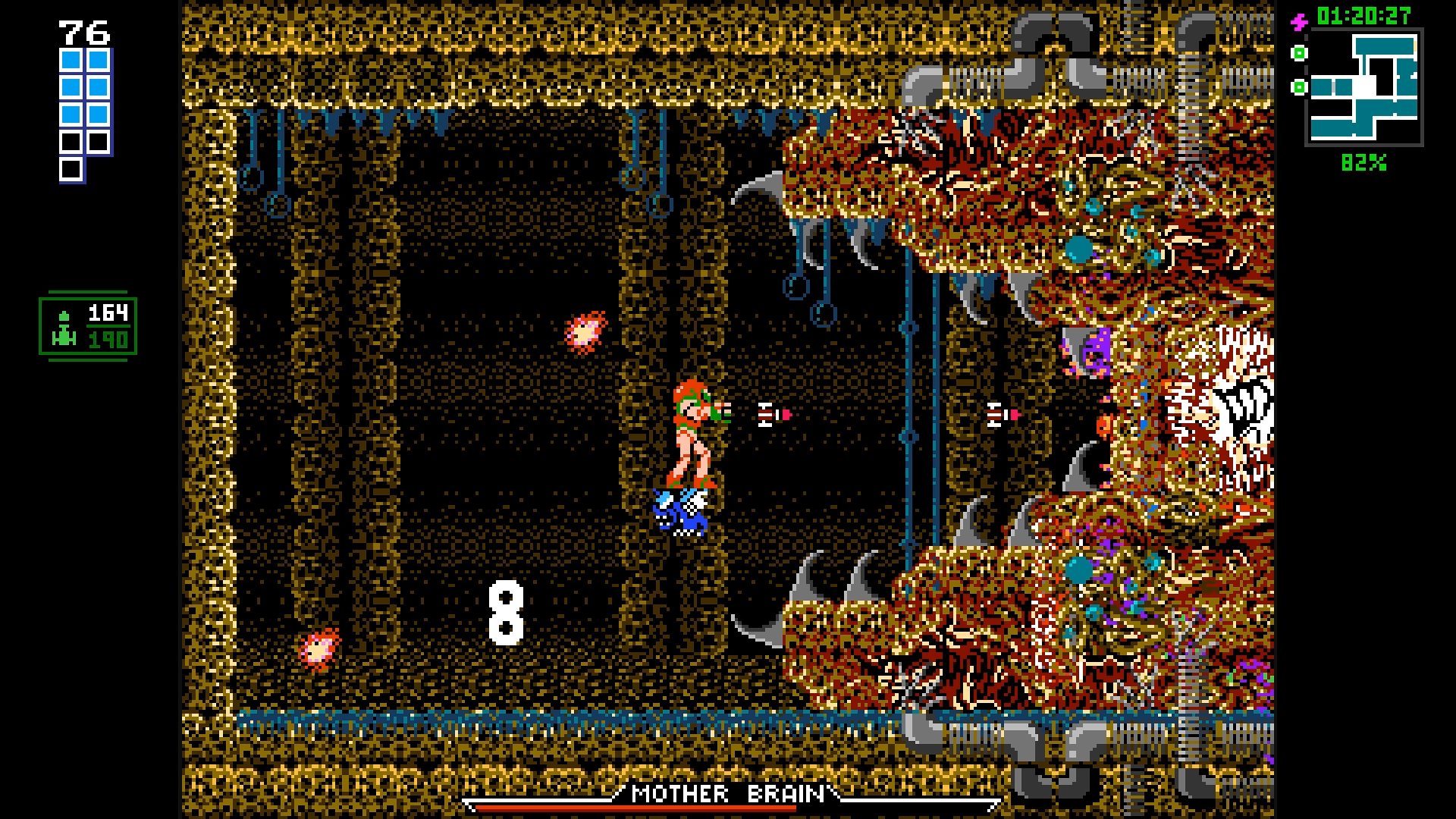
The randomizer does a pretty good job of making the progression make sense, as long as you properly identify which rooms are genuinely gated by which items, but that still means it can force you into really tedious back-and-forth reversals across the entire map. There were times I really wished there was an option to save and quit to the ship you start from rather than the most recently visited elevator. The map scanners are interesting and can definitely play a role in determining routing for a race, but when you're by yourself, they feel a bit limited and 'wasting' one to see nothing but a single item dead end is demoralizing. And a handful of rooms, even in the relatively well-designed Infinite Mission pack, are pretty obnoxious. There was one Mother Brain fight that was enhanced with spawners and elaboration to turn it into something akin to the Doom II Icon of Sin, which really impressed me… and then the next run, it was the most depraved shit I could have imagined.
Look at this. Only thing they could've done to make this worse is put spikes on the top of the jar.
But in the end, I still think Metroid Planets is worth a download and a play, even if I wouldn't necessarily recommend giving your time to the original map. Novus is worth the price of admission [a few minutes of searching and downloading] on its own. Meanwhile, a randomized run on default settings usually runs a little over an hour, and it's about as good of a wind-down as a playthrough of Metroid II is for me, with the welcome addition of some novelty and problem-solving. Look it up and give it a shot. Quick, before Nintendo cease-and-desists it and has a hit squad murder the dev!