
Constance
My milkshake brings all the boys to the yard and they’re like: is it supposed to be this hard?

Hollow Knight was a turning point for Metroidvanias – no longer a niche subgenre for psychos and nerds, but one of the beloved core genres, ranking alongside roguelike and Souls-like, a term stripped of all meaning and reduced to a description page buzzword. For many generations, gamers awaited the promised second coming of Team Cherry. The decades rolled by, with imitators scrambling to emulate one quality or another, which they thought could peel some of Hollow Knight’s prestige off and give them sales – thick-line sprites, mostly monochrome environments, characters making mumbly mouth sounds in lieu of voice acting. Suddenly, with almost no warning, Silksong emerged from its cocoon, its praises sung by millions of middling gamers desperate for another ‘hard’ game to say they beat, its place among the year’s awards contenders etched in stone before anyone had even booted it up.
And then a few months later Constance came out.
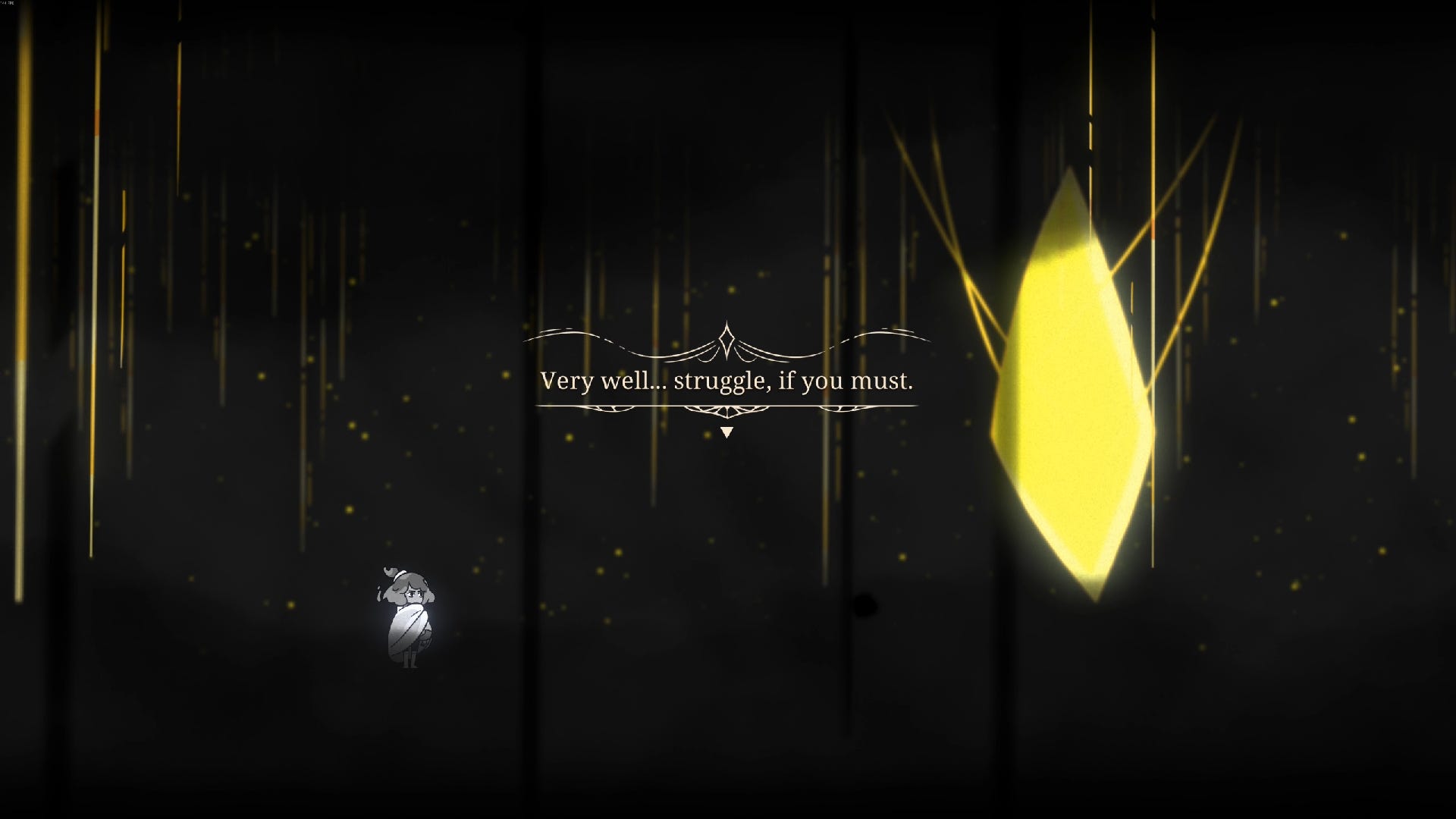
I have to say it up front: Constance is a Metroidvania very, very much in the vein of Hollow Knight. It’s got similar movement, similar combat, similar build customization, and NPCs going ‘hmm, mah wah doo dah~’ when their text boxes pop up. It’s got plenty of character of its own, it makes some changes, mostly for the better, to the now well-worn HK formula, and it’s always a little reductive and intellectually lazy to go ‘well, this game, it’s like this more popular game I assume you’ve played or know about.’ Well, tough shit. There’s no getting around it – Constance wears its inspiration on its sleeve, and the specific inspiration that drove a lot of the design is very clearly Hollow Knight, so the specter of Silksong looms over its very existence.
You play as an artist who has fallen into a fugue, [maybe because she released a Hollow Knight-inspired game two months after Silksong] which takes the form of a painted world full of whimsical robots for some reason. On arrival, she’s menaced by some omniscient force, then gifted a giant paintbrush to defend herself with. The paintbrush gives you a basic attack combo, but notably does not allow you to aim downwards or pogo off enemies as in HK – those abilities are separate upgrades unlocked later.
The upgrades themselves are one of my favorite parts of the game. Each one fills a role both in combat and in puzzles, and they’ve got just enough nuance and distinction from the norm to make them feel fresh while still intuitive. The paint stab lets you attack upwards and downwards, gives you a bit more range over the basic combo, and lets you hit switches and temporarily clear electrified black goo from passages and enemies. Your grappling ability can also target most enemies, allowing you to yank yourself right through them while simultaneously doing damage. Instead of a typical wall climb, your dash gets enhanced to turn you into a flowing puddle of paint that slides a bit up the wall before running back down, letting you ascend or descend while immune to hazards before popping out wherever you want.
Everything is impressively detailed and gorgeously animated, from your attacks to the backgrounds and enemy sprites. Your dash and stab slosh purple paint onto the environment, you splash into walls and along the floor with your dash, and enemies drop their loot in little floating orbs that you have to shatter to collect. I still don’t really get why there’s so many boxy cartoon robots, but I did like their designs. My favorite is a flying robot with two arms that tries to line up and punch you and does a little fists-up boxer pose before throwing a straight in your direction. Super cute.
The various movement and combat skills also feel really good to use – at no point was I bristling with frustration about hit boxes or timings that felt ‘off,’ and even when things got tough, it was extremely clear to me that I had screwed up, not the developer. The game starts out pretty slow and simple, but your new abilities steadily ramp up the pace, and by the end you’re flying through the air, yanking yourself through enemies to pummel them in the back, and backtracking is generally smooth and quick. You never upgrade the damage done by each attack,1 and so enemy balance never gets as complicated or annoying as in Silksong – instead, you just become more nimble, get more options for how to approach, avoid, and attack enemies, and so can dispatch them or move on much more quickly without needing a ‘weapon’ upgrade of any kind. One of my favorite late-game moves has you painting a clone of Constance that can be remotely detonated to do three hits worth of damage, plenty to feel worth the extra time and a satisfying payoff for successfully setting up a trap.
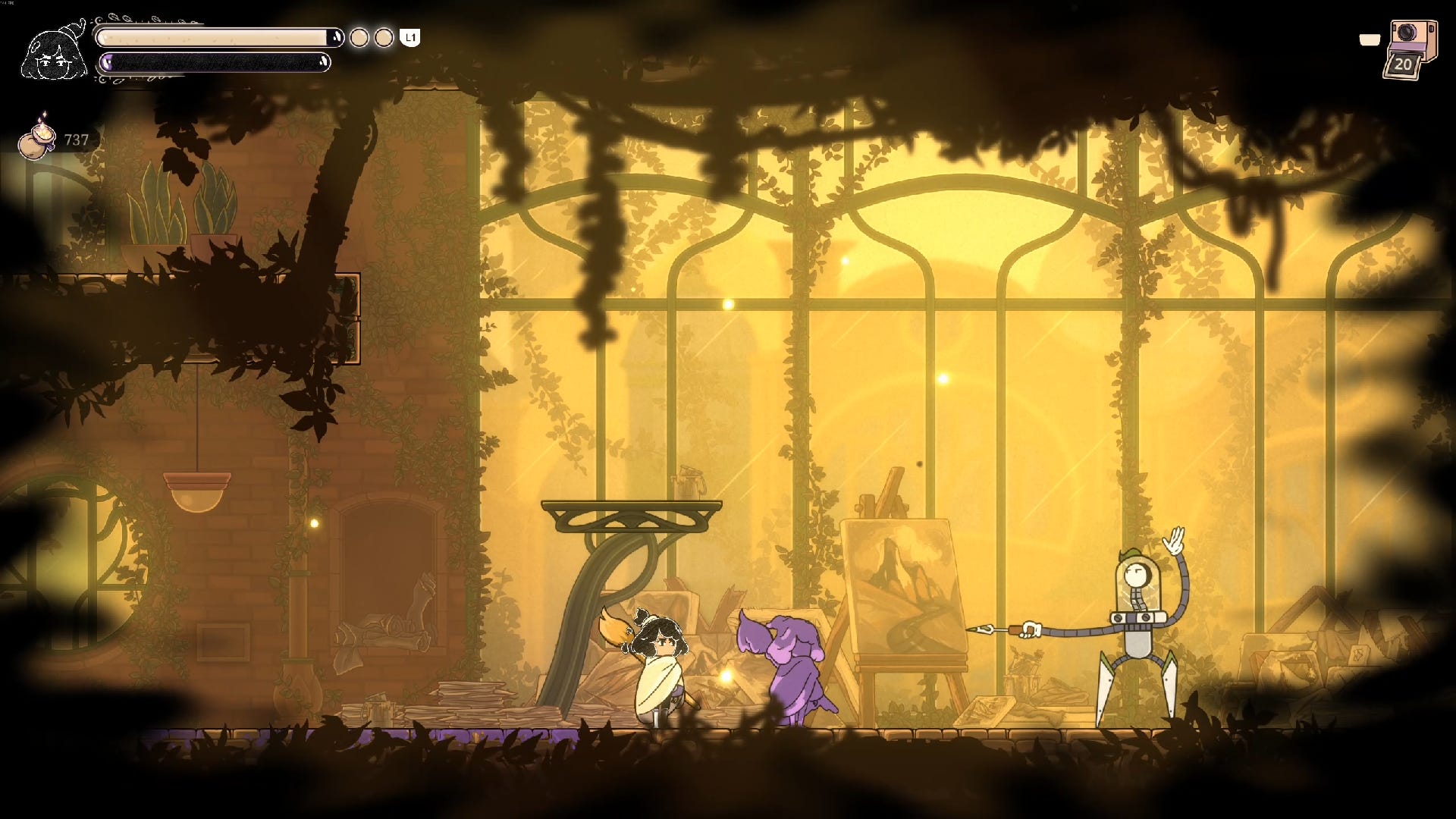
Most of your additional moves are limited by costing some amount of Paint, a constantly regenerating mana bar that can be permanently expanded with collectables alongside your standard heart containers. If you burn through all your Paint, you enter a temporary drained state until the full bar can recharge, a bit like running out of Ink in Okami. You can still use all your moves even while drained, but their power is drawn out of your health instead. This system hit the perfect sweet spot for me – you’re free to use your entire kit pretty liberally, but can’t exclusively spam one ‘best’ move, and you can take a little bit of damage to dodge something scary, finish a long platforming section that’s gone sideways, or squeeze in that one last hit when you need to.
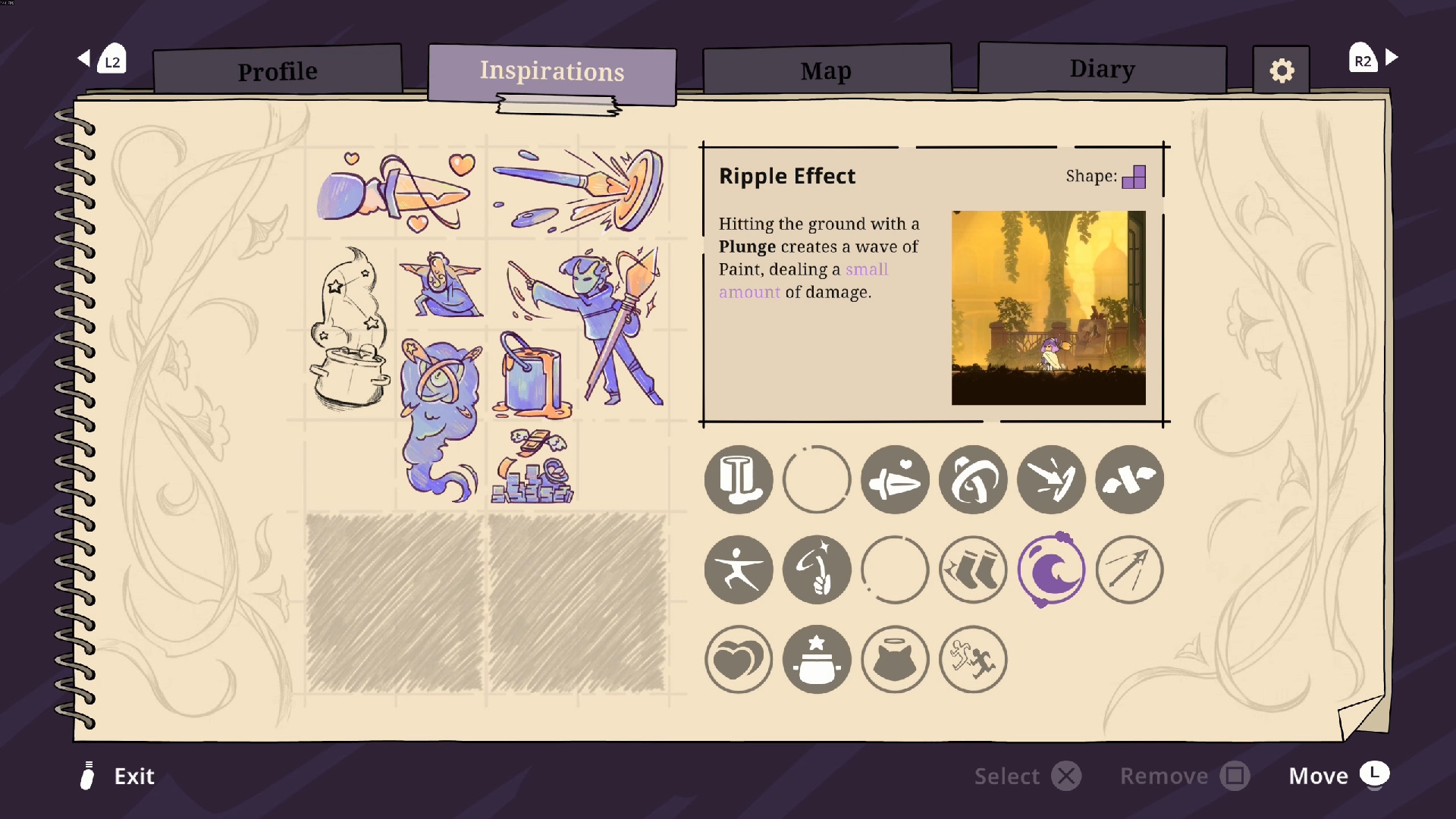
Throughout the game, you can find Inspirations, distinct scenes that compel Constance to pull out her sketch pad and scribble down a doodle. The Inspirations take the place of the Badges from HK, letting you pick a couple bonuses to equip at a time. These have to be slotted into a Tetris inventory grid, and though none are particularly big or cumbersome, they do enough to limit your options while letting you fiddle around to fit new ones on, and it’s a lot more satisfying unlocking more grid space than just getting a couple extra badge points. Some Inspirations are straightforward buffs, but many let you augment a particular skill to give it new functionality – you can turn the Paint Stab into a ranged spear throw, or make your dash damage enemies instead of you while you’re drained, for example. Even the basic ones have a little bit extra worked into them, getting bonus effectiveness based on how many other Inspirations they’re positioned next to. Later on, you can spend a rare currency to upgrade the sketches into colored drawings, improving the ones you like using. The only thing missing is the ability to rotate or otherwise alter the ‘shape’ of a glyph.
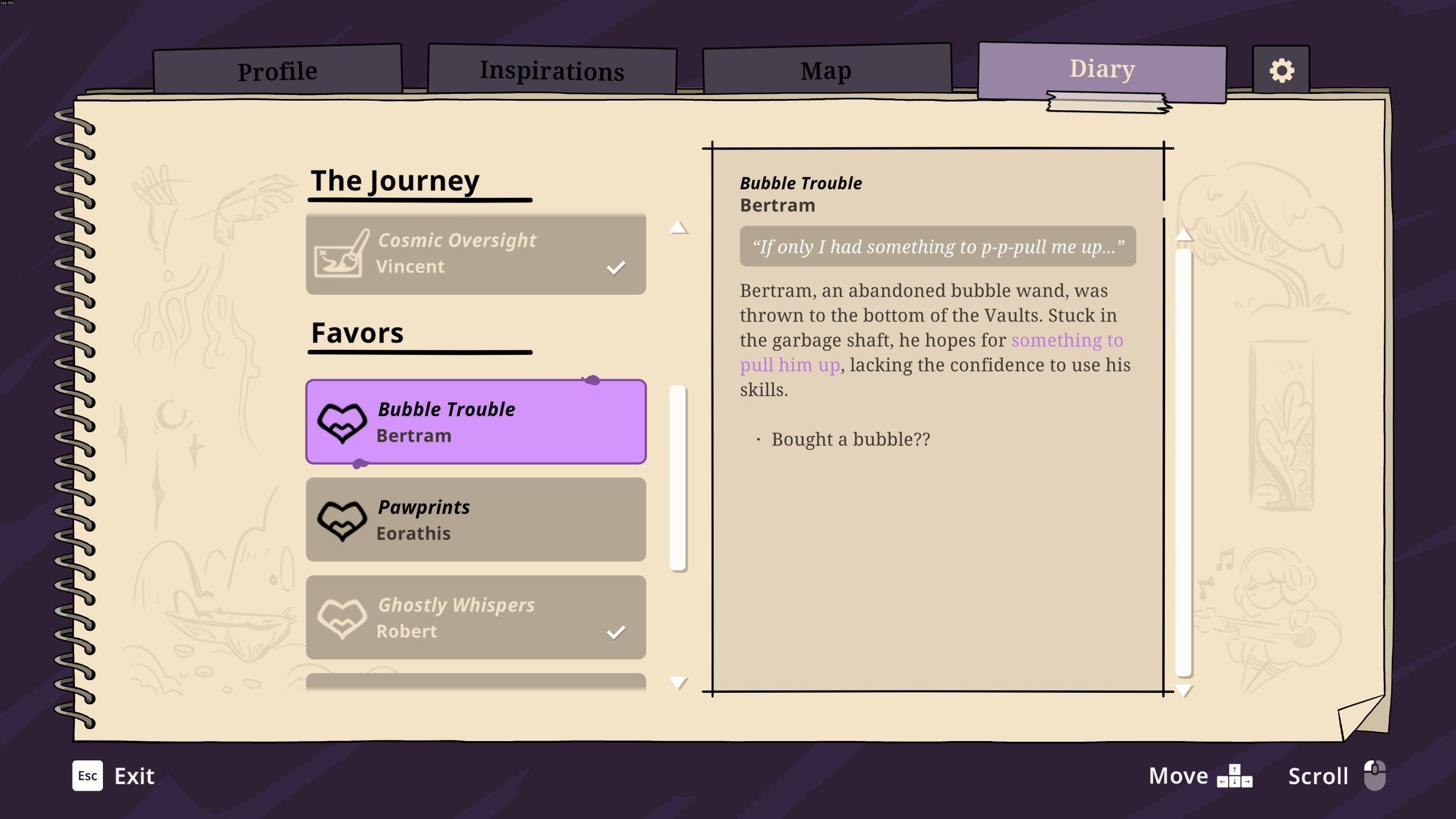
The game follows the standard format, with an introductory area leading to a hub, followed by a more open-ended selection of areas, each of which revolves around a new movement ability, and has some secrets and optional paths that can only be reached with a movement ability from one of the other regions. Each path ends in a boss fight, and you need to defeat all three of these major bosses before unlocking the endgame gauntlet. The whole thing is relatively short. There is one region per major boss, no additional or connective regions, and the fast-travel system with a total of six stops is thoroughly sufficient. It only took me around six hours to beat the game, and a couple more to round out 100% completion. But the short run-time means there’s not much slump or filler, and I found it fairly evenly engaging throughout.
Bosses are one of the highlights of the game, challenging without being total slogs, and sticking to recognizable patterns without feeling like an exercise in rote memorization. Most of them took me a couple attempts, and I really enjoyed learning how to fight them properly. In fact, I’m a little sad there’s no refight mechanic – I think a way to challenge these bosses again, maybe with a few new moves for some small reward, would be really cool.
Constance also leans a little bit into the platforming challenges of these sorts of Metroidvanias, but not all the way – I wouldn’t put any of it on the level of, say, Aeterna Noctis or even Prince of Persia: The Lost Crown, but it’s got some decent gauntlets, some tricky movement gimmicks, and some cleverly hidden secrets that are satisfying to sniff out and unveil. In the very endgame, you do get an Inspiration that unlocks a series of ‘Milkshake’ challenges, which push your skills with the platforming to the limit, usually forcing you to tackle one of the harder platforming gauntlets in reverse.
A lot of the endgame cleanup and mid-game exploration would be somewhat tedious if it weren’t for Constance’s very good map. The one thing I’ve always complained about with Hollow Knight is the fact that you have to buy each area’s map, meaning you have to find the merchant in each zone, then buy the pins to mark it up… oh, and you have to equip a badge to show your current location. It’s all a bunch of extra crap that doesn’t really add anything of substance to the experience, and it’s annoying as hell. Constance makes a very deliberate point of giving you the map for free, and it’s one of the best designed and most informative maps in the genre, without giving away too much right away.2 The rooms are scaled and shaped properly, every exit from every room you’ve visited is shown, with ones you haven’t taken yet indicated, and you can see the path you’ve recently taken, letting you intuit the location of likely secrets. You can even bring up a floating minimap on-demand without needing to pause or go into a menu, which is really nice.
Constance also takes one note from The Lost Crown that improves exploration a lot – the screenshot pin system, in this game justified as a camera you are given early on. Using the camera lets you save a screenshot of the current view, which is then put on your map, in the proper location, as a pin. At any time, you can pull up the map, then glance at any of those pins, even expanding them into full screen view, to remind yourself exactly what you were trying to note – a ledge out of reach, a cache behind a wall, a suspicious feature you know you will be able to interact with later but not how.3 The total number of pins you can have active at a time is one more collectable you can find or buy more of, though you can delete them to free them up, and it’s even used in a cute side quest later on. I love this feature, and I really hope it becomes more standard for Metroidvanias and even other genres moving forward.
At some point, you can buy an enhanced map, and that allows you to see which rooms you’ve fully cleared of secrets and collectables, and which you still need to find something in, which is extremely nice for doing end-of-game cleanup and makes a 100% clear possible without resorting to tedium or outright spoilers. Endgame has some surprising optional content for how short the game is, including unique bosses and abilities.
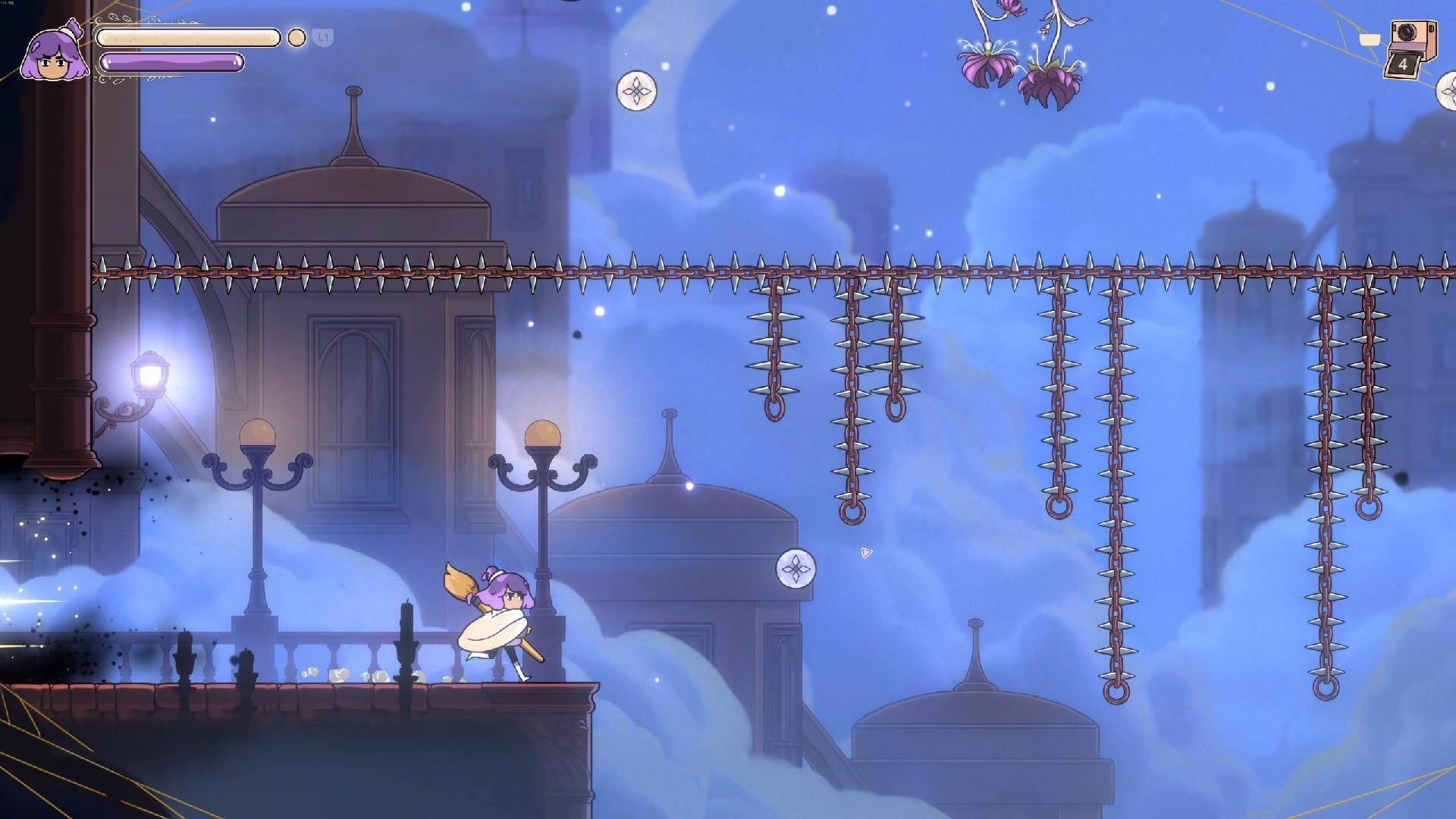
Though I wouldn’t exactly say Constance is a particularly difficult game, it’s definitely not trivial. One nice feature is that, on death, you have two options for continuing – you can return to your last used save point, losing progress, or reset just to the start of the current screen, but incur the Puppeteer’s Curse, giving all enemies extra health and an electrified aura that damages you if you dash through them, and remains active until you rest at a checkpoint. Honestly, I almost wish the game went a little bit further with the penalty, maybe adding extra enemy spawns or something, but that would probably be a lot of work.
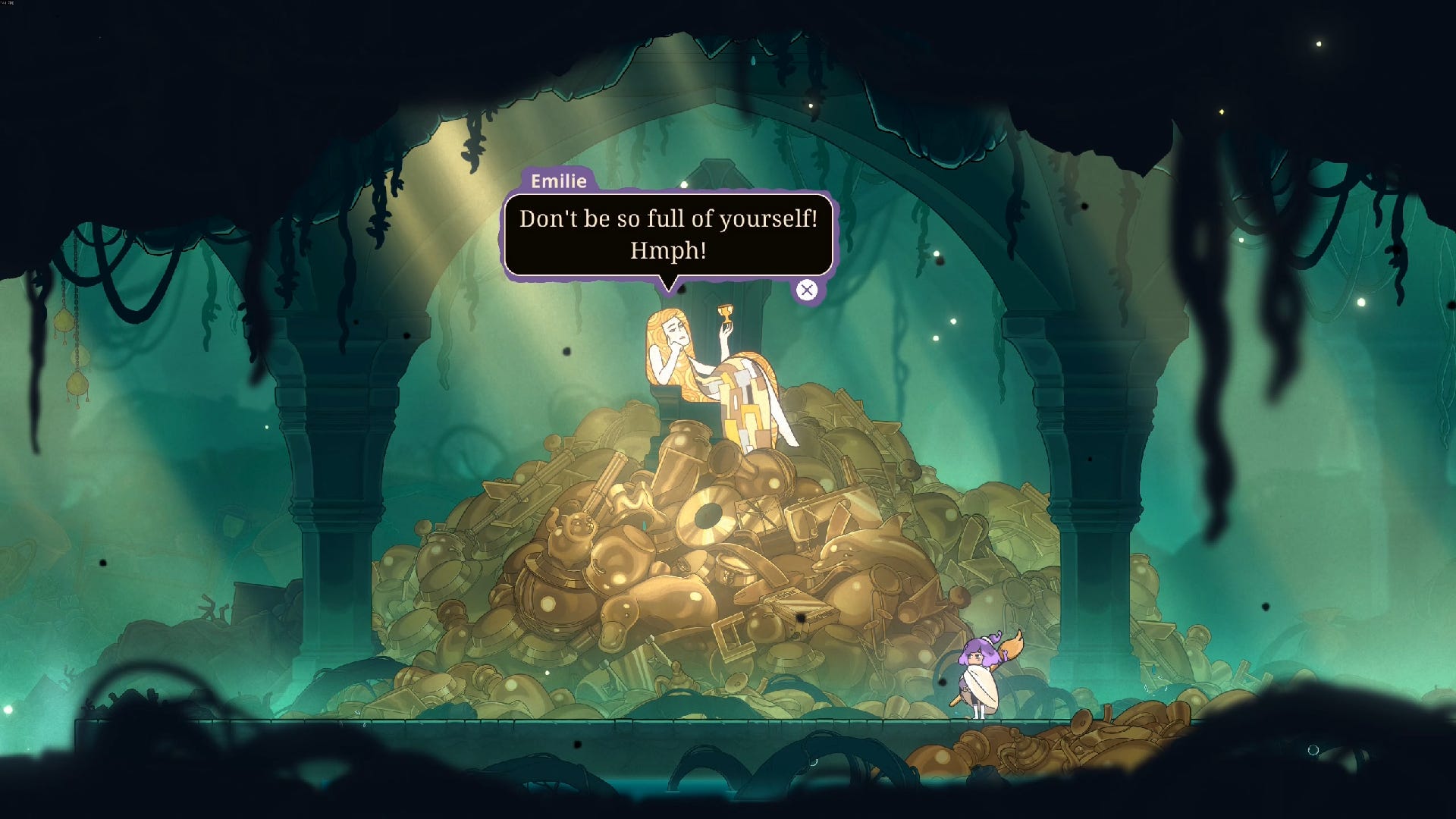
There are a couple difficulty options to ramp things up on a replay, though neither are super exciting. There’s of course a permadeath toggle, so you can challenge the whole game in one life, and the slightly more interesting Cursed mode, which, as you might guess, permanently enables the death-penalty curse. You can pick either or both options on starting a new file, but they didn’t really sound like enough of a change to make me want to bother.
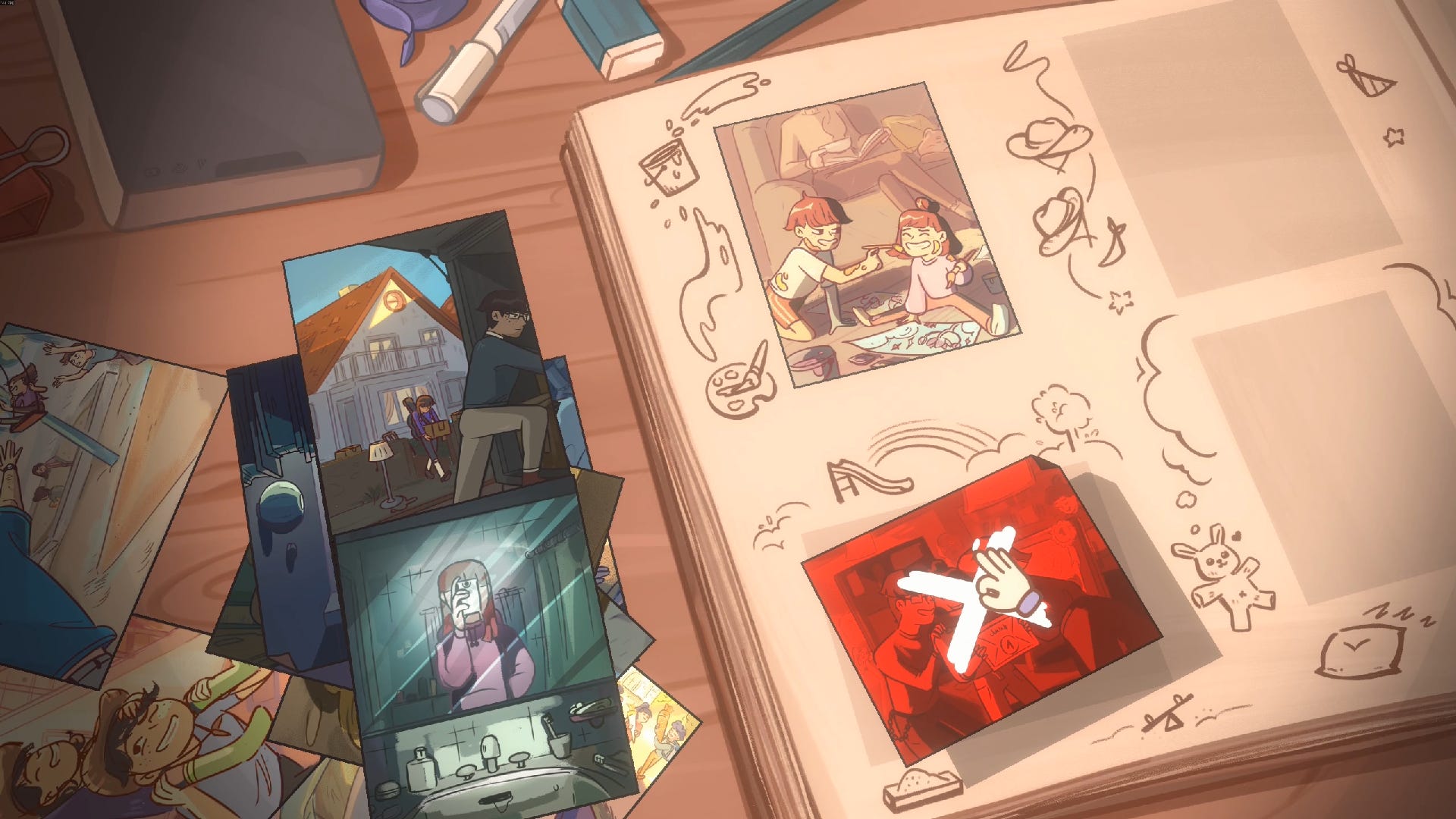
The one thing I think Constance does slightly drag on with are the story beats. The story itself is fine – mental health and overwork and anxiety and all that, yeah, okay. The frustrating thing is that on defeat each major boss makes you go through a real-world minigame of some sort, like putting Polaroids back in a photo album or jumping back and forth answering frantic emails from clients, revealing some of the problems Constance herself is grappling with. I get it. But they’re not fun, they go on a bit too long, and they’re annoying without any payoff. I know what it’s like to get a work email, start on something you don’t want to do, and then get a followup email asking you to start all over. But I don’t want to simulate that in a videogame. Or rather, it would be one thing if Constance were advertised as a game about doing minigames while following the story of a young artist developing burnout, but this is a Metroidvania, and the Metroidvania part is really good, so I’d rather not get a mandatory break from the good bit, especially if it’s fiddly and boring. Just make them cutscenes I can skip.
I really enjoyed playing through Constance, and I even enjoyed getting 100% completion – and I’m not sure I could say the same about Silksong, however good it is. It’s a solid game, short, sweet, and satisfying, with great art and audio design. So it’s a shame that Constance is probably destined to remain in Silksong’s shadow – I think if it had come out just a couple months earlier, it could have filled the gap in people’s calendars and maybe a few more people would decide they, too, preferred it to Hollow Knight. But on the other hand, maybe it’s a good thing, a return to the natural order, where the only people who know about most Metroidvanias that come out are sickos like me who just play every single remotely passable Metroidvania.
Constance can be purchased on Steam, Xbox, Playstation 5, and Nintendo Switch.
Technically, one of the Inspirations gives your basic hits a chance to crit for double damage but that doesn’t really count. Or maybe it does but I don’t need to do integrations to figure out the effect it has on my DPS
I should probably note that a lot of the extra map features and some other quality of life changes were added with the 1.1 patch that came out before I started playing Constance, so reviews from before that might not feel as positively about it
I complained about this specific thing when I wrote up Toziuha Night, for example
Great write-up, Jim!
I was really impressed with Constance's demo but ended up passing on it on release for whatever reason. Really glad to hear it's a short and sweet experience, as we both agree the HK games are way too long for their own good.
Looking forward to playing it once I get the metroidvania itch.