

Sorry, no theme or even a joke about a theme today. I was tired so I just tried to pick a few things I was pretty sure I’d enjoy and kind of take it easy today.
over the hill
From the developers of art of rally, over the hill takes the same soft lighting, mid-detailed approach for the art of overlanding. You get a 4WD truck, an automatic winch, and a big map to explore, full of muddy ditches, rocky tracks, and plenty of trees and stumps, with very little guidance and no external pressures.
You do get a few things to do, though, which help keep it from just being a totally hollow sandbox. Scattered around the map are camp sites, which let you respawn and fast travel, merchants with new vehicles and equipment, random crates with cosmetics, and so on. You also get a camera, which you can use to take pictures of wildlife, filling up your Pokedex and earning a little bit of money to spend at vendors.
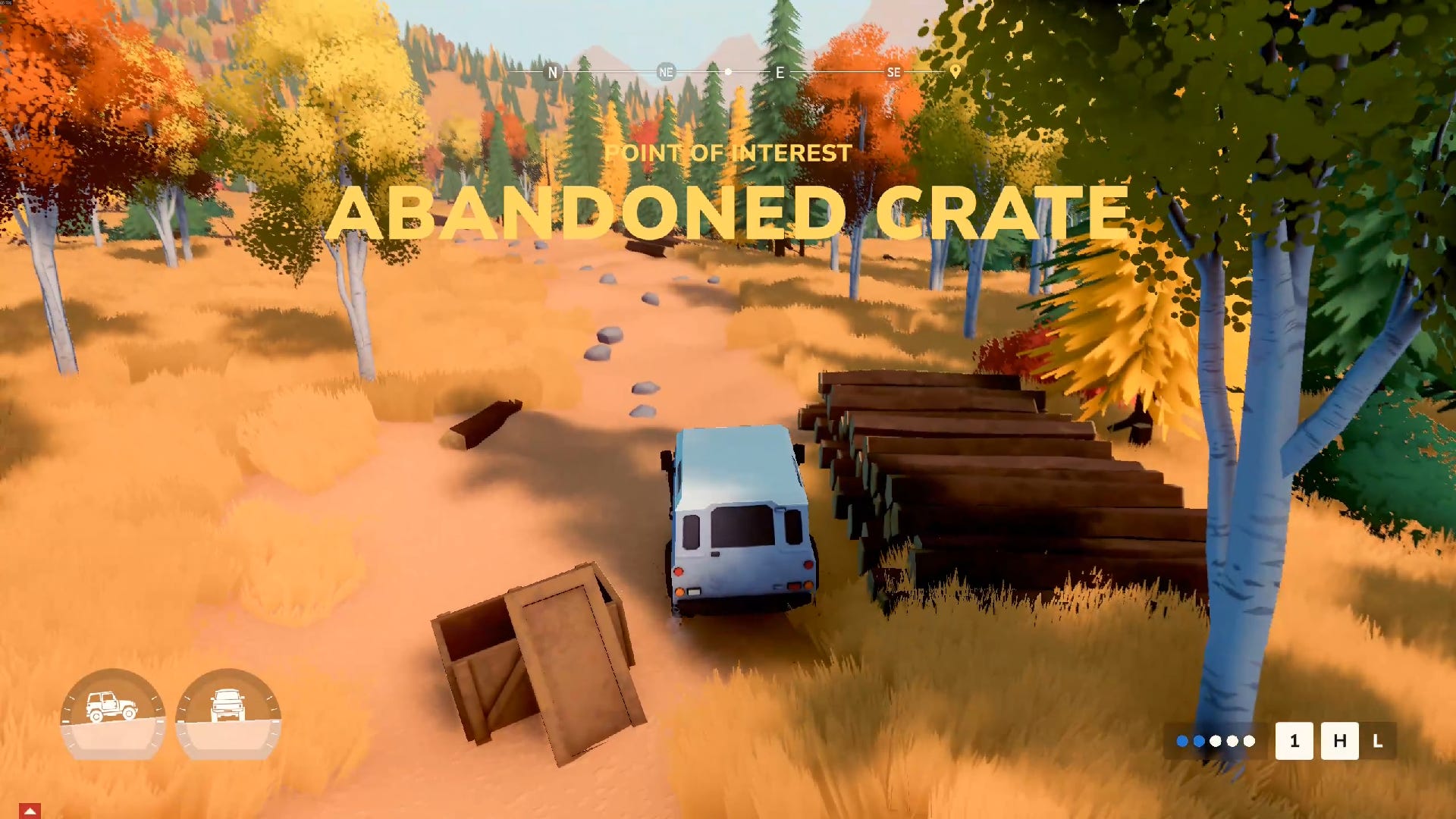
But there’s not really all that much going on. You don’t seem to have to manage fuel or have damage modeling more complex than a health bar, weather rolls in but you can apparently get an item that just clears the weather. The biggest problem is that the terrain is all kind of… blobby. As in, there’s patches of mud, and that slows you down a set amount, there’s bumpy roads, wet stone… but the real struggle of doing this in real life is all the little awkward rocks and loose piles of gravel and trying to find the spot in the mud where you have a bit more traction and not throwing it out, and while over the hill kind of approximates those sorts of things, it isn’t making a real attempt to emulate it properly. Or, I suppose, emulate it to my personal taste.
Speaking of personal taste, with a game like this I’d really love the option for a first-person camera, and not the one you take photos with, because that automatically puts the handbrake on. Even better if you had the ability to lean out the window and look down as you crawl along a ledge or try to get around a boulder. Having to make do with a drones-eye view to get around some trees is very different.
Nimaat
Egyptian horror RPG set in the reign of Akhenaten, a pharaoh who threw out the longstanding pantheon and devoted the whole kingdom to his own cult of the sun disk. You play as a woman who returns home from a shopping trip to find her husband torn in half and son snuffed out by an avatar of the new Universal God. She takes up her father’s khopesh, wraps their remains in linen, and sets out to kill the blasphemous ruler and save her son’s ba.
This is a really cool setting for a game like this, and the developer seems to have taken real pains to make it, if not realistic [it is a horror RPG full of monstrous entities] at least resonant of a real period of myth and history. I loved that the game doesn’t have a lot of handholding or explanation for period terms, and just lets you figure out what’s going on based on context or preexisting historical knowledge. I didn’t love how casually your lady slowly struts around, though I suppose this is supposed to be a horror game of sorts.
The game also has combat, which is turn-based with action commands, and it could be a strong point in the full game, but it definitely is not in the demo. There’s some potential here – you get to target individual limbs of enemies, and if you deplete a limb’s health, its severed and the enemy loses whatever attack or ability relied on it, a mechanic usually reserved for special bosses in RPGs. Unfortunately, that’s pretty much where the positives end, at least for what you get to play now. Severing limbs is supposed to also make it easier to land head shots, which are apparently the best way to kill most enemies, but I never actually landed a headshot, so it’s hard to say whether it would be easier or faster than just depleting their overall health. The parry system could be alright, but has two problems – the framerate the combat runs at means that it’s almost impossible to reliably land parries, [especially because the timings for some damage seem desynched from the animation] and nailing every parry in a combo string is required to reduce damage taken… by half.
That’s two strikes right there, and though you can argue endlessly about whether a parry system really should completely negate damage, I think the success of Clair Obscur proved that a game system doesn’t need to be totally and thoroughly balanced to be fun for the majority of people. More urgently, needing to perfectly parry entire fucking STRINGS of attacks to get ANY result feels like shit. So many 3-hit combos in this demo had me nailing the first two and then getting hit before the third ‘attack’ visually even landed and it just made me mad. It’s possible the full game does something interesting with this all, but you don’t get any combat skills, items, or equipment in the portion I played, just the basic attack. Oh, and the font is smushed and super hard to read. Should be an easy fix but you never know with these indie devs.
Sir, We Have an Orc Problem
An incremental tower defense game?? Let’s fuckin GOOOOO!
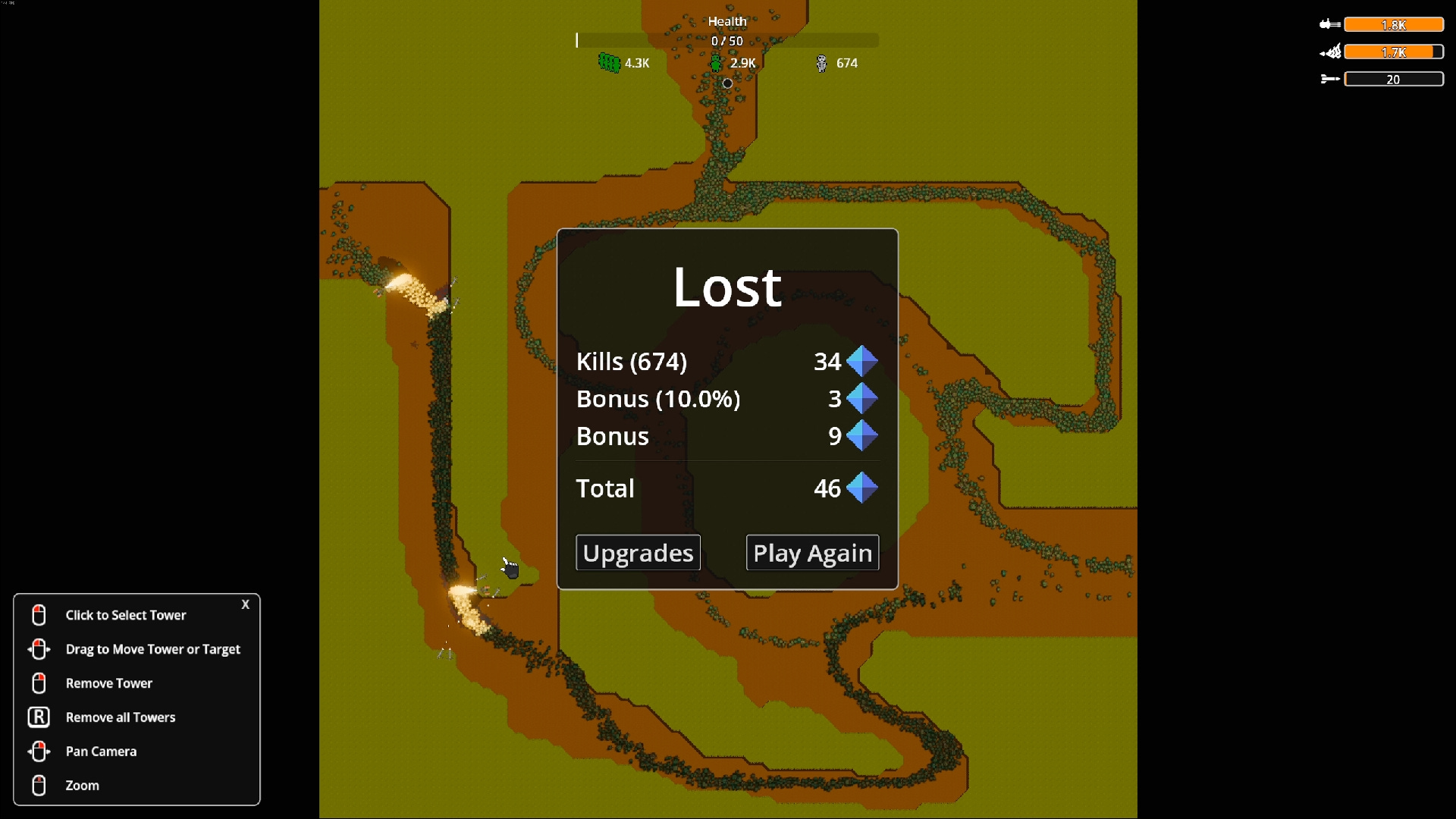
So, yes, this is tower defense, with upgrade costs in line with incremental games, and it’s actually blending the two things surprisingly well. You start with just one turret type, but can place it pretty freely and then even designate its exact firing arc, and you have the ability to click anywhere during a round to launch a slightly delayed missile at the target on a small cooldown, enough to pick off the occasional stray orc who’s slipped past your defenses or soften up groups but not enough to clear whole waves. You earn blue diamonds based on the number of orcs you manage to kill before losing, and can spend those in a skill tree to improve your turret’s various stats, give yourself more copies of basic turrets to work with, or add to your health pool and missile power.
There are two things I think the game does really well, unexpectedly so from a fairly straightforward mashup of two kind-of mindless genres. One is the secondary currencies – there are special nodes on the skill tree, mostly for unlocking whole new turret types and all the branches behind them, which require either orbs or cubes instead of the regular orc-death currency. You earn an orb the first time you survive a stage, and you earn a cube the first time you perfect-clear a stage, killing every single orc that spawns. That gives you these two distinct goals to hit, on each stage, beyond just grinding one swarm over and over to max out the more general skill tree perks.
The other one is the enemy movement, which is less like a traditional ‘lanes’ or pathfinding system, and a lot more free-form, almost fluid-like, as orcs bump into each other and flow around pileups, making your turret placement feel a lot less rigid and ‘solved’ and more dynamic and experimental. Even better, some weapons actually push orcs around, sloshing them out of paths you’re used to them taking, making their use actually a tradeoff in cases and not just raw DPS overlays you stack in the most-dense bottlenecks. This could end up being really interesting, especially if you’re a big tower-defense fan – I’m not, but I don’t think I’ve seen any that bring quite this combination of elements to the table.
The Transylvania Adventure of Simon Quest
From the developers of Prison City, this is a very slightly tongue-in-cheek knockoff of classic Castlevania games that is also attempting to be all the best of the first three [NES] games rolled together. You play as Simon Quest, a man who trained all his life to defeat Dracula, only to have some other dork with a whip beat him first, scattering his remains to stall his rebirth. Now Simon has to gather up Dracula’s relics and bring him back just to put him down again. Where have I heard this before?
There’s actually not a lot of jokeyness in the gameplay itself, which is good, because it’s pretty tight, pretty satisfying, and lightly modernized without going too far from classic controls and physics. You still don’t get air control after a jump, you still have a pretty stiff whip attack [though it can hit behind your head in the early frames] and you get knocked back by attacks, though not nearly as much as in a ‘real’ Castlevania game. But you can also jump up and land on stairs, the movement in general feels a little more fluid and precise than in the games it is inspired by, and there’s just a little more animation in everything that helps liven things up and convey more information about hitstagger and so on.
You have the option in the demo to play through the whole adventure portion before the first ‘mansion’ or skip straight to it, and for my first run I went right into the action. The game is divided up much like CV2, with a large, interconnected overworld full of towns and NPCs and paths full of enemies, and entrances to proper, linear dungeons, though the mansions in this are a lot more like a full CV1 or 3 stage, and even seem to have alternate paths and secrets of their own to find. My favorite thing, though, is that you get a little bit of bonus cash for catching the post-boss orb in a cool pose. All that practice is finally paying off.
I’ve been keeping an eye on this project for a while, and I’m really excited for it to finally come out – if there’s as much to explore as is teased by this demo, it’ll be the first real competition for a modern Classicvania since the second Curse of the Moon spinoff of Bloodstained.
The Goddess’s Will
Alright, well, the vibes are fucking immaculate. Look at this crazy inventory. Am I slotting skills into a shaped grid? Yo, hell yeah. Let’s go see how the combat is.
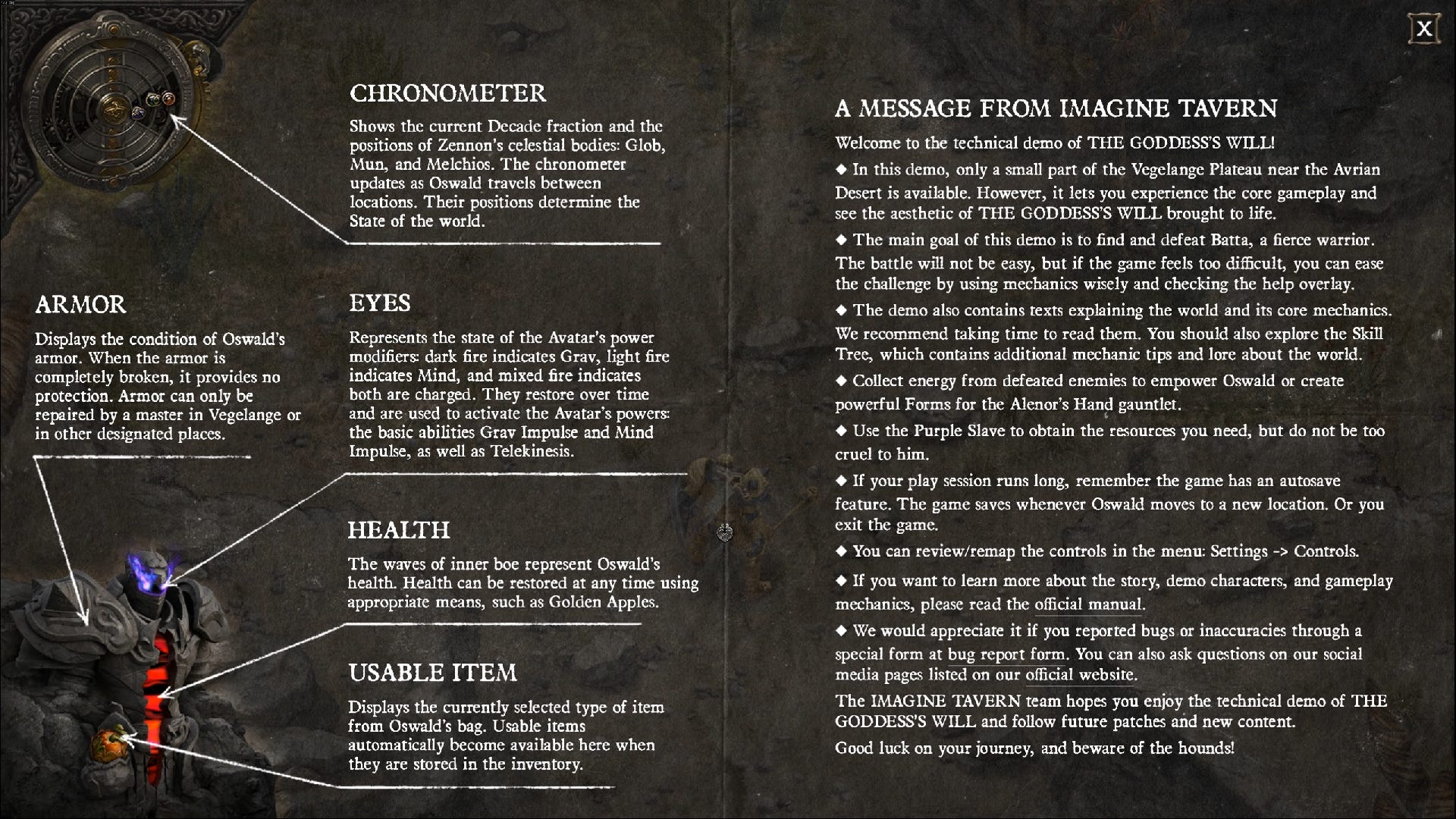
Well. Uh, that was something. Maybe there’s some trick to not getting perma-stunlocked by everything. Let me just open up the controls thing and find out what-
Oh God.
So this game has a lot going on, including a tracker for celestial alignments, and yet the combat is so slow, clunky, and unforgiving that I just could not so much as survive the first group encounter. Even when I very carefully baited out their… rabbits and killed them, and tried to isolate one enemy at a time, I always wound up getting pelted with arrows, staggered out of any attempt to attack or defend myself, struggling to even face the right way to hit enemies, and generally just really frustrated. It felt like I was playing something off a magazine demo disk, in all the good and bad ways. The help menu lets you open a really cool old-school manual in a PDF, which is great and all, but I’m not going through 18 pages when I’ve still got other demos in the chamber. I decided to take a peek at the forums to see if anyone had anything to say that would make me go, like, oh, okay, I get how to play this now, and instead I saw this.
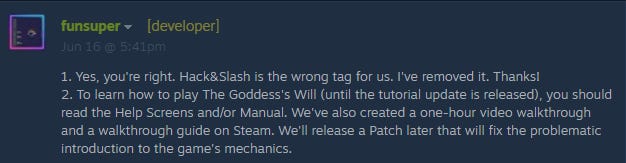
Cmon dude. An hour? An hour. I ain’t watching an hour-long video about how to play a fuckin demo. This is something that happens with niche indie devs sometimes [a good example would be Hired Stars, a demo I tried in the October 2025 Fest] where they’re just too close to it, too insulated from anyone that’s not themselves or a close friend playtesting something over and over, and so they don’t understand that even if your game eventually reveals itself to have genuine depth or interesting tactics, if everyone’s first impression is just sheer unplayable frustration, you can’t tell them ‘you should watch my hour-long walkthrough’ or ‘join the Discord.’ I hope this dev does give this a better introduction, flesh it out, add something more than a shrug and a respawn when the only extant combat encounter seems insurmountable, because I’d really like to play an RPG with these sorts of insane systems, but only if it’s not authentically late 90’s Euro PC jank, which this currently feels like.
Tales of Acilain
AHHHHH!
After ghost lady gives you the Tears of the Kingdom arm you then go through a short tutorial showcasing its abilities, which mostly consist of flipping switches and carrying boxes, before battling her in a boss fight that has a shockingly difficult final phase. And then the demo’s over.
Except not really because you can then go talk to the devs and get teleported to a big sprawling map that just seems to have every biome strung together, extra heart containers and mana capacity upgrades all over, and one new magic arm power after the other, seemingly letting you preview all the magic types in the full game while fighting random enemies.
For as frankly crude as the game looks and feels, there are at least some decent ideas and mechanics to play around with. Your basic ghost arm can grab up piles of ash left behind by enemies on death and use them as projectiles, the ice spell can freeze over water to form bridges, and I really liked the manual aiming delayed casting of the lightning spell. Feels like the sort of thing that would be on Newgrounds 25 years ago. Will it be remotely playable at release? Well, my game crashed shortly after getting the lightning spell, which is an excellent sign.
Gurei
This game looks kind of reminiscent of Nine Sols, albeit with less polished controls and animation, and without the talisman attack gimmick. What it does have is a unique structure – Gurei is not a Metroidvania, but instead a boss-rush, with bosses you can tackle in any order, with each fight finished in a run increasing the challenge for the next.
Each boss also unlocks a new part of your arsenal when you defeat them, making it an interesting mix of Mega Man and a more standard 2D combat game. The first boss I beat had a giant shield, and beating him let me summon my own, able to absorb a few hits before breaking and needing to slowly regenerate, unless you time it well enough to totally deflect the blow and preserve the shield’s health. The last boss gave me a special attack that charges temporarily when you perfectly time a dodge – each new thing seems like it could genuinely be helpful in a later fight, and changing up your order might make some battles easier, which is good, because that’s the whole point of this format.
My favorite little thing, though, was that when you enter a boss arena, the soul of each defeated boss chimes in with their thoughts on the upcoming fight, which seem to be potentially hints on top of flavor. You also get some dialogue from them when you absorb a new power and head back to the hub, and it all just gives what is otherwise a very laser-focused and no-nonsense game a welcome bit of personality.
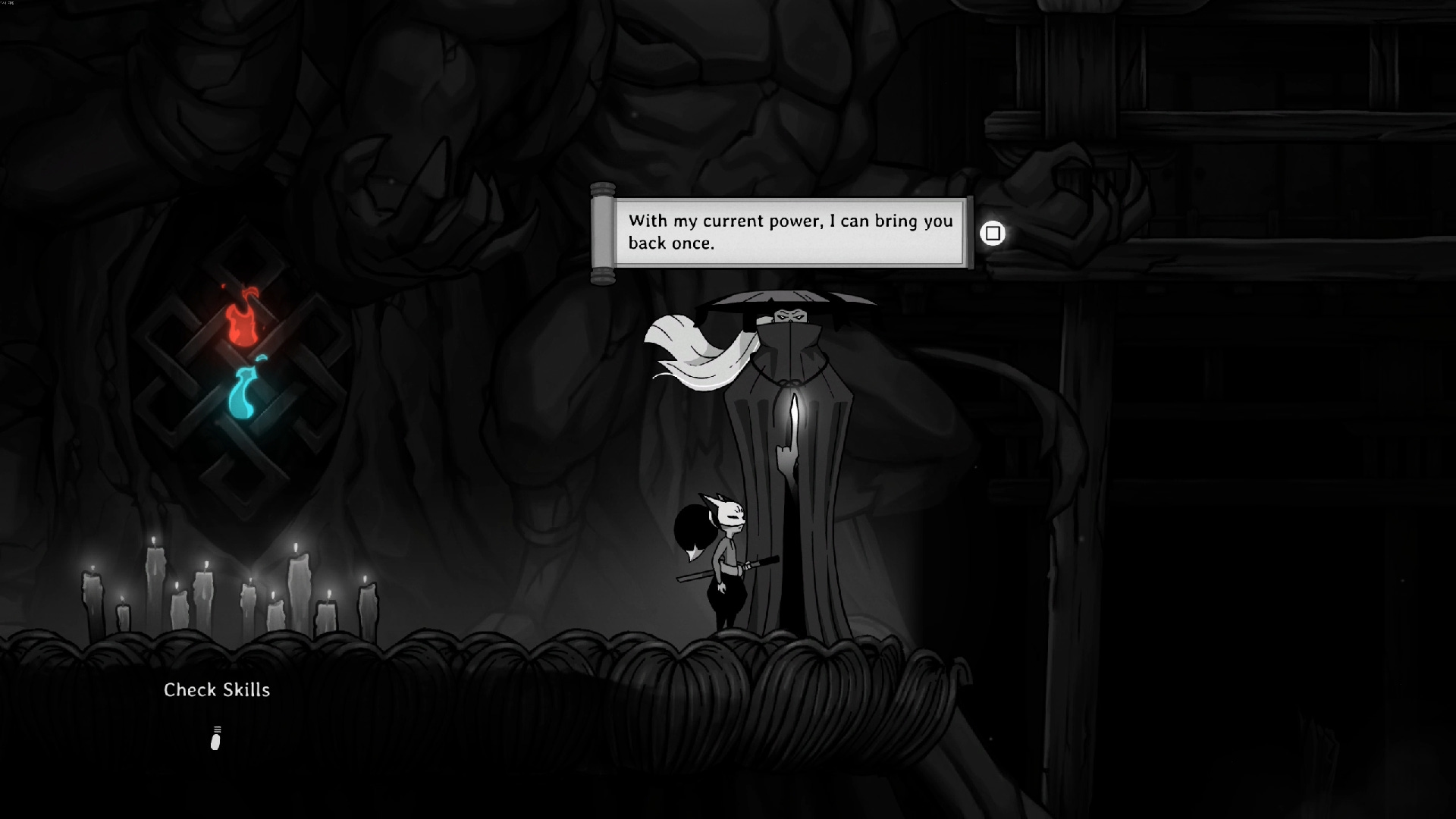
After beating the three bosses in whatever order [within the limited number of lives provided, which is a mechanic that may or may not be good in the full version] you then get to challenge a much later boss with all three unlocked abilities – I think he’s scaled to greater than, uh, tier 4, but still seems beatable. I didn’t beat him, though. I still had one demo left.
Echo Weaver
I was a little hesitant to try this one, it being a bit too high on the ‘popularity’ scale or whatever for my hipster cred, but I’m glad I broke down and gave it a shot anyway. I mentioned Vision Soft Reset in my Christmas deep cuts recommendation essay, and one of the reasons that game weighs so much on my thoughts still is that it’s an idea that I think is really good and hasn’t been exploited or even played with by very many developers. Now, Echo Weaver is not exactly the same sort of thing… but it is starting to play with those ideas, and doing a really good job of making an actual game around them.
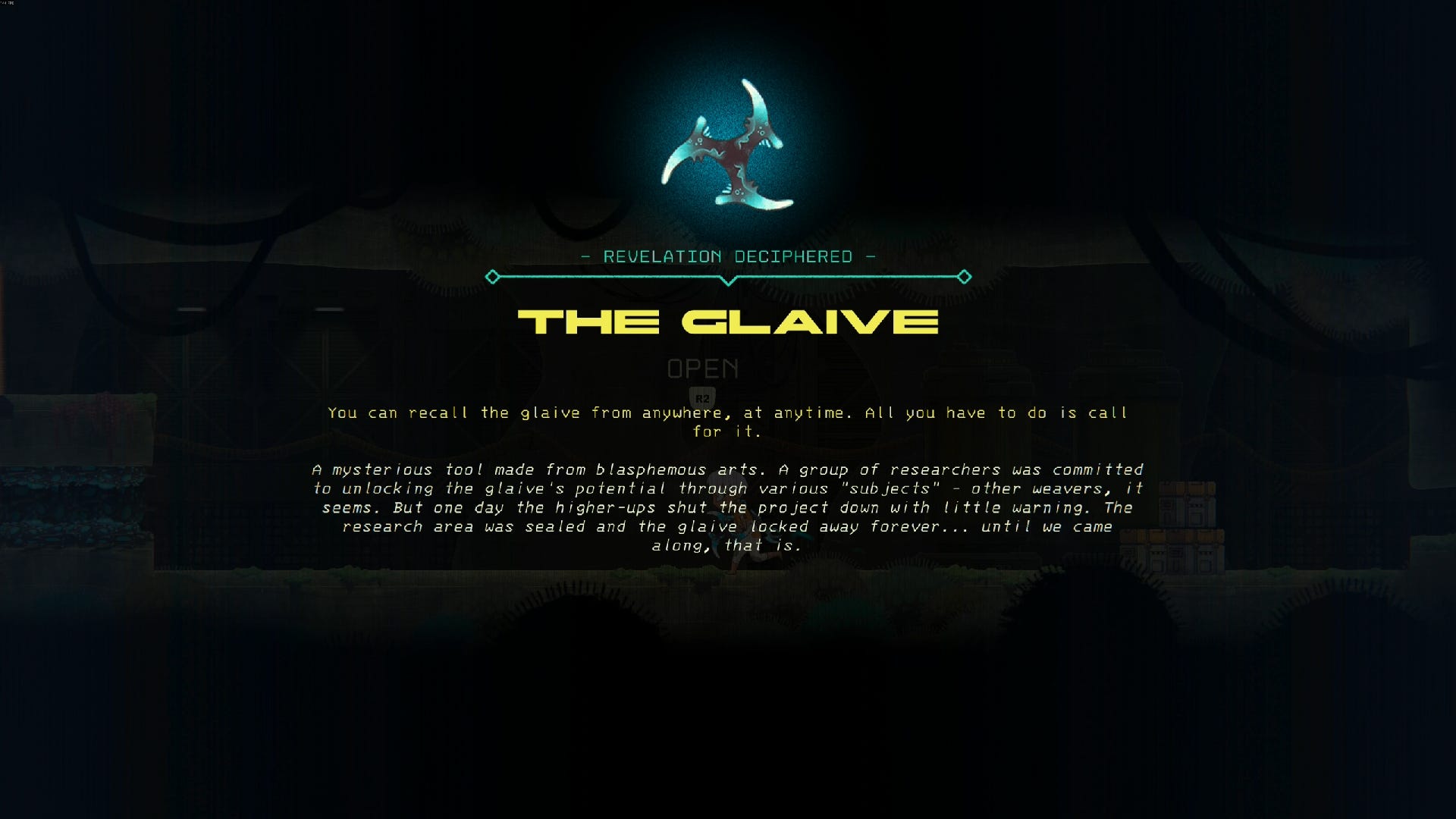
The main gimmick of the game is that much of your actual ability set is given to you right from the start – you just don’t know how to do any of it until you reach a certain point where it’s revealed to you diegetically. The secondary gimmick is that it’s a sort of time-loop game, where you have a fixed amount of ‘life’ slowly draining out, and there are crystals scattered around that you can collect to extend it a bit and give yourself more time, or consume a chunk of it to heal your actual hit points. Once you run out of time or manually reset, you get dropped back to your starting point and can bring up the map to decide on your next goal before kicking off the timer and going again.
This gets used in some pretty obvious ways, like with you finding hidden shortcuts that you can then use to skip areas, and then in more interesting ways, like realizing that you can just summon your weapon to your hand from the very beginning if you know how to do that, or remember the code for an elevator you pass by on the way to the note that reveals that.
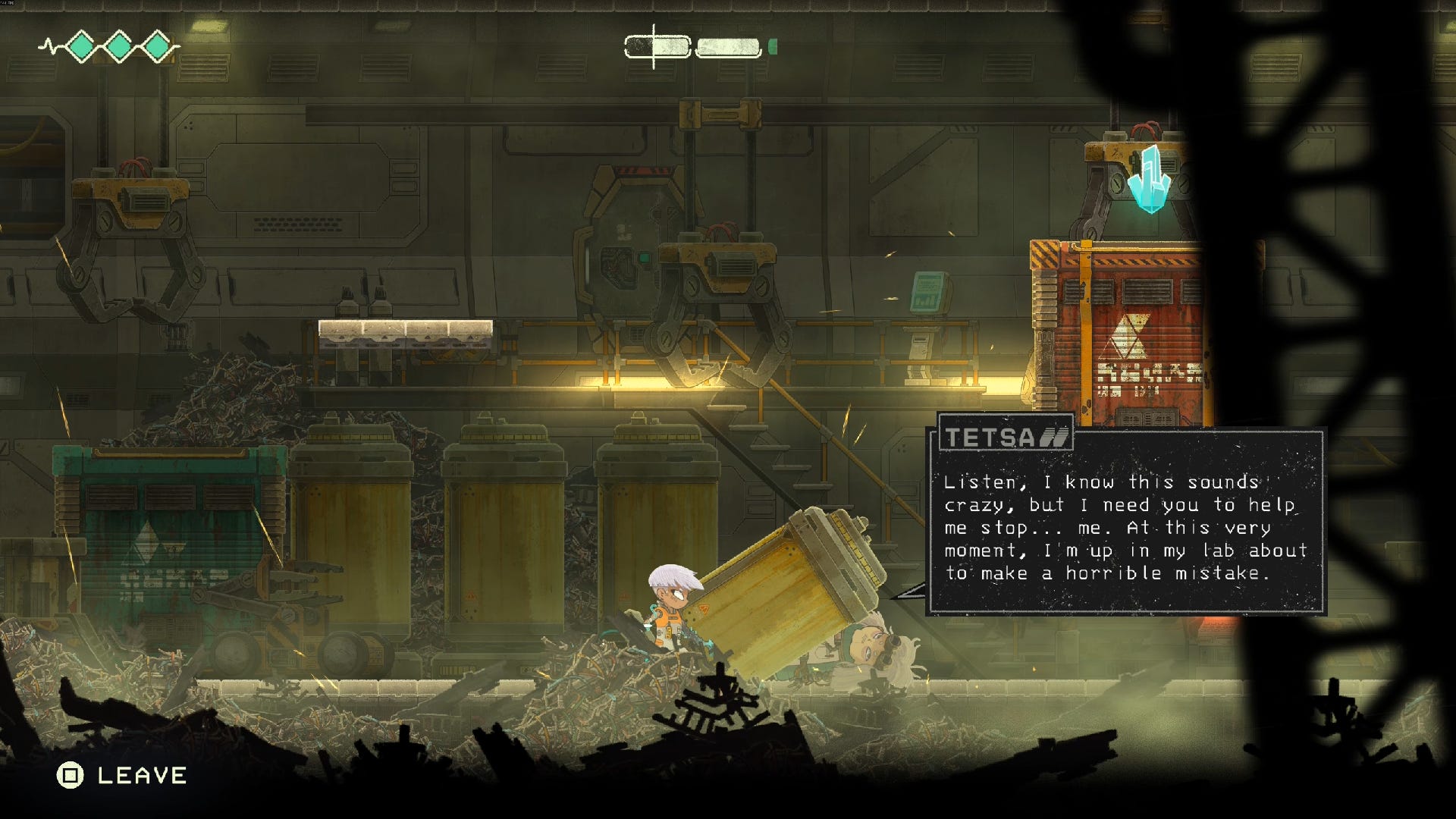
The puzzles using all your abilities in the demo are pretty good, the combat is… fine, and the whole thing reminds me even more of Nine Sols than Gurei did, admittedly, not in having tight and satisfying combat, but more in the look and feel of it otherwise. I’m hopeful that Echo Weaver holds up and does some surprising things with these gimmicks and design, and am really excited to try it when it comes out.
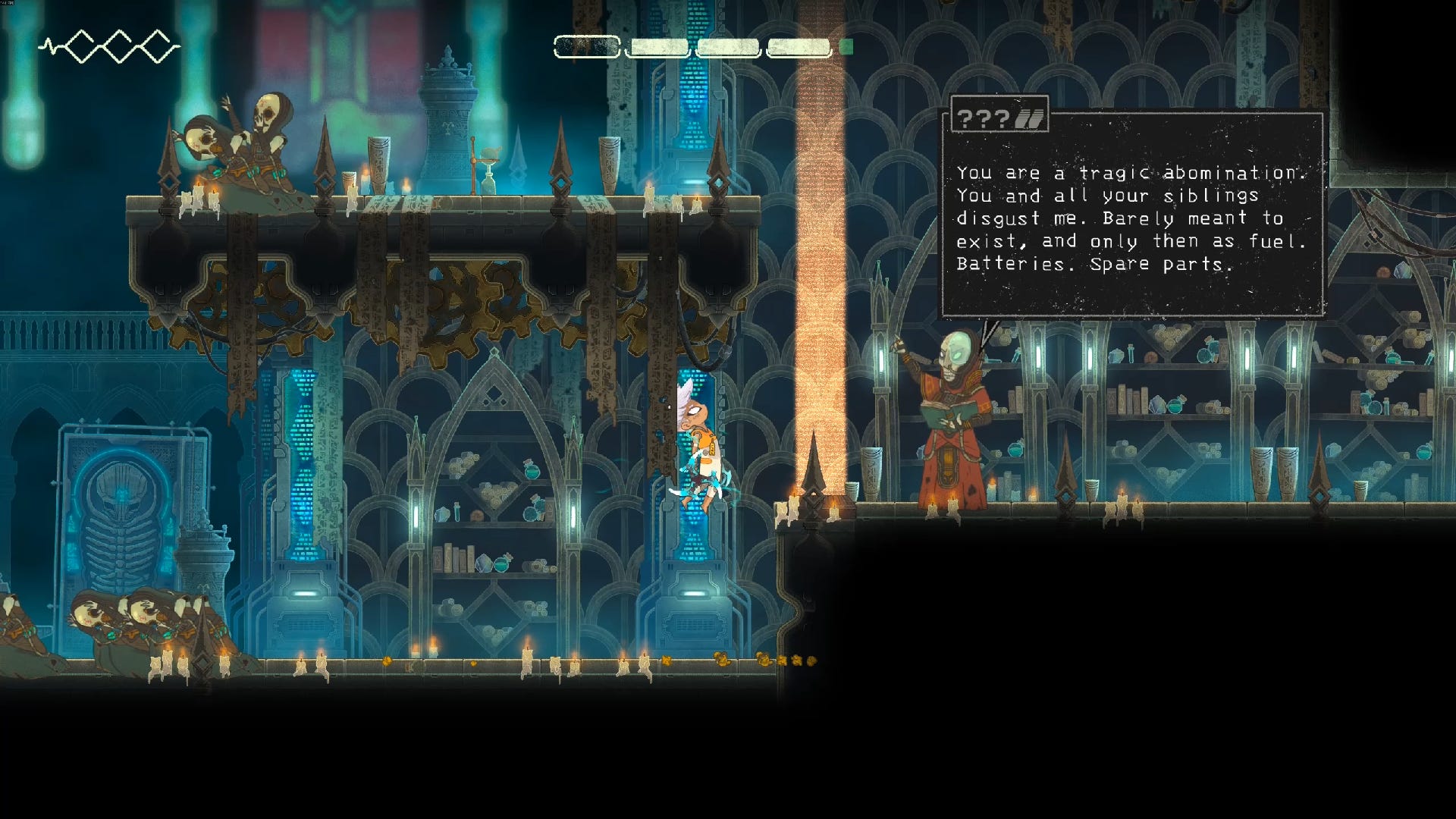
I’m happy I decided to get around to all of these, because none of them were really… like, crushing disappointments or anything. I’m still looking forward to Simon Quest, I’m glad I discovered Echo Weaver and Gurei, I’m even hopeful that Nimaat and Acilain have got enough going on at release to make them worth checking out.
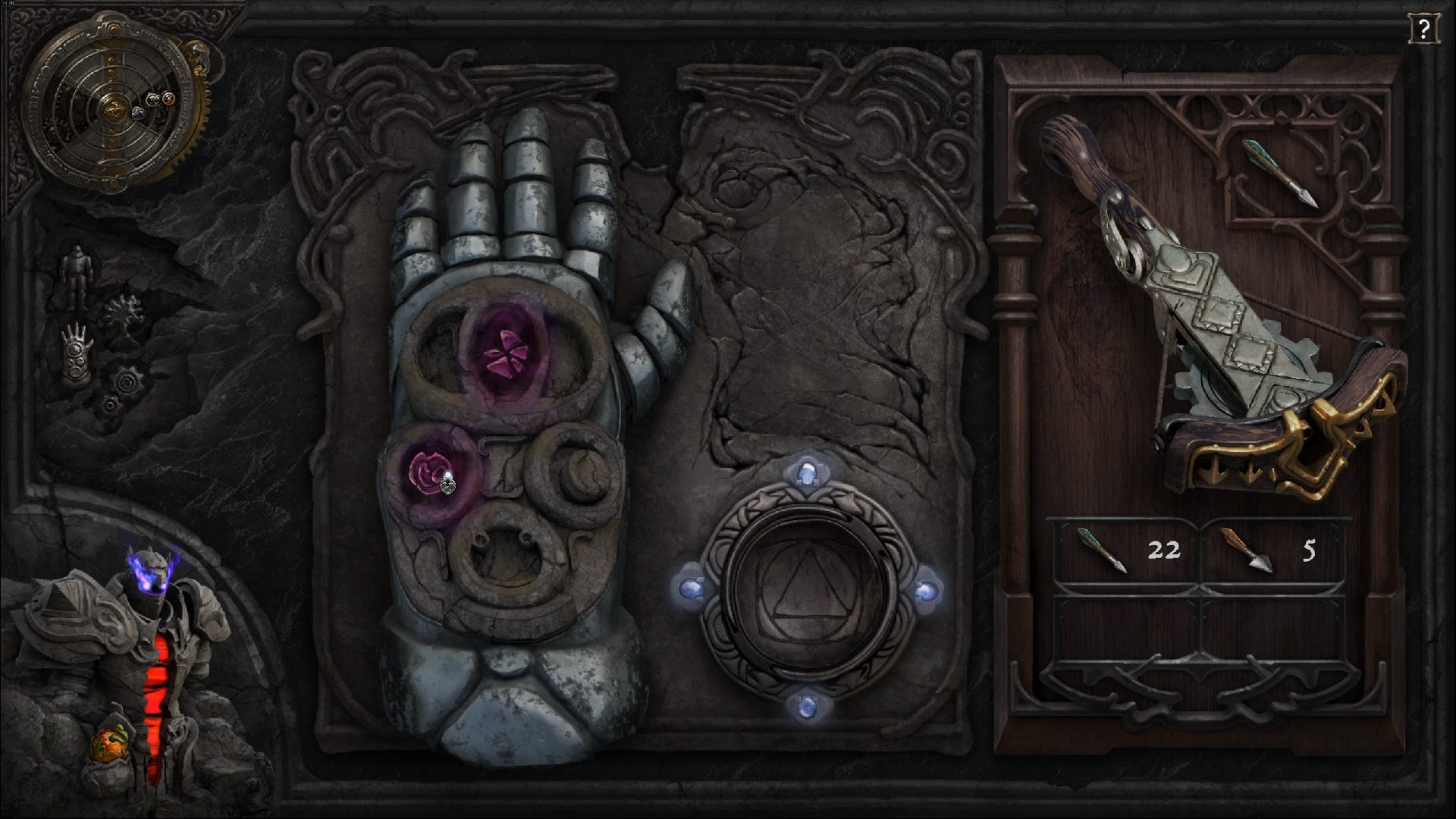
And I do really want to give The Goddess’s Will another chance, though who knows when I’ll ever have the mental or emotional bandwidth to do so.
I feel you on being tired, goddamn man.
Transylvania Adventure looks amazing and right up my alley, I'll give it a try later. I was expecting to really enjoy over the hill, but it didn't really resonate much with me. Guess I wasn't in an exploring mood.