

Space… the final frontier. The vastness of the cosmic expanse hangs over our heads, and the void calls to us as though every star is a siren. The charting of our galaxy is the grandest conceivable project left for our adventuresome species, and our desperate longing for a new horizon haunts our dreams. Today, I will explore some of the expressions of that all-too-human urge, through the medium of Steam Next Fest demos.

Except for the first game. I played that one before realizing most of the rest were space-themed and committing to the joke.
SnekromancY
What if Vampire Survivors was a snake? Okay, yes, I know, everything is Vampire Survivors these days so it barely even warrants mentioning, but SnekromancY is genuinely a pretty clever combination of, uh, not terribly original parts. You play as a snake, controlled in the style of Snake [best played on the Nokia in the bottom of your junk drawer] and instead of weapons or spells like most Survivors-likes, you summon various monstrous and undead creatures that ride on your tail and launch attacks automatically. Eating food lets you grow more tail segments, taking damage eventually makes you shrink, and ramming into a wall [or yourself] does a ton of damage.
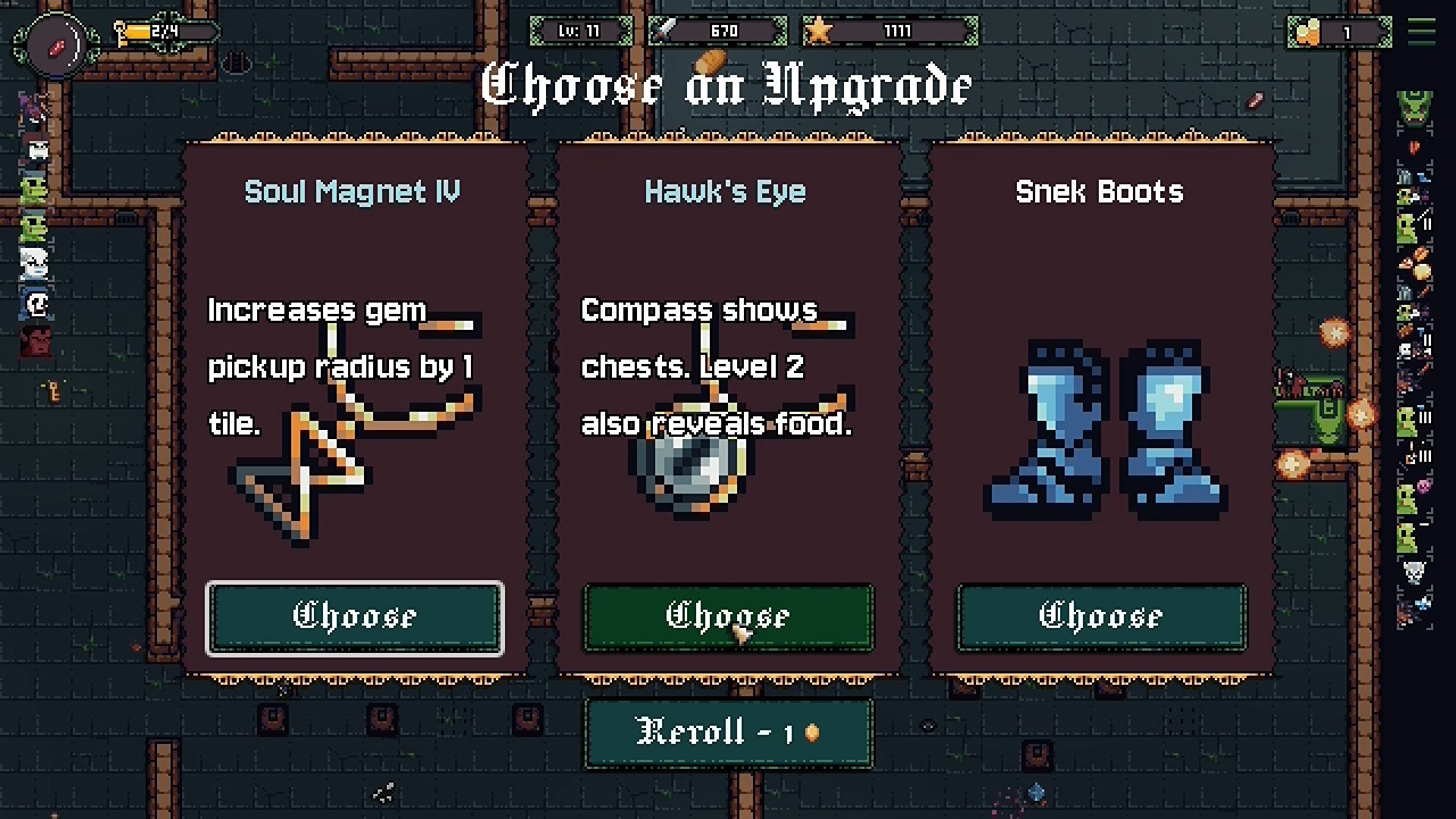
Every stage is full of invincible enemy spawners, sectioned off with locked doors, and sprinkled with items and keys. You generally need to collect enough keys to reach the boss room, defeat the boss, and then reach the stairs that open up afterwards to move to the next stage. Enemies drop gems on defeat, and eating those gives you XP that earns you ‘pick from 3’ levelups, which can include new passengers, general buffs for your snake, or bonuses to certain ‘classes’ of rider.
And, you know what? It actually works pretty well. You get to shuffle the order of your riders around between stages, and they fire at the nearest enemy pretty reliably, and it turns into kind of a mobile tower defense thing, where you’re steering your wall of turrets past a group of mobs and calculating that they’ll be able to mop up the enemies before you start taking hits, then looping back around for their gems without closing yourself off. Extra items give you a little more to juggle, like bombs you can carry around and detonate for a big AoE splash that doesn’t rely on your riders, mattocks that let you blast through walls and make your own shortcuts, and coins that can be used at the occasional post-stage shop.
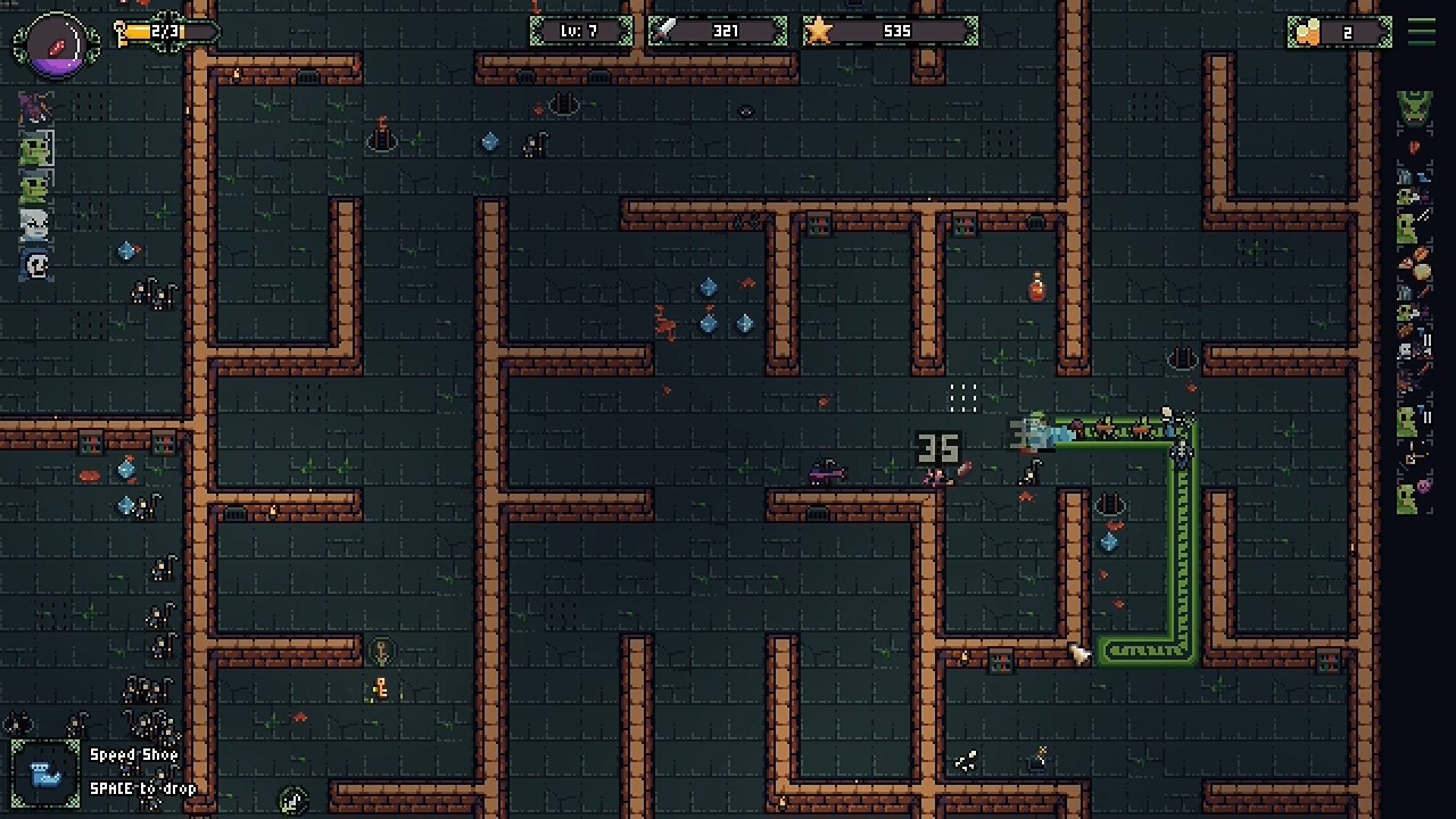
Duplicate units can be fused into stronger variants, there’s meta-progression for unlocking new unit, upgrade, and item types, there are floor traps that you have to avoid, and some of the bosses are surprisingly interesting fights for the game’s setup. I think my only real problem with it, besides the graphics being kind of distant and lackluster, is that it has the Gradius syndrome problem where one mistake can spiral almost instantly into a completely unwinnable scenario, because losing a tail segment that one of your turrets is on makes you weaker, obviously. Thankfully, it’s not permanent, and the minion comes back if you can find food and grow back up, and you can mitigate it a bit by putting your weaker and less important guys further back, but it is still a problem that doesn’t really crop up in most Survivors-likes. Otherwise, yeah, good job, guy.
Venus: The Last Ascent
What if Raft was an RV? And that’s about it. You are in command of a hilariously awkward land yacht, with open sides and a bunch of stations for… *massive sigh* mining and crafting and filling your oxygen and battery meters.
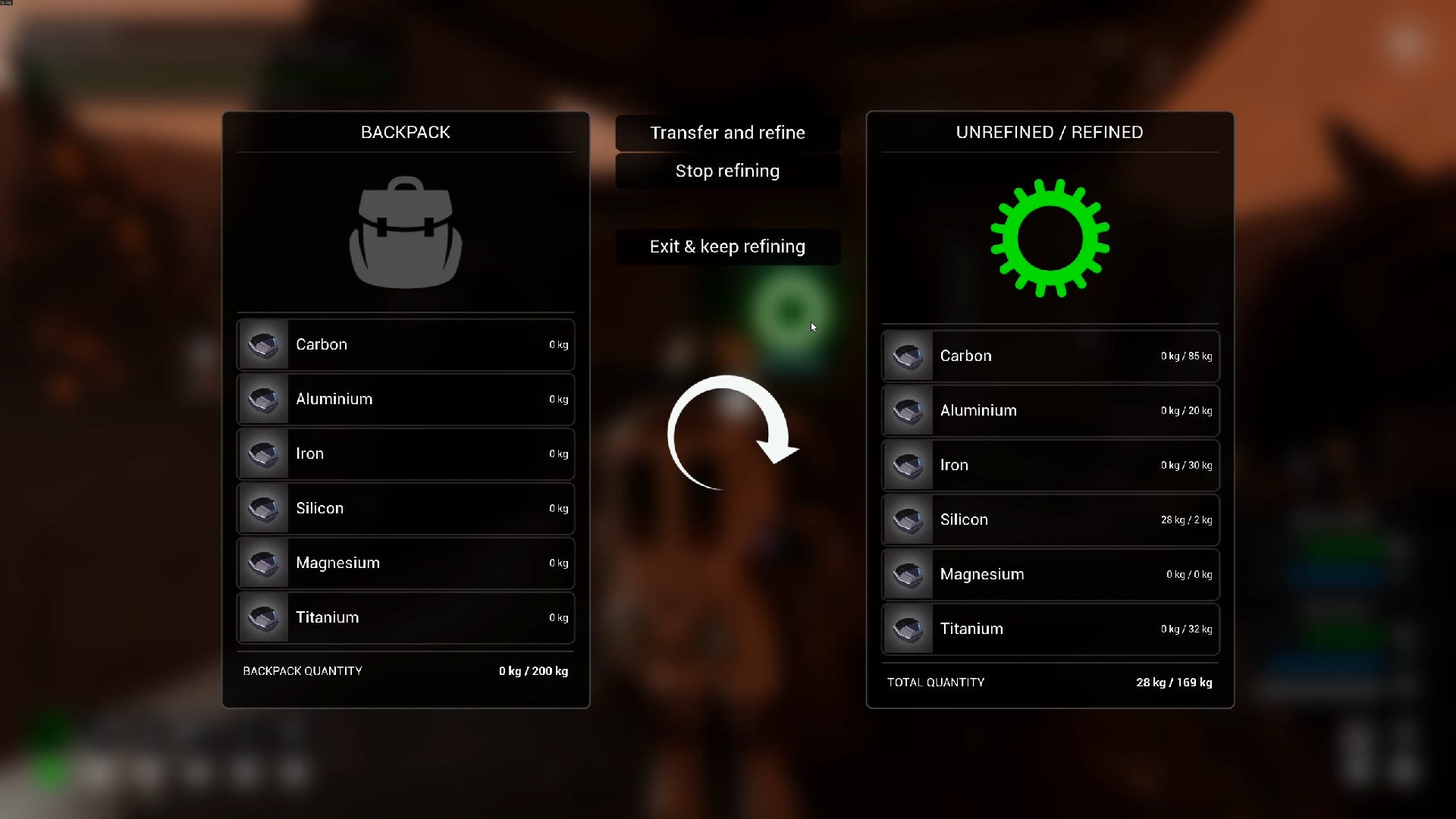
Your tour barge then has to make it down a road that’s covered in spikes and on fire, and occasionally you have to jump out of your captain’s chair and waddle around shooting lasers at rocks to turn them into numbers in a spreadsheet, then waddle back to the van to turn those numbers into other numbers and then turn those numbers into a second floor for your mobile home.
This is the sort of thing that, and I’m just theorizing here, could potentially be kind of fun with a group of friends, but I absolutely guarantee that if you have any interest in managing power output and mining magnesium to make new wheels you don’t have any friends, and if you do, they don’t want to play Venus: The Last Ascent with you.
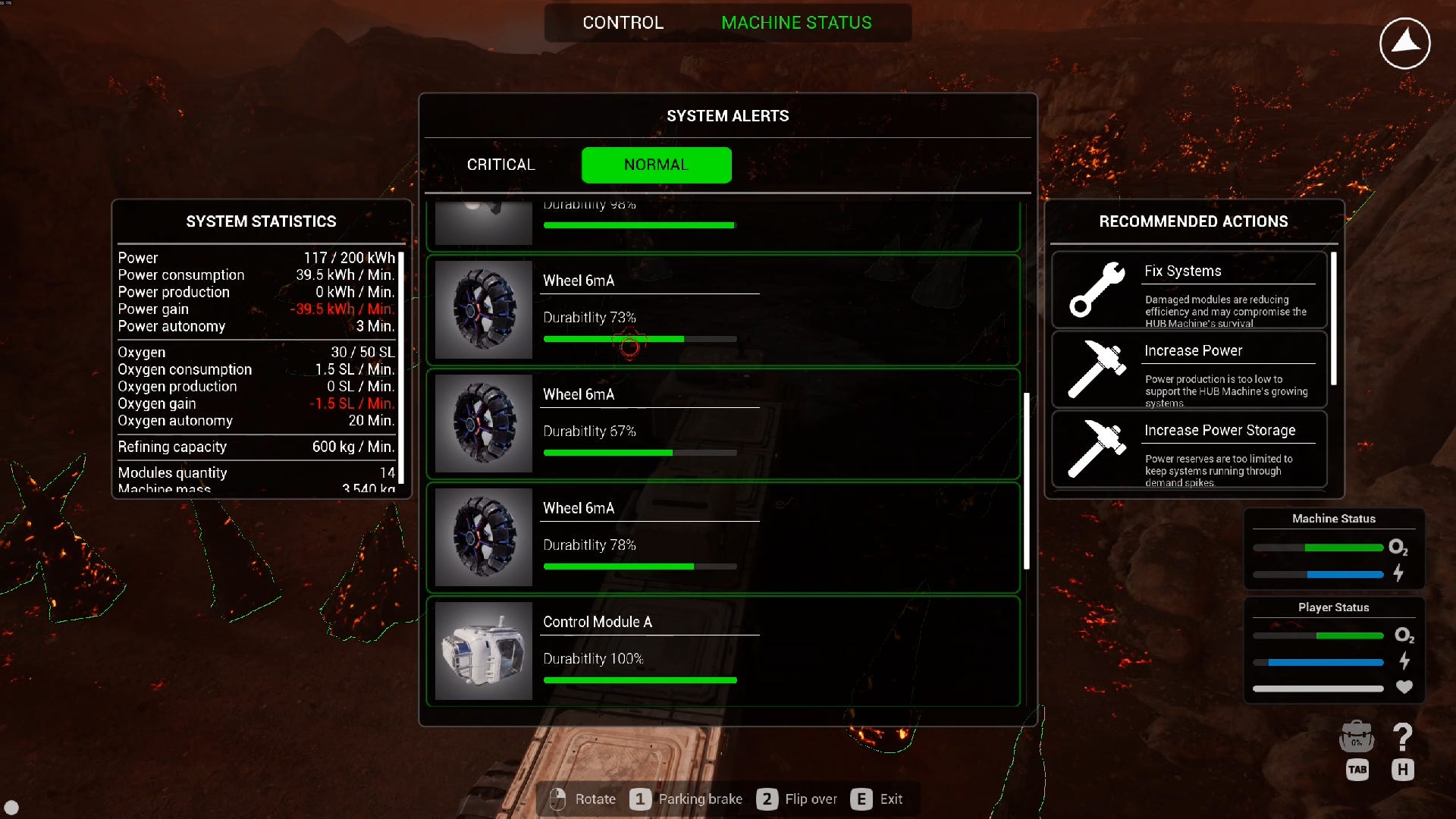
The last thing I noticed before deciding to hit Alt-F4 like I was knocking a bug off my arm was that my wheels were at like 2/3rds durability, and presumably I’d have to go on a field trip to scrounge up enough brown bricks to 3D print and replace all four wheels on this thing. And I’d only gone like 500 feet.
I did really like the way the game opens, though. I’ve lived in California, this is fine.
Tom Lander: The Exiled King
Another extremely hype opening, let down by, uh, pretty much the whole rest of the game. To be fair, it would be insane if any game lived up to this intro, but still.
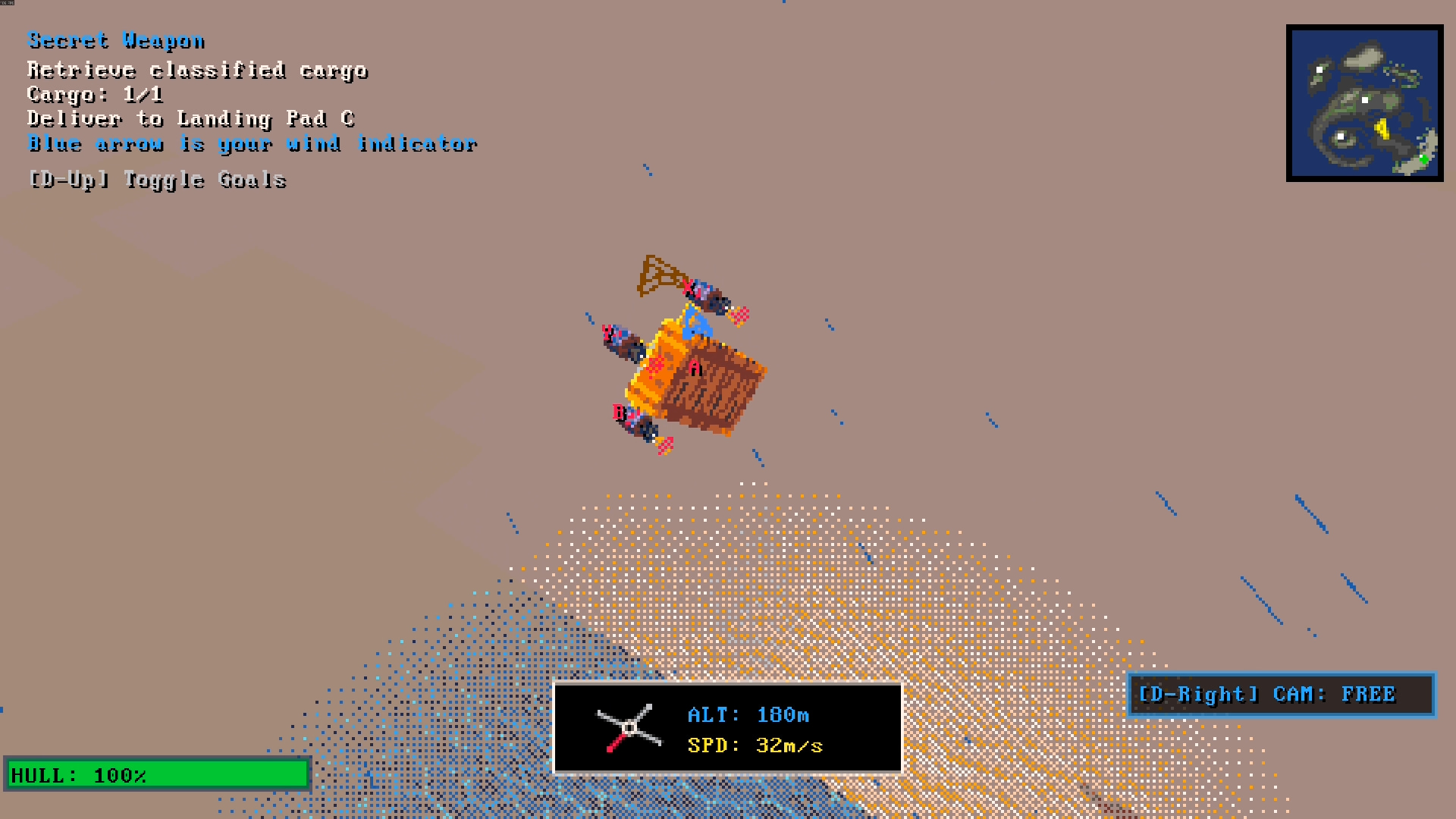
This is kind of like Pilotwings if your only vehicle was a quadcopter drone that flew weird. You fire each of your four thrusters individually with a face button, and doing that tilts your whole shit over in the corresponding direction, and then you can fire all four at once to rocket away towards whatever you happen to be facing. It’s tough to manage, because you can also kind of spin your ring of thrusters around, but each still is bound to the same face button, you don’t really have very good, uh, fine control in any way, and the gravity and collision are just kind of half-assed. The one good thing is that you can hold one of the bumpers to auto-align yourself with the ground to come to a stall or hover/landing orientation, and it’s really not that hard to just tilt yourself towards your objective arrow and go.
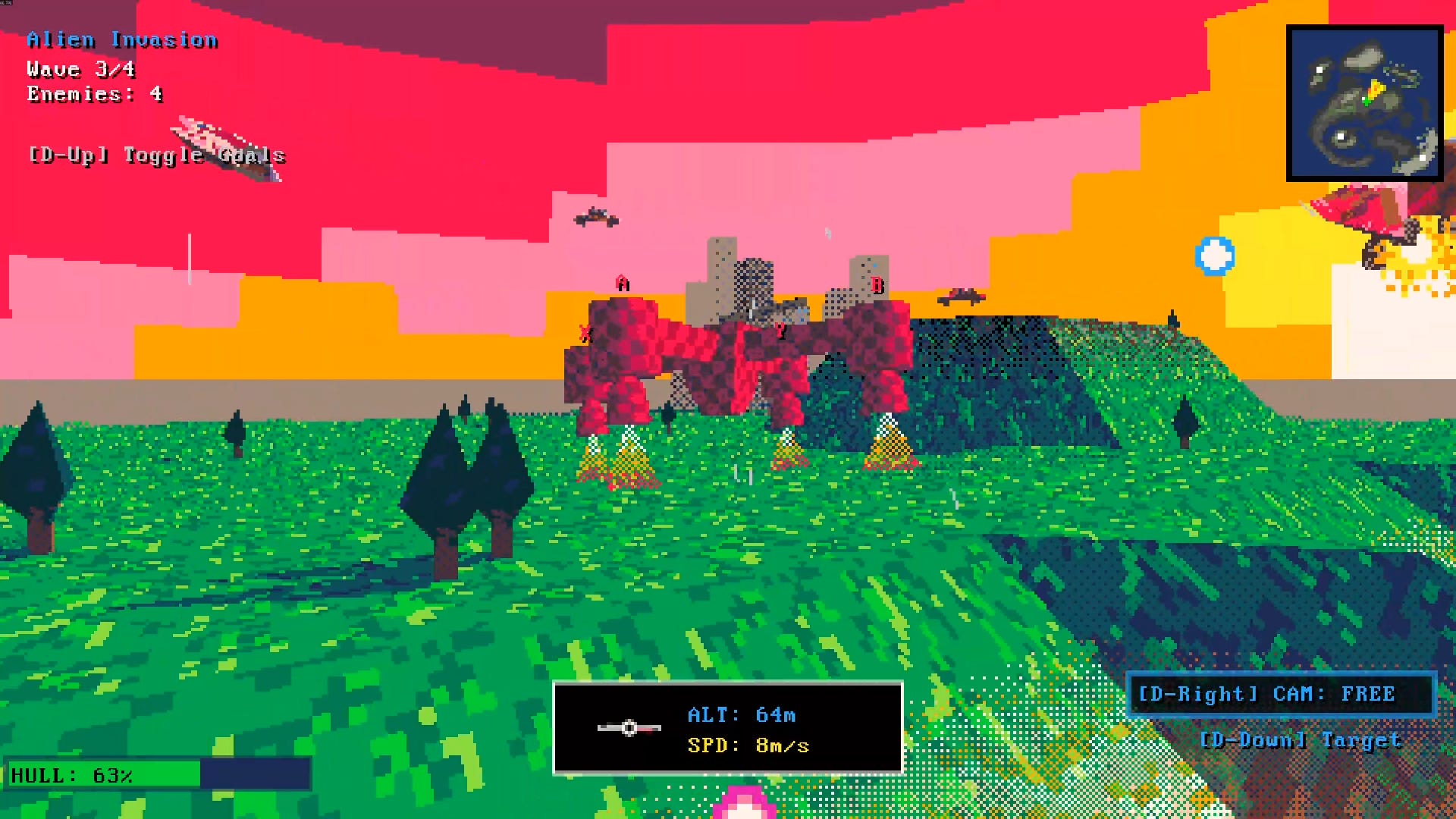
And that would all be fine, or even kind of cool, if there was more to the game than there is – most of the missions in the demo are just, follow your objective arrow to a box, get close enough to the box for it to latch onto your drone, then go somewhere else and land [or rather, plop down close enough to the landing pad for the mission success to trigger] and repeat.
There is combat, but it’s handled automatically by a dinky turret on top, which seems to miss a lot even if you try to do a good job of following enemies and keeping steady, and your only alternative is to ram the enemy drone out of the sky, which does a huge chunk of damage to you, and the only way to repair is go sit on a landing pad and wait for your hull gauge to slowly fill, probably getting shot at by other enemies if the ones you rammed weren’t the last alive.
There’s also a race mode, where you get to pilot a slightly different sort of ship, which is more triangle-shaped and the fourth thruster is set as your forward thrust. It doesn’t really control any better and trying to go through the rings with it kind of felt like I was playing Superman 64 with QWOP controls. This game’s even got about the same draw distance.
Max Savage


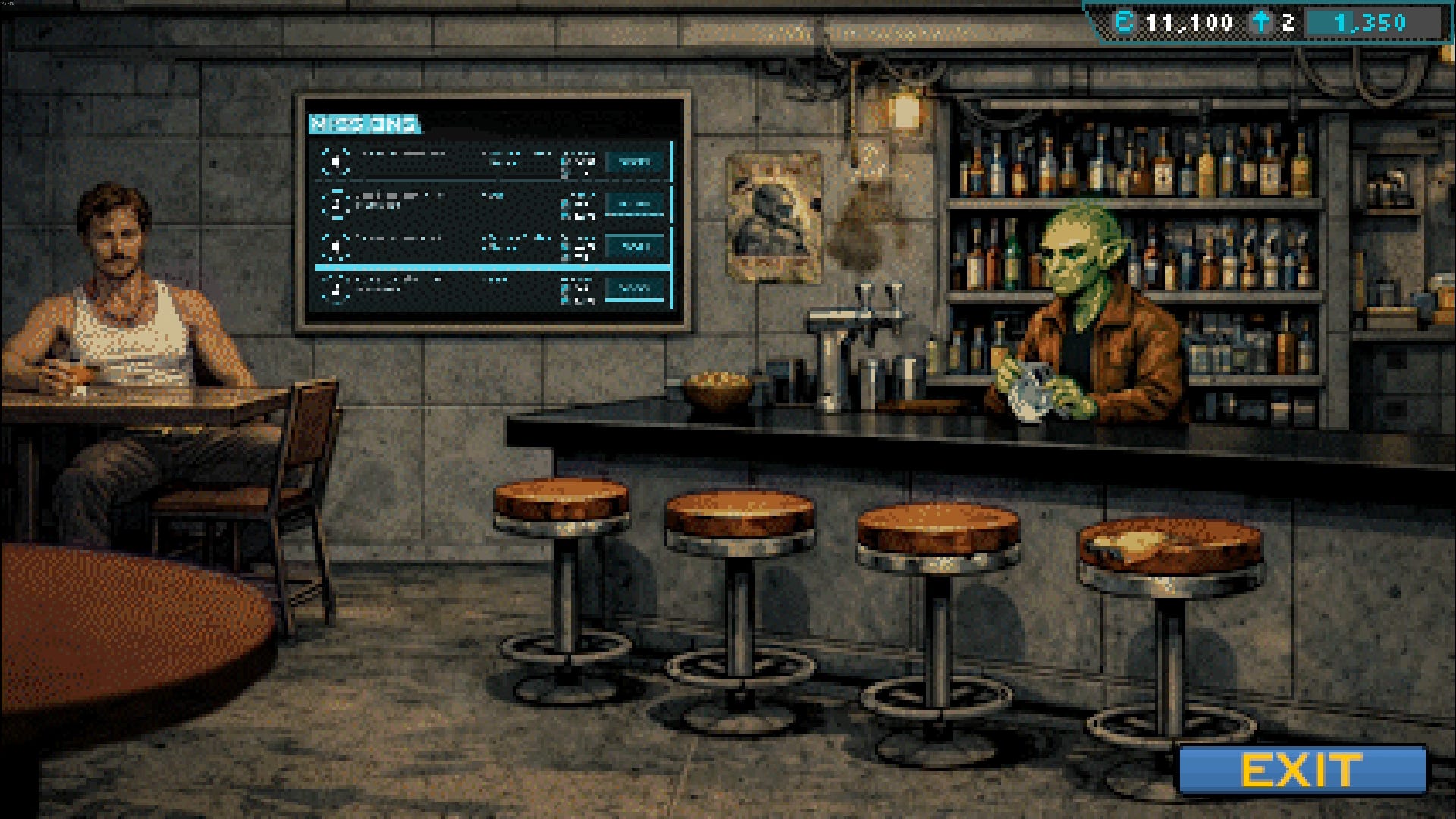
Lesbians in spaaaaaace! Okay, I don’t know for sure that they’re lesbians but that’s the vibe I’m getting. You and your, ahem, special roommate have just purchased a pair of gently used starfighters together, and set off to grind rep and credits to earn a ticket out of the backwater they’ve been stuck in and back home.
Half of the game, or probably more than half, is a very Freelancer-esque space sim, with a bar that doles out little missions where you warp to a system, fight some pirates or something, and then warp back for your reward. The controls and graphics for this are actually dead on – chunky 3D fighters and frigates, tight mouse and keyboard controls, a little arcadey but you still have to pay attention to your speed and shields. Most of the upgrades are entirely dedicated to your ship, and the different primary weapons, for example, seem to actually have different projectile speeds and max ranges on top of increasing DPS, which is nice.
The second ‘mode’ is where you land on the few available planets and get to walk around with your pixel lady and slice stuff up with a space cutlass. Or maybe it’s just a normal cutlass. But it’s in space, so it’s still a space cutlass. Each planet is its own little map that you can wander around, complete with points of interest, hostile wildlife to slaughter for a tiny bounty, and fast travel points you can unlock. Some missions send you down to collect items that spawn in a particular region, and some main quests involve you going down, but it doesn’t seem that well fleshed out or particularly compelling, at least in the very first chapter that I got through.
I’m actually pretty jazzed by this. There don’t seem to be too many different systems, and most systems seem to only be available to warp to if you have a mission in them, plus I noticed that taking two different missions in one system only spawns one of the objectives and you have to warp out and back in to do the other one. And it looks like it could be kind of grindy – not only do you have to grind missions to earn money for all your upgrades, you need a minimum rep to unlock a lot of them, and your starting ship can only equip up to a certain level anyway, so you’d eventually have to trade up.

But it’s a cute little setup, the graphics and style [aside from the developer-acknowledged AI gen character portraits] are all spot on, and it reminds me of something that could have been on SNES or Genesis alongside Buck Rogers and Starflight. At about a quarter of this framerate, probably.
The Message from Deep Space
The second demo set in the ‘70s so far this event! A meteorite has been recovered, with a conspicuous antenna on it that’s constantly blasting out a particular radio signal, and scientists quickly realize it’s of extraterrestrial origin! Well, duh, it’s a meteorite, I mean aliens. A crack squad of four random scientists [or rather three scientists and the player] are locked in a room with an old ass computer terminal, the entire world waiting with bated breath to discover what incredible insights they’ll glean from our first communication with non-human intelligence! Here it comes…


The entirety of this, at least as far as I got, is a pretty straightforward call-and-response game being played by whatever is inside the meteorite – your terminal will blaze with a series of numbers that have been pulsed out, and you can type in your response. Most of the prompts are in the form of long series, and the proper reply is the next logical entry of that series – send the correct answer, and you’ll get rewarded with the next sequence. Send the wrong answer, and nothing happens. Unless one of the scientists sitting next to you decides you need a hint and pipes up.
What’s really surprising to me about this is how well realized the setting and characters are. They each have their own little ‘voice’ in the babble-talk VA, they all come across with unique personalities, and they all offer genuinely valid insight if you need it. It also works pretty well mechanically – what you’re entering are highly specific frequencies, and after a few back-and-forths, you’re starting to get sick of typing out the whole thing when the computer scientists pipes up with news that he’s added a shortcut to skip the identical portions of the entries, then again to let you know that they won’t automatically interrupt you anymore, and you can instead ask for commentary manually on any ‘puzzle’ you get stuck on. Even your boss, animated like a 1970s scientific director version of the Happy Mask Salesman, is really charming and fun.
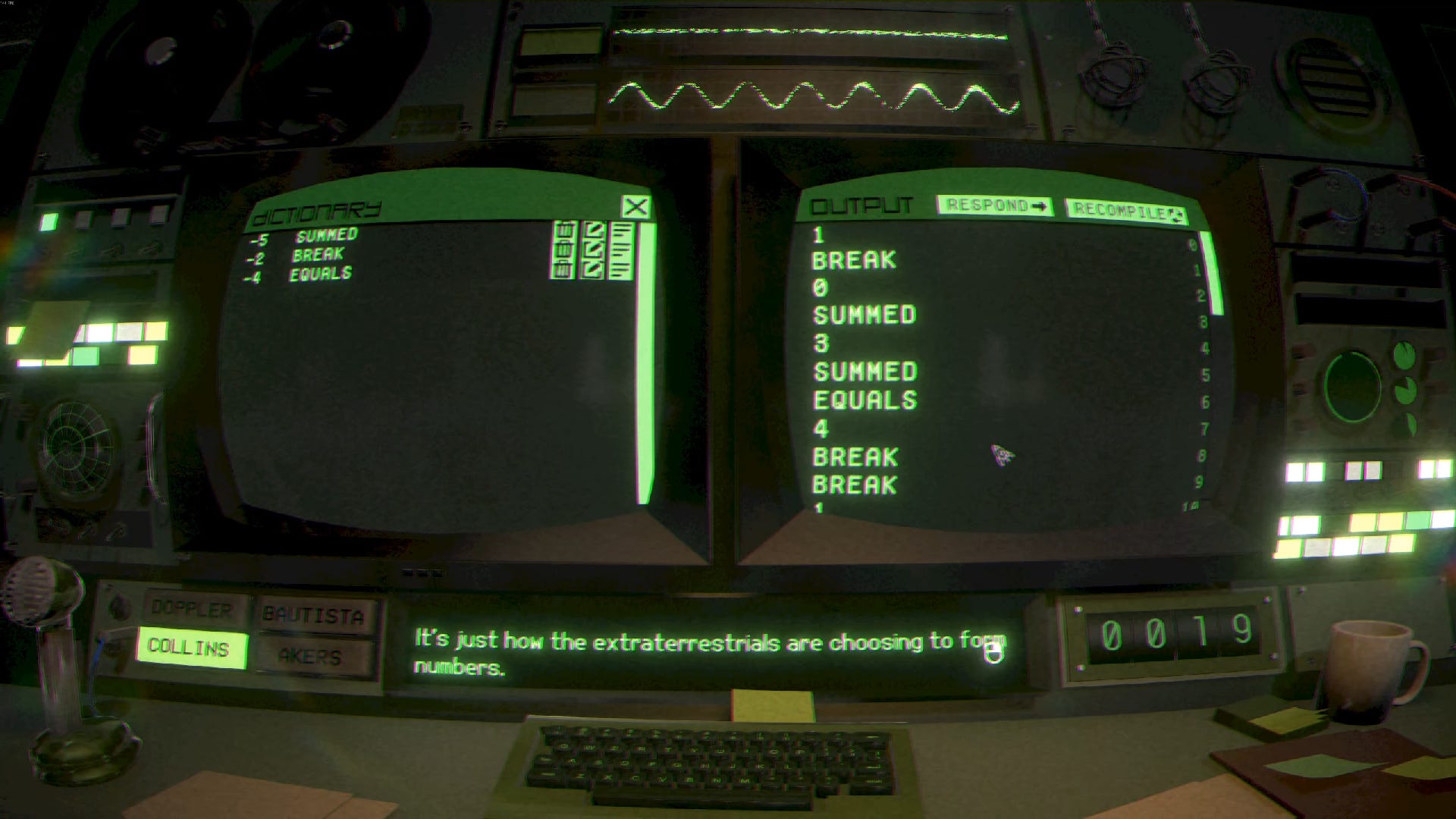
Now, is this game any fun? Well, it’s hard to say. I took a break right at the point where you get the ability to assign ‘words’ to define certain obvious anomalous signatures, and they seem to mostly relate to more math. This really could go in some super interesting directions… but I strongly suspect it’s the work of a mathematics undergrad who’s trying to sucker in hapless gamers to tutor them in basic number theory. At least I’m not solving a basic substitution cipher for American English… yet.
Atomcraft
Thought that crap just now was some shit for nerds? How about Terraria crossed with Powder Game made by someone who probably has an actual chemistry degree? Imagine I edited the Actual Art Degree screenshot from Disco Elysium to say Actual Chemistry Degree. I don’t have time to screw around that much for this joke.
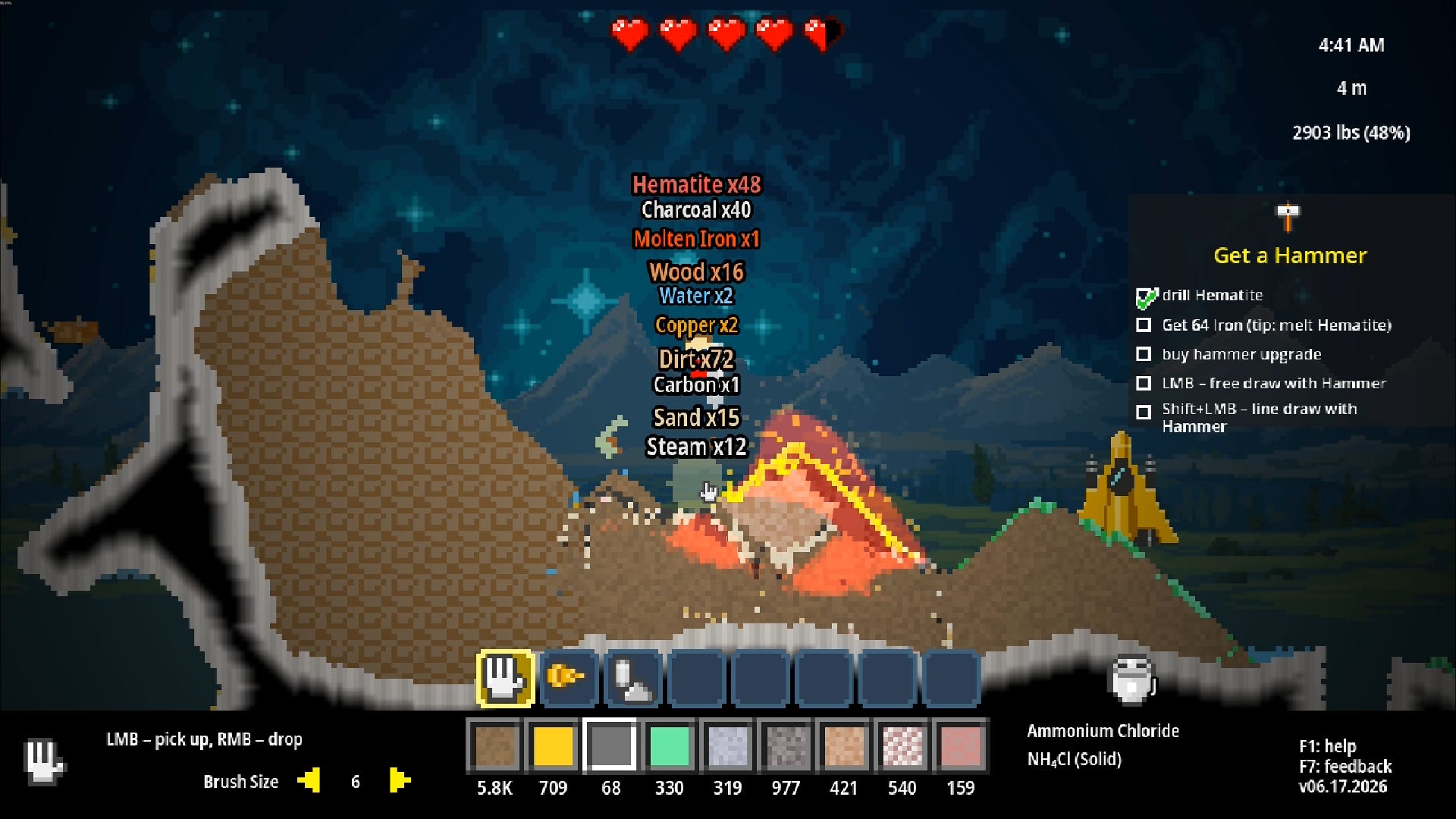
Anyway, yes, it is a 2D mining and crafting game, with the primary gimmick being that every resource is, like, an actual Earth-like mineral compound, with realistic[ish] properties, and physics, and you have to climb your tech tree starting from smelting copper out of ore and then work your way up to disposing of radioactive waste by throwing it into the deepest hole you can find. In case the fact that I put CHR$(143) at the very top of my Christmas Deep Cuts recommendation essay didn’t clue you in, this is very much my shit.
Unlike Terraria, survival is, let’s say, a much lower priority – you start the game with a jetpack, with infinite juice, that lets you just kind of hover around indefinitely, and enemies don’t really seem to threaten your landing spot or pose much danger in general, at least in the areas I explored. You also have much speedier collection of resources – your drill can just kind of grind through trees and dirt and really any material you have tech’d it up enough to scratch so quickly you’ll be swimming in units of every basic resource, and you can dump it and grab it up in big, physics enabled piles with a cursor you can change the size of freely. The question is, how do you turn a big pile of hematite into steel?
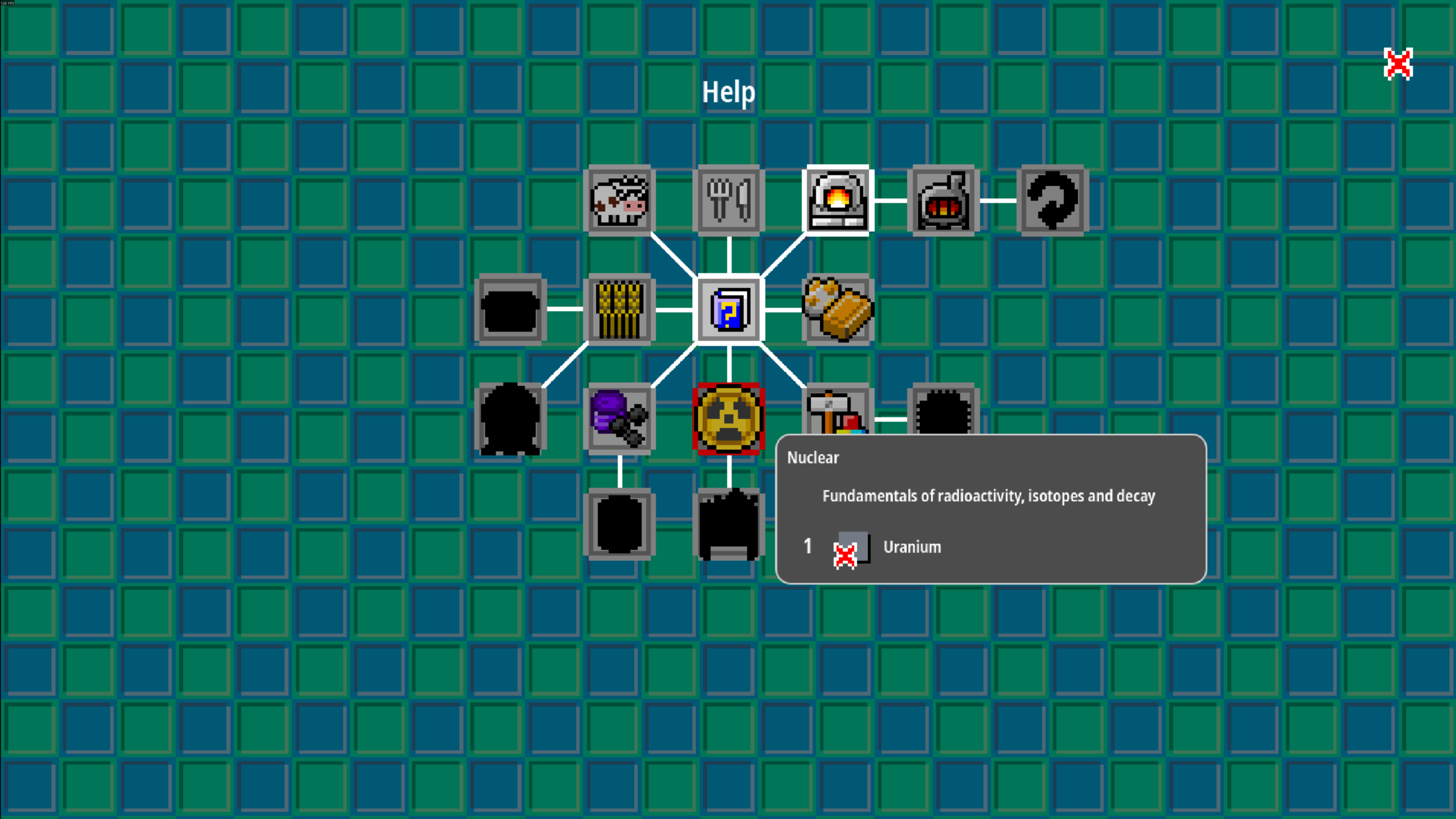
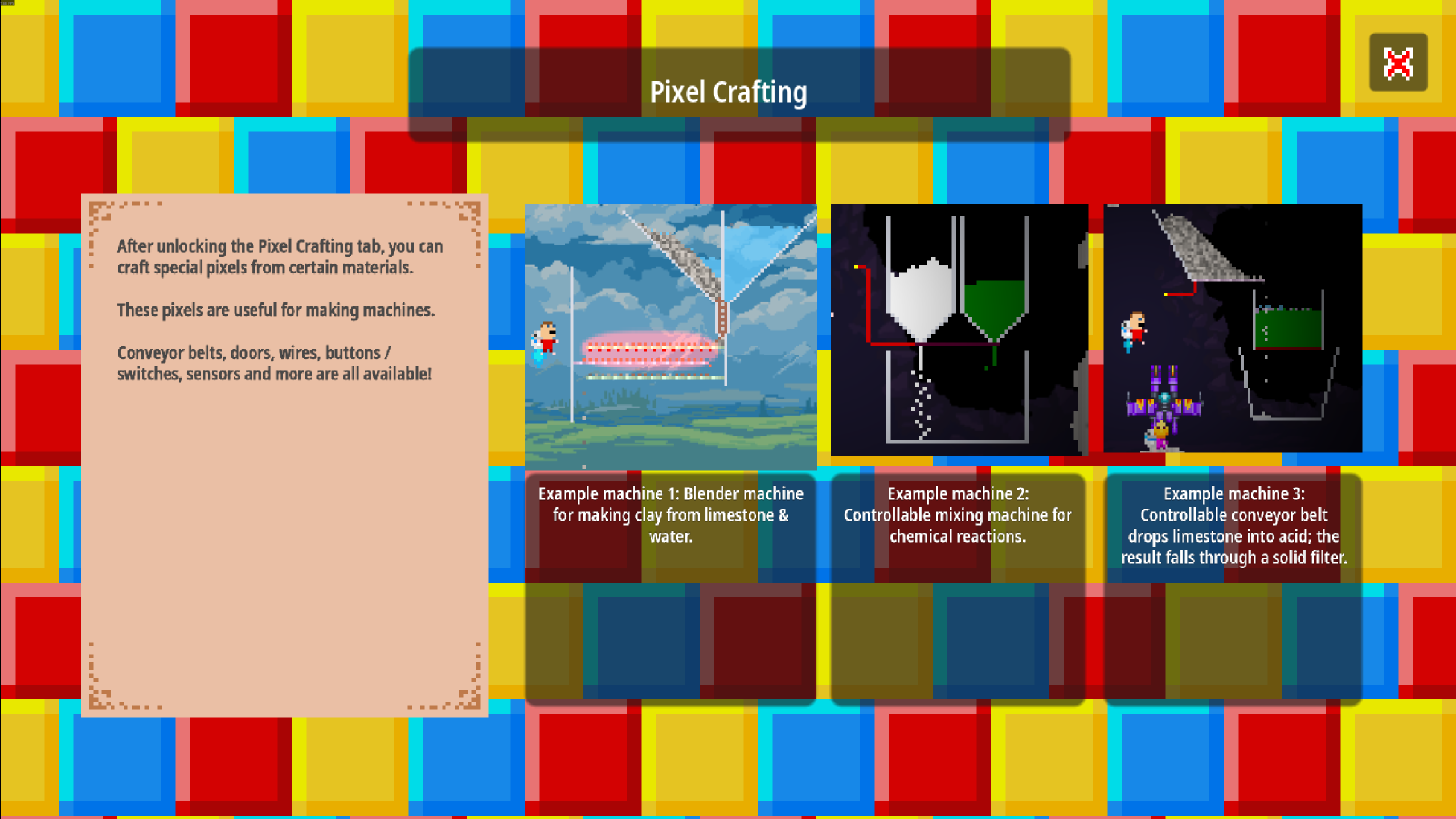
Materials have genuine melting and boiling points, wood and charcoal and coal can be set alight but need an air supply to continue burning properly, and some materials conduct heat and endure it better than others – leading you to create a 2D kiln, where ore can be cooked off into pure metal, enriched with raw carbon from thoroughly burning tree matter, and then cooled with a plunge into water to collect the steel. And, presumably, that’s the sort of thing you’ve got to do to extract each type of element needed to begin engineering, aided by a pretty helpful… Help menu, and a variety of unlockable pixel types, letting you start making temperature sensors, logic gates, hell, why don’t I just build a computer that can run Doom in Atomcraft? Somebody will eventually.
I don’t really know how well this will stretch into any sort of endgame, which seems to involve repairing your broken spaceship, but it’s interesting enough and seems devoted enough to relative authenticity and an impressively robust engine that caused no obvious bugs that I noticed despite simulating the current temperature, chemical composition, and neighbors of tens of thousands of pixels simultaneously. I don’t know who the hell else wants to play this sort of game, but that’s kind of a secondary point for me to be honest.
When the Stars Threw Down Their Spears
Another retro space sim, this time in the vein of Star Control or Starflight. You pilot a little ship around, visit planets [but never actually land on them I don’t think] and blow up enemy ships in Asteroids-but-the-asteroids-shoot-back dogfights. It seems pretty well made, if a bit amateurish and unambitious – the controls seemed fine, the balance was okay in the few skirmishes I tackled, and I actually liked the super pixelated character portraits and design of the ships.
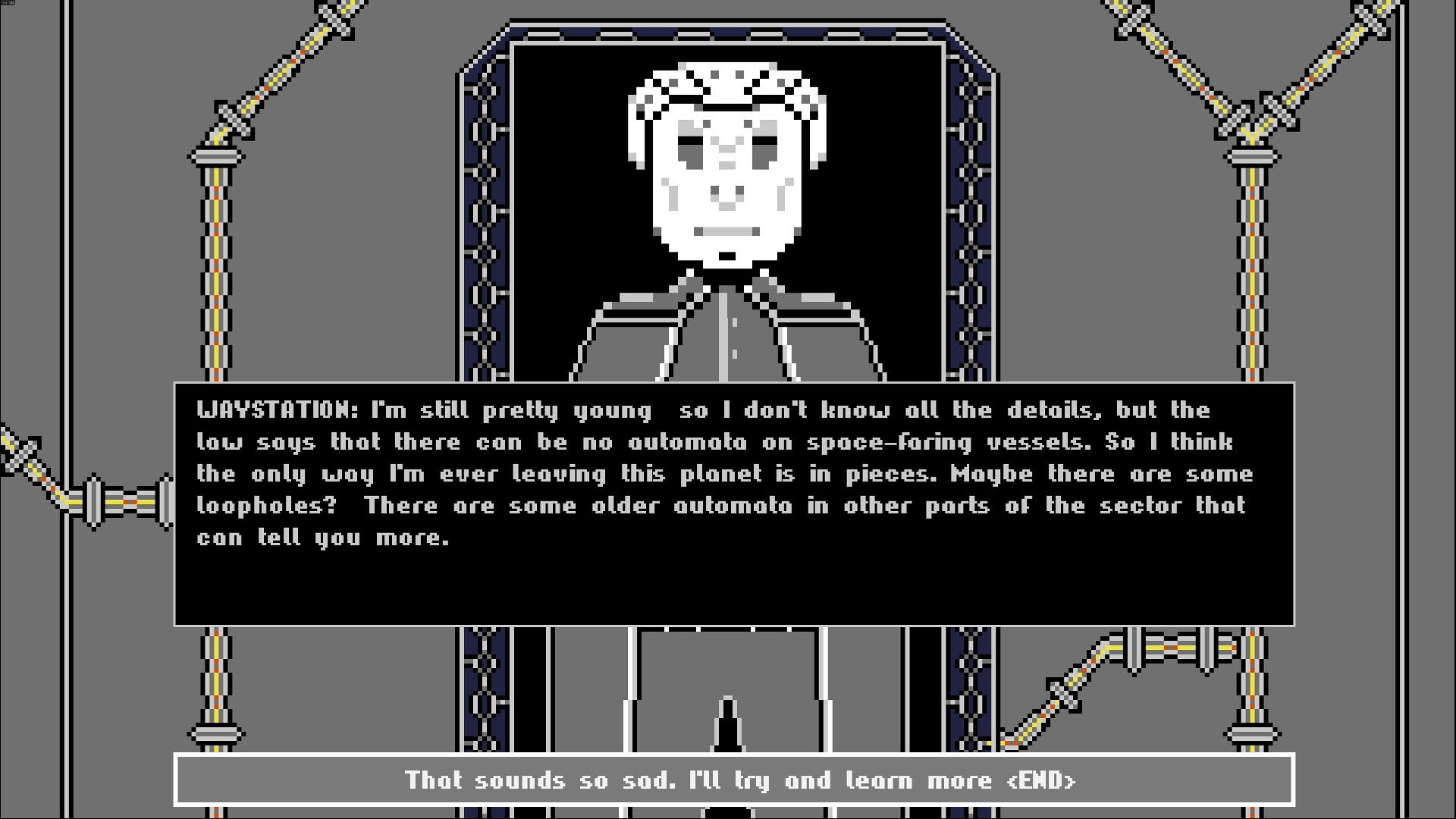
One potentially interesting quirk is that you don’t seem to have regular shops with new components for your fighter – instead, you salvage modules and even whole ship frames from enemies you destroy, with the components left over being determined by where they took damage… or at least that’s what the game implies. You then do need to pay to repair them before being able to swap them in, and you still need to make sure you have enough power output and cooling systems to fire your weapons without overheating, which can be made easier by assigning guns to different firing groups or using projectile cannons instead of energy.
But if all you’re doing is flying around talking to planet-shaped NPCs and scrapping with other ships over and over, I do think it could get a bit boring… games like this really need a second or even third ‘layer’ to break up the flow, otherwise I tend to burn out pretty quick. The game does the ‘NPCs yell Cartesian coordinates at you and you have to write them down in a notebook’ thing, which was the main reason I didn’t play a lot more of this last night, but I may revisit it and see if it’s got any more going on.
JUNK CONNECT
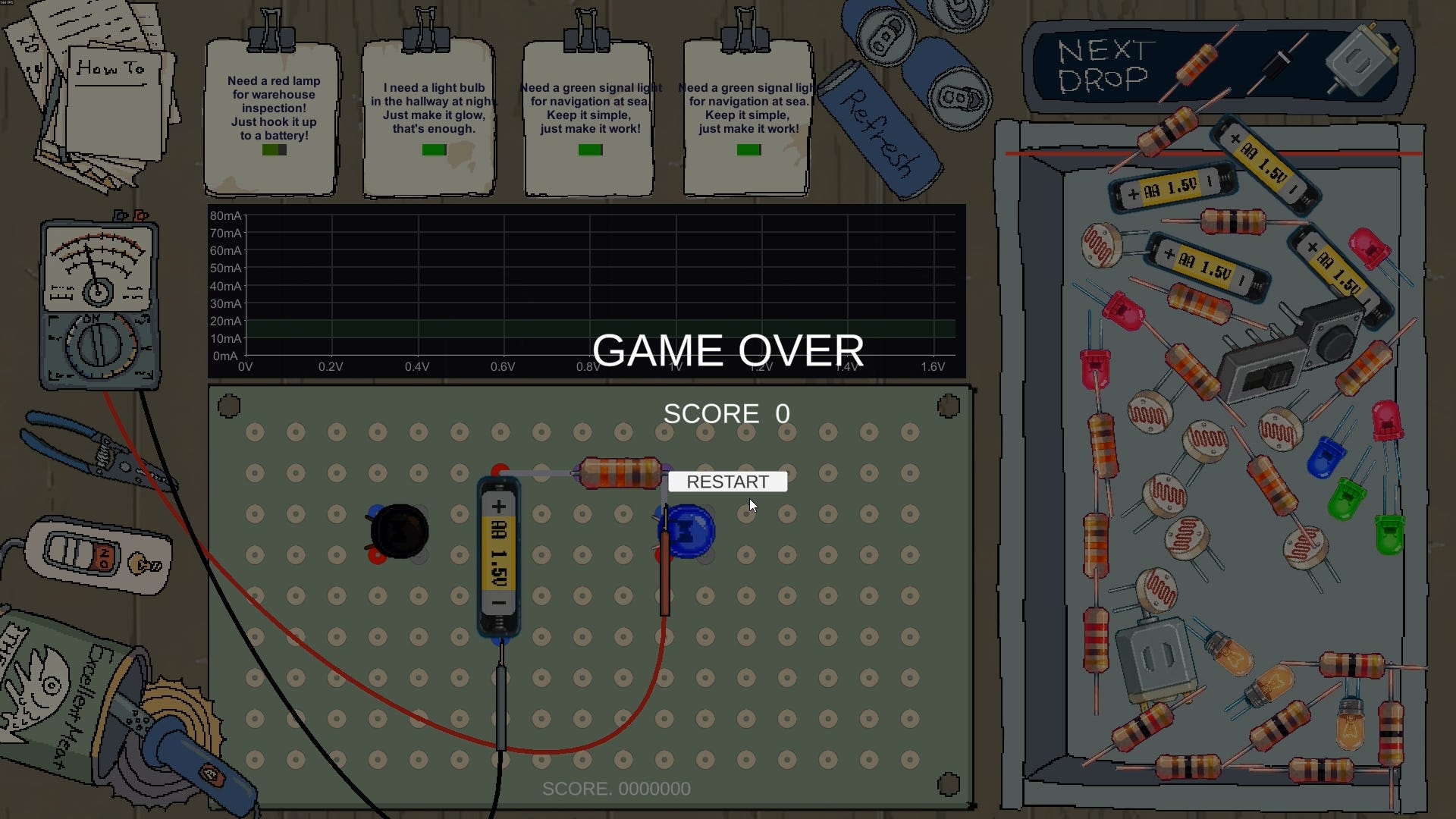
For all my glowing about niche STEM-punk crap, I bet you’d think I’d be all over a game about soldering together bullshit just to empty out your constantly overflowing junk drawer. Well, I might have been, but this game really is some JUNK.
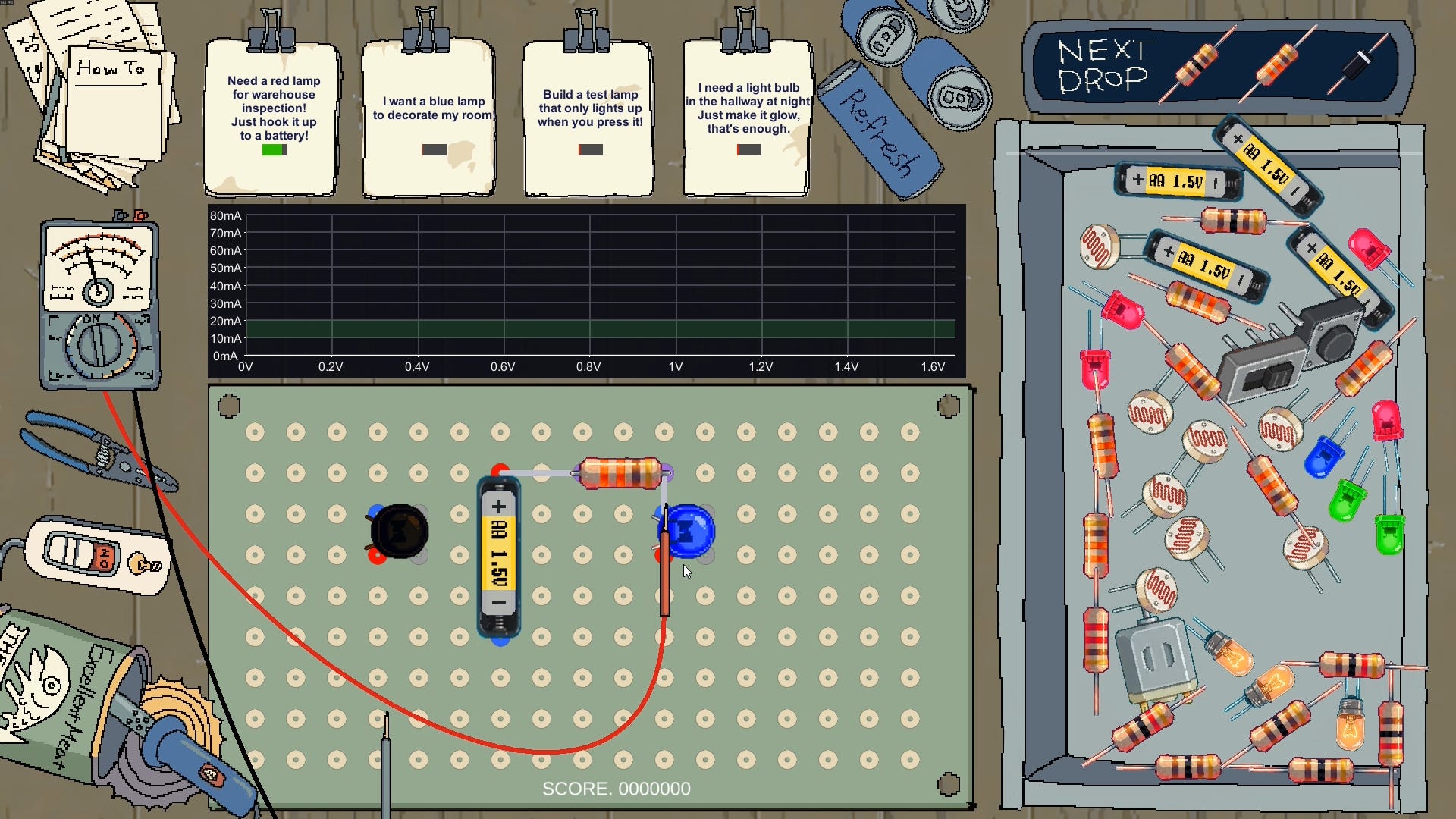
The idea is that random electronics components drop into a column on your right periodically, and you have a set of requests along the top of your screen, and have to place components and wire them up into the functional devices asked for to clear them. Let the pile overflow and its game over.
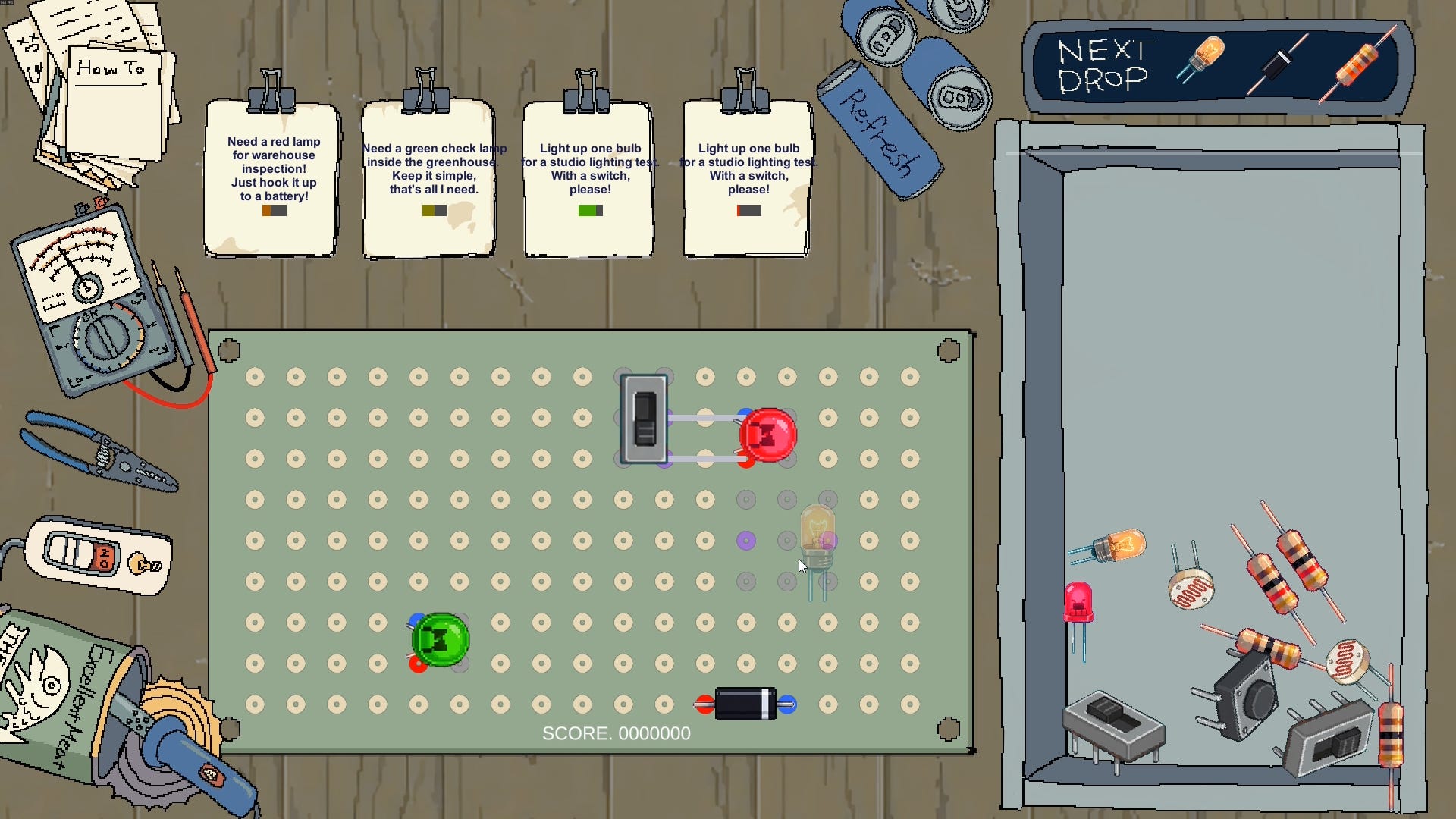
It’s not a terrible concept for a game but it is a terrible execution. You’re meant to check voltages and viability with a multimeter but the probes control like ass and sometimes get stuck or won’t go on the spot you’re trying to test. If you burn out a component by hooking too much voltage to it, it melts onto the board and you can’t use those spots anymore. Even the soldering felt buggy and frustrating, sometimes making 90 degree angles that didn’t seem properly connected, or drawing extra lines on that you then have to clean up. Just like real life!
I don’t know resistance band values by heart, I don’t feel like learning what each bulb can handle, I don’t like soldering electronics, and most of all, I don’t like that the game sometimes just doesn’t give you batteries unless you flood yourself with crap. Probably the most glaring technical thing, though, is that there’s a separate volume slider for the BGM but as far as I could tell there is no BGM. You’re just doing this shit in silence like a real EE dork. No thanks. Oh, and this isn’t even space related.
Infinite Empire
Now we’re talkin. Take the Star Control clone above, turn the speed down to about 5%, and turn the autism up by a corresponding amount. Mm. Yeah, baby. That’s my song.
The entire conceit of Infinite Empire is having very slow, grinding encounters between starships just pummeling each others shields while glacially advancing or retreating or turning with the urgency of a supertanker. While your cannons automatically pump away, you can handle more important matters, like switching up which quadrant of your shields to direct extra power to, shifting stances, or giving helm commands that top out at ‘five degrees starboard.’
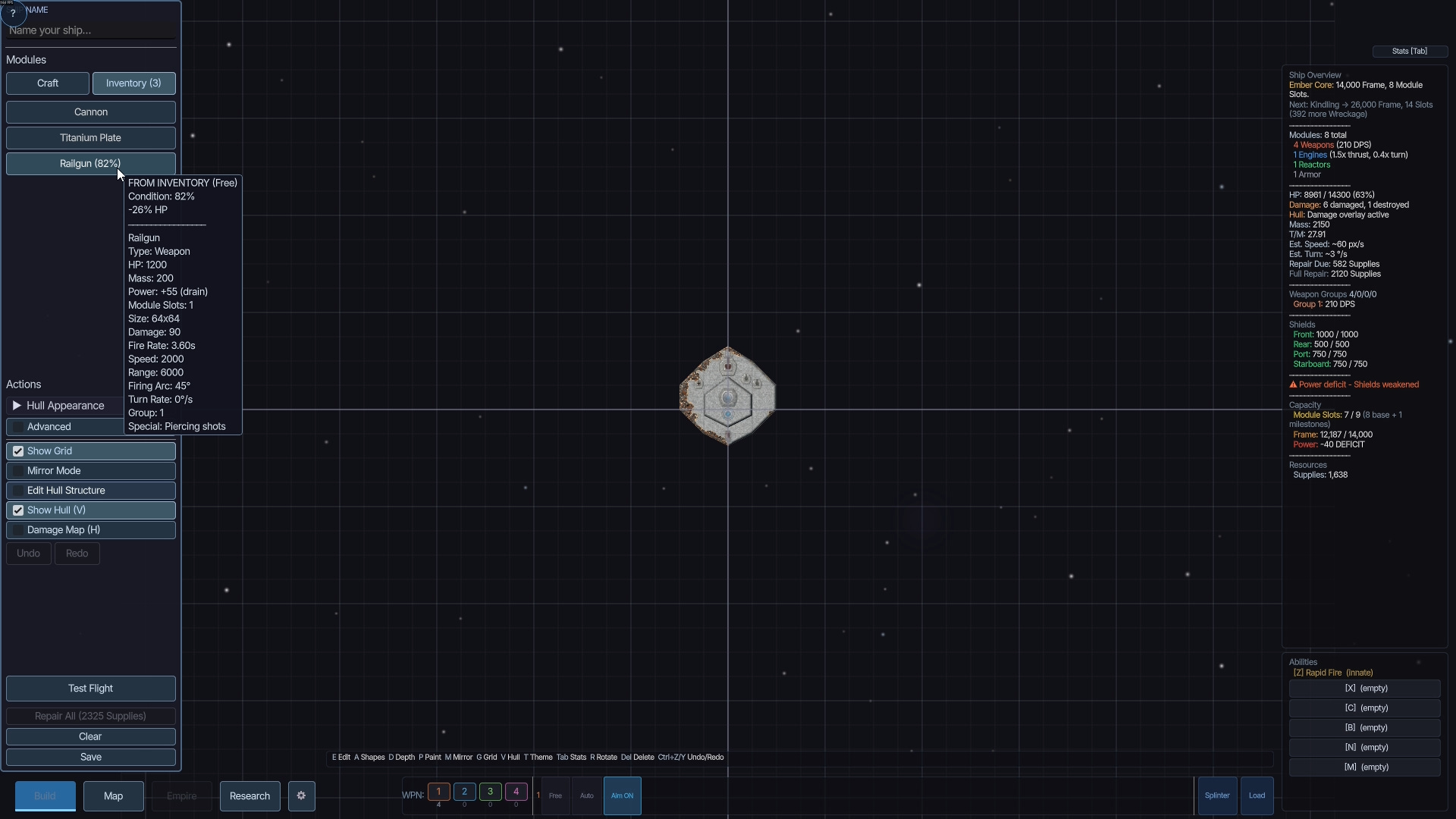
Each encounter takes place on a branching node map, which in the demo mostly stands in for locations in the inner Solar system, a bit like FTL except you can return home at any time for repairs and to stock back up on supplies. And you’ll need repairs, as every shot that gets through your shields will start to visibly chip away at your hull, leaving you a snarled, smoldering mess and potentially knocking out whole systems if the damage advances far enough. You can move your systems around, place armor plates in worry spots, and turn yourself into or away from hits to spread out the hurt, but you will take damage. Enemies fare the same, getting progressively eroded away until their core is exposed or they manage to flee.
The best part of this, at least of what I played, was the stances, which are ship-wide commands that shift focus to different combinations of systems, and have a short period of wind-up as they work to reach max effectiveness. You can start an engagement with power directed to your sensors, giving you a chance to evade stray shots while tightening up your auto-firing weapons’ cones, then close the distance while Braced, pumping everything you’ve got into your shields, then finally shift into either Broadside engagement for full cannon firepower or, my favorite, put it all into the engines to prepare for RAMMING SPEED.
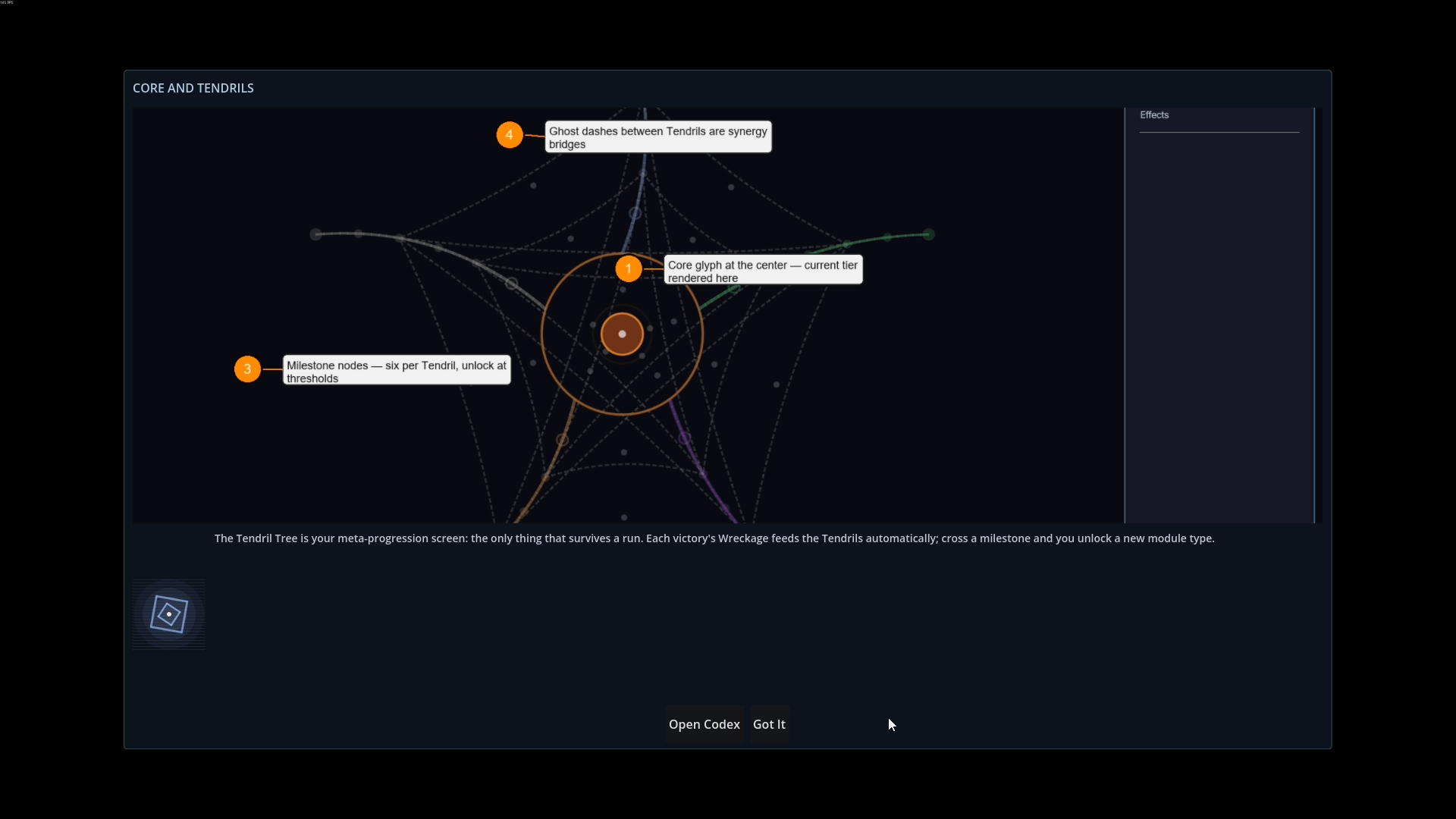
It genuinely feels pretty good, and despite some worrisome hints that the whole thing is secretly a roguelite with meta-progression, I liked enough of what I saw that I’m definitely willing to try this some more.
Kosmass
My final voyage today was experienced in VR – Kosmass is a little physics-based Katamari grower where you tell a ball what direction to shit out tiny balls to bump into other balls to get big enough to absorb the biggest balls there are – my balls. Gottem.
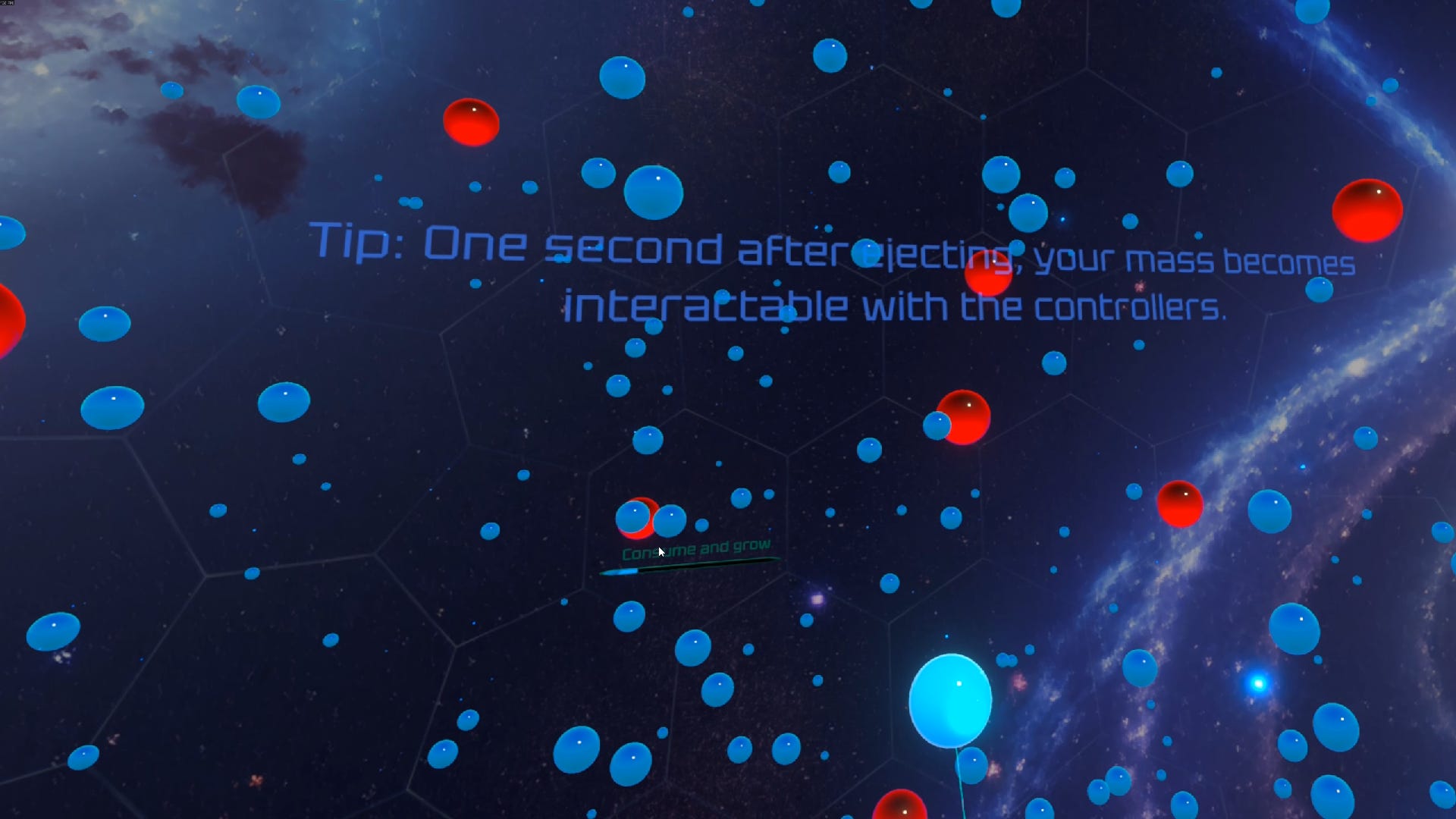
This is pretty much the perfect sort of meditative, immersive, and gimmicky little thing for VR, and much to my surprise, it’s incredibly well made on top of that. You control your avatar ball by moving your motion controller to the side you want it to go and ordering it to launch its own mass backwards, causing it to lose some size but also shifting its momentum, hopefully causing it to collide with, and absorb, other masses that are smaller than it, while avoiding anything bigger that would, instead, pull it apart and add to its own girth.
Your current trajectory is clearly indicated, and it shows you very clearly how you’re affecting it with each squirt of matter. Objects are color coded in real time, making it obvious which you can safely touch and which are currently ‘hostile.’ You can move the camera around freely, you can use the other controller to slow yourself to a frame neutral velocity, and some of the later stages involve you and every other mass orbiting some gravity well that changes how you move around and interact with other bodies.
It’s one of those spectacles that’s just right for VR, and though I don’t know how much more you can wring out of this idea, I’m happy to play some more of it to find out.
Wow. Not a lot of disappointment today, I’ll tell ya. A lot of these have some real potential, and if they look like they’re going to make good on it, I’ve got plenty of fresh material on my wishlist.
Hey, I'm the dev of When the Stars Threw Down Their Spears, and a friend pointed me to your substack. I wanted to thank you sincerely for the kind review! It's my first game, and this kind of feedback is really helpful.
If you do go back to the demo, I wanted to mention that there's a "Star Log" in the pause menu that tracks open quests with the cartesian coordinates included, so you shouldn't have to write them down. But you're not the first person who thought that the game expected you to write down the coords, so I clearly need to work on the UI and/or tutorialize the journal system better :-)
Thanks again!
While we’re on yo momma jokes, here’s some extra groan-worthy ones:
Yo momma so fat, her hitbox has DLC.
Yo momma so fat, when she rolls initiative, the table takes bludgeoning damage.
Yo momma so fat, in Dark Souls, she fat-rolls while standing still.
Yo momma so fat, her Armor Class is “terrain.”
Yo momma so fat, her character sheet lists her size as “regional.”
Ok, I’ll stop now.