
October Next Fest, Day 3
I'm a real potatoes-and-potatoes sort of guy

A NOTICE: I am traveling, and therefore limited to playing [and recording] on my Steam Deck, which is an impressive little machine, but, uh, not flawless. Any issues I mention with performance or graphics should be considered in that context, which isn’t to say they aren’t problems, but that they are problems that might not exist on a full rig. Also I mostly fixed the resolution problems from Day 0, but not entirely. You’re just gonna have to deal with it, I’m tired.
Moonsigil Atlas
In the interest of full transparency, I should mention that one of the developers of Moonsigil Atlas reached out and recommended I look at their game during this event. I’m sure this isn’t unusual for people with actual audiences but it is unusual for me, and stands in stark contrast to my usual method of finding demos which is more in the vibe of ‘standing waist deep in -10 degree water harvesting Asiatic clams.’ You should know by now I didn’t let it color my impression that much, and actually winced when I read the phrase ‘indie deckbuilding roguelike’ in the pitch.
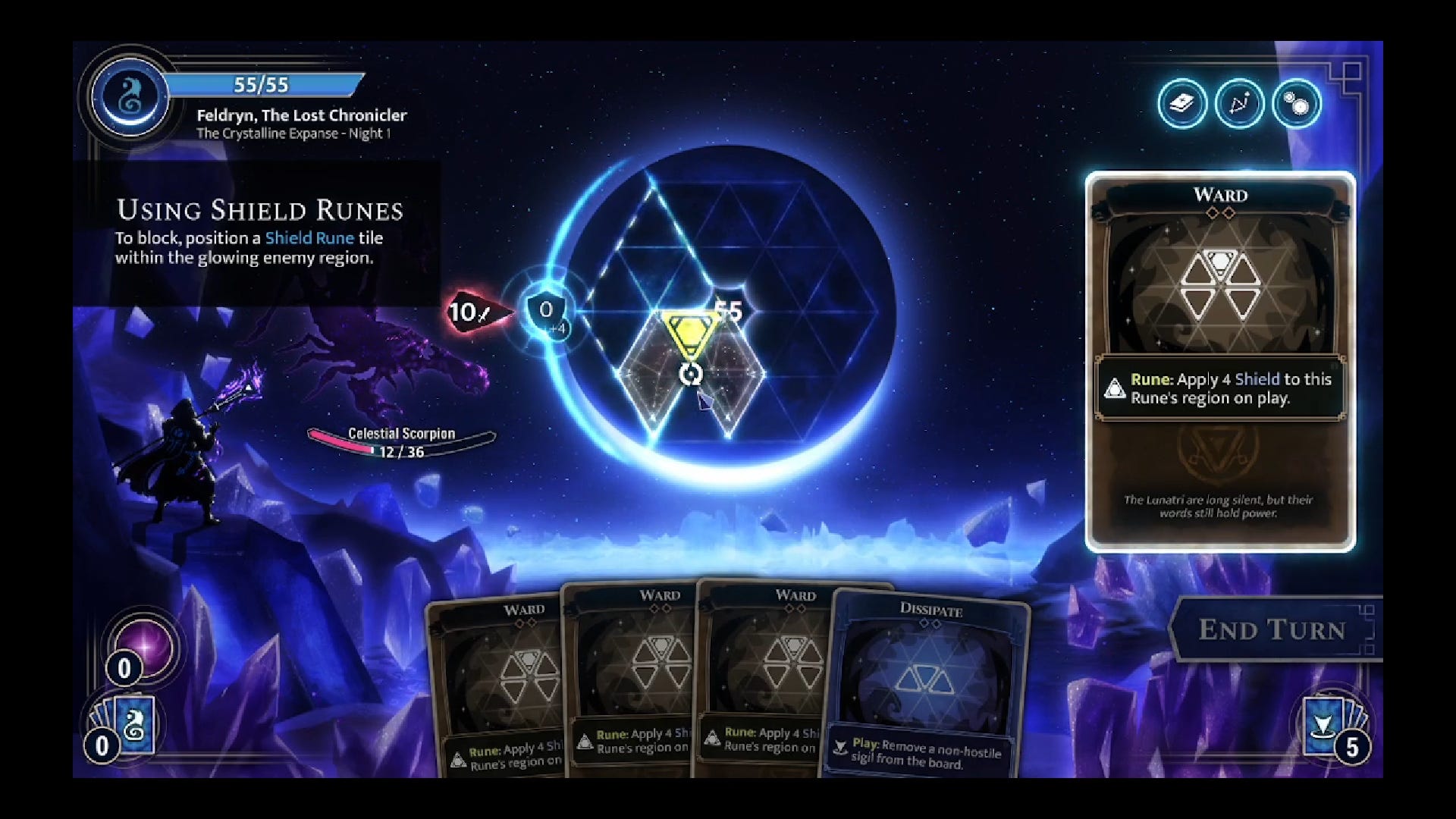
In fact, the more important disclosure is probably that I absolutely detest the ‘deckbuilder’ fad that’s been infesting indie game development, taking the place of balance and design in player abilities in the same way proc gen relieved lazy developers from needing to design levels and difficulty curves in prior years. At this point, when I see cards in a screenshot, I mentally shut down, assume the developer has a whiteboard with a half-dozen buzzwords circled out of a long list, and move on. So it’s with relief that when I actually looked at Moonsigil’s Store page it felt like there was something more going on.
The main gimmick with Moonsigil is that the playing field you cast your cards onto is a hexagonal grid of triangular tiles, and each card has a shape made out of triangular tiles that you have to find the space for to actually cast them. Things get more complicated as you play, with some spell cards interacting with ones you’ve already placed, shield tiles needing to be placed in the correct quadrant to block an attack, and enemies variously cursing or even casting their own spells onto your playing field, restricting your placements and forcing you into tough choices.
Your run progresses along a branching path, where you can see in advance the number of fights and sorts of rewards you’ll find along the way – there are duo fights where the side you lay your blocking glyphs matters, artifacts that provide permanent run-long bonuses, the opportunity to score cards from other characters, and even several ways to modify your own cards. The physicality of each glyph’s shape lends itself to making these mods a lot more interesting than they would be otherwise – adding a blocking tile to a shape can make a big difference, and deciding whether you want it next to another blocking tile, on a glyph that persists through turns, or even added onto a small attack spell that normally wouldn’t provide any defense are all worth consideration. Same with the ability to remove one tile from one of your glyphs – you can dump all of those into one card, slimming it down and letting you almost guarantee you’ll find a spot to cast it when it comes into your hand, or you can more carefully trim bulky but powerful spells into shapes that are easier to work around.
The most impressive thing to me was the final boss of my first run – it summons two ‘moonlets’ that act like additional enemies, constantly buffing and protecting the boss itself until I was able to wear them down, while splitting off some turns to block as much of the boss’s attacks as I could. Then, once one of them dies, not only is it no longer actively working against you, but its tiles become playable spaces too, and you even get a special spell off them that you can affix to any one tile to give yourself an extra card pull each turn. I beat the boss on my first run, but only just barely, literally one hit away from death.
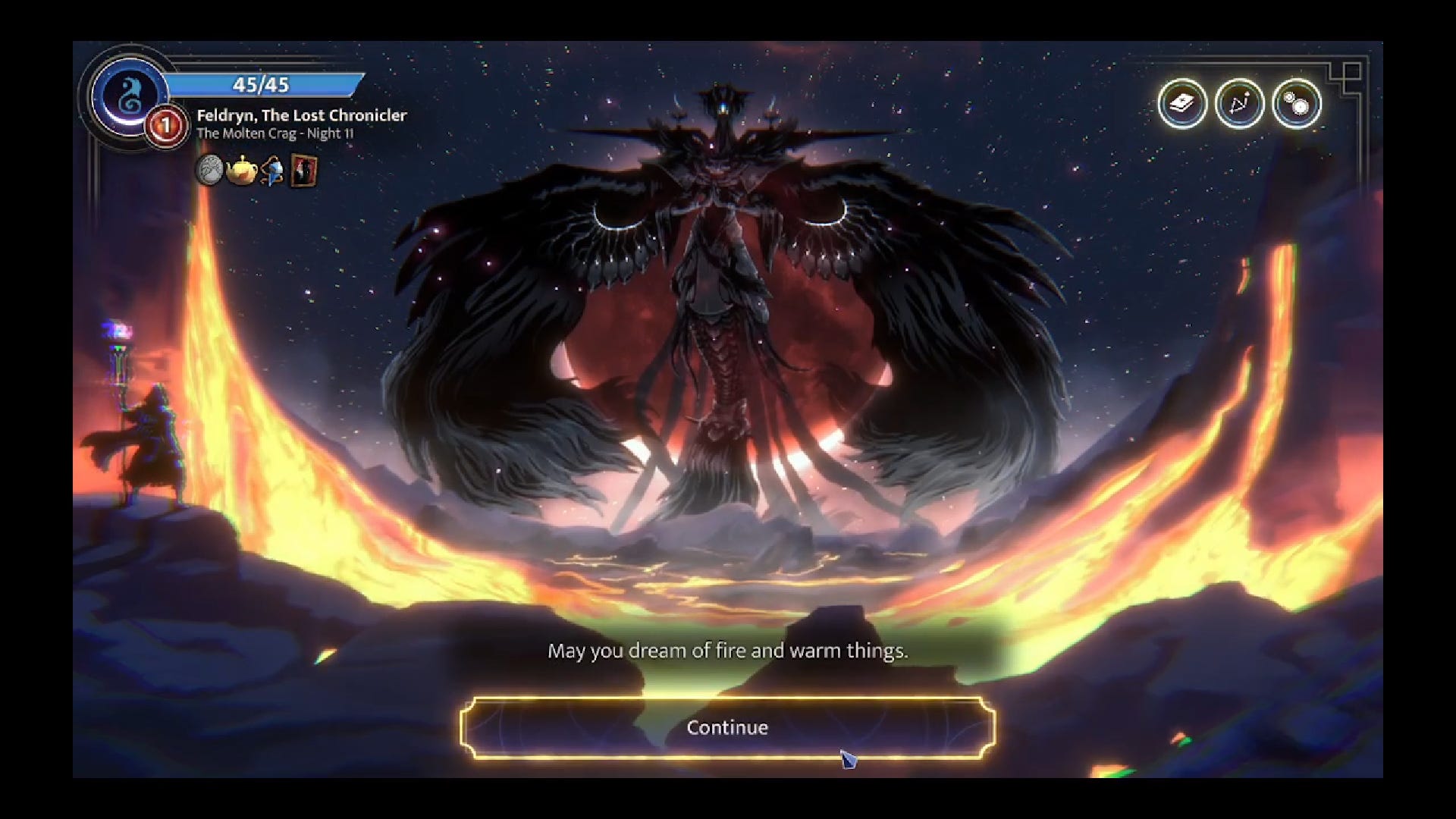
I’m genuinely very impressed with Moonsigil – it’s one of the first ‘deckbuilders’ I’ve played that actually does something interesting with the format, it seems to draw from the roguelite genre with some thoughtfulness, and was just a lot of fun to play. I didn’t continue on past finishing the first boss, so I can’t comment on things like how other characters play, how good the variety in card and artifact and enemy encounters are, or how well balanced the game is. The demo claims a full second act and a set of difficulty modifiers, so I’m sure if you get really into it, you can stress test it out a bit more. I might do just that in the coming days, if I have the time.
Switched Destiny
Very basic puzzle game where you walk over switches that open and close every door on the screen. Sometimes the switches also turn on and turn off every firewall at the same time, and sometimes there are enemies that seem to move based on your movements or at least inputs [since you can move them around while walking into a wall] and you can move them into the active firewalls to kill them. Each stage has a very generous turn limit based on your O2, two optional items to collect, and a three-star score system like a mobile game.
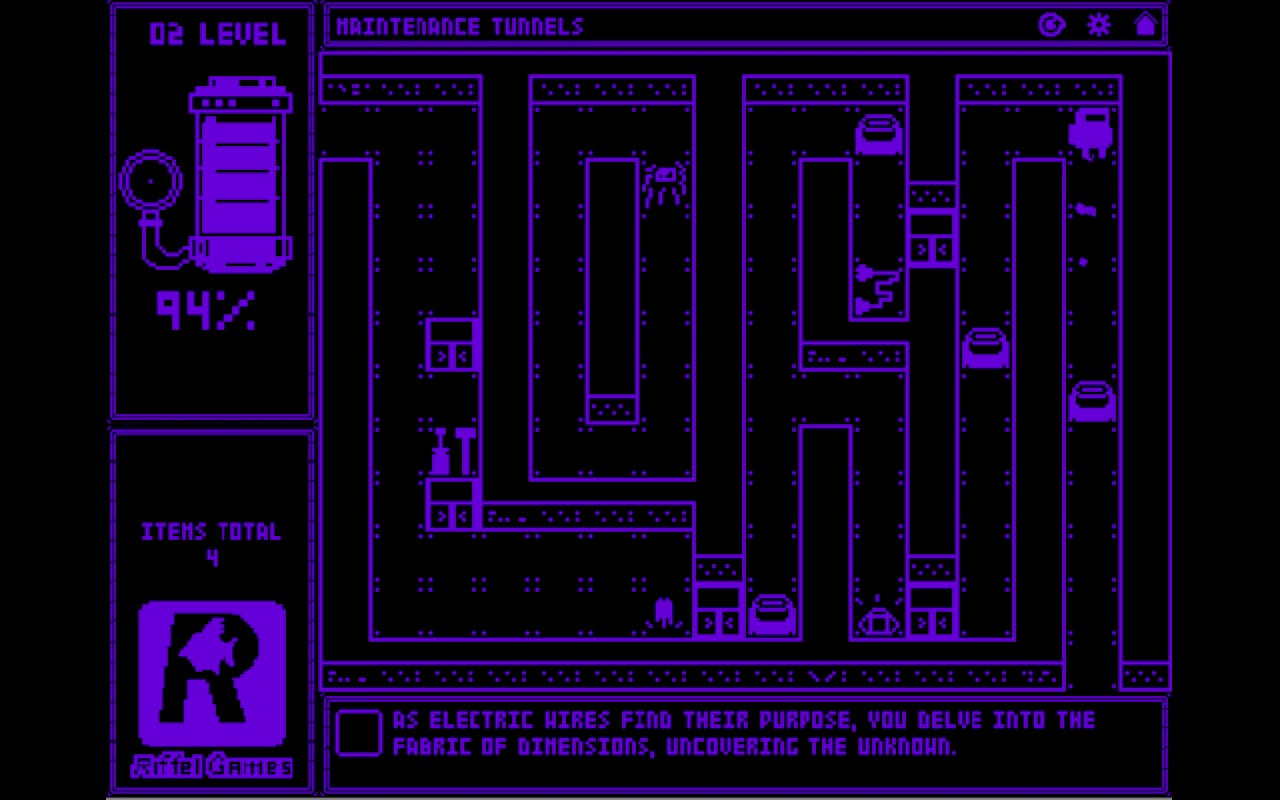
There’s not much going on beyond this. You can turn in collected optional items to unlock new palettes but they’re all the same one-bit look. The only thing really worth note is that there’s a text feed at the bottom that is spitting out surprisingly descriptive summaries of what’s going on, which is a cool callback to ancient times that doesn’t really land when there’s nothing else of interest going on. It very very slightly reminded me of the works of A. Hagan, my favorite ‘mobile’ game developer, such as Void Pyramid and Ramble Planet. Just not as good. You need a little more game here to sell the style, guys.
Lady Dracula
Speaking of style over substance, this Castlevania clone has got some really nice visual tricks and not nearly enough interesting gameplay. Walking, whipping basic enemies, stomping up stairs one at a time, it’s all the superficial aspects of a Classic-vania with almost none of the challenge and very little else. Movement and attacks are stiff, enemy patterns are trivial, and the one thing I saw that I don’t recall from any other Castlevania game or knockoff are orbs that turn you into a bat and fire you off in a set direction… but those are just the barrels from Donkey Kong Country.
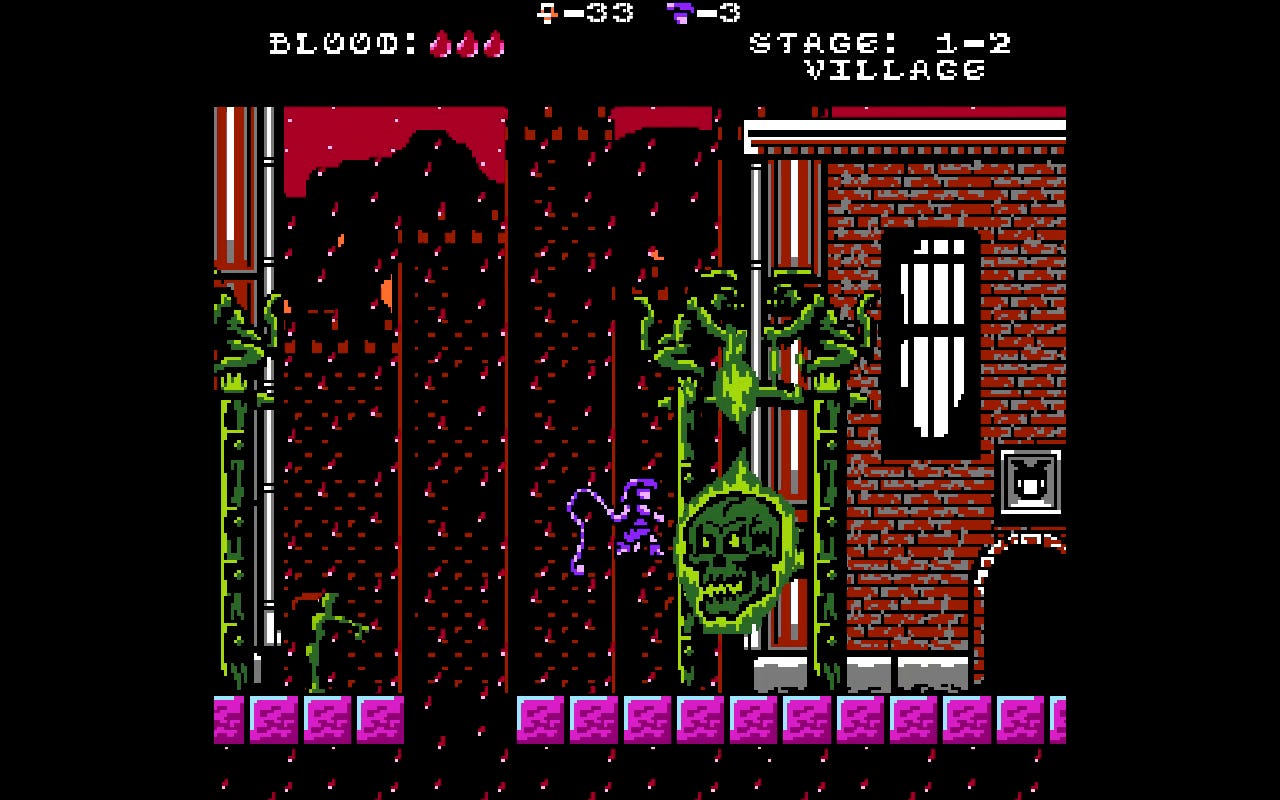
I wish this had a bit more going on, because the style and flair of it are all solid enough. I did like that the difficulty was broken down into a bunch of distinct modifiers, with the ability to turn on stuff like knockback and no air control for a true 1987 mode. Unfortunately, the game just isn’t hard or compelling enough even with those toggles on to hold my attention.
Constance
Constance is actually a game I played the demo of… I think last year, and really enjoyed. It’s very obviously inspired by Hollow Knight, to a point stopping just short of what I’d call slavish, and it’s one of the very few HK clones that gets the priorities right. That is to say, the inspiration mostly comes out in the mechanics, and especially the feel of exploration and combat, rather than just an aped art style. The demo has a good balance of gameplay, and some teases at systems you don’t get to see in full, like a Tetris-inventory for equipable badges.
The game has a very nice and well-realized art style, with smooth animations, attractive colors, and some cute touches that make it stand out. There’s a lot of little flourishes of character, like with the flying robots that put up their Dukes and posture a bit before throwing a punch like a turn-of-the-century boxer. But don’t think the pastel paint personality means it’s completely toothless – one of the optional paths to a heart piece in the demo includes a lengthy platforming challenge that was at least as difficult as any of the stuff I’ve done so far in Silksong, and forces you to make good use of the few abilities at your disposal at that point. I actually spent a good 15 minutes of my playtime just stuck on that one screen, and I’m no slouch at these games. The store page shows previews of future movement abilities, and they look like they’ll make for some genuinely difficult gauntlets, even if the mandatory stuff is a little less taxing. To be honest, I’m not sure how different this version is from the demo I played before – I recall having a similar platforming gauntlet that tripped me up for a long time, but I don’t remember the boss fight at all.
I’m also pretty sure the new snapshot feature is a new addition – this mechanic was, as far as I’m aware, first used in a game like this in Prince of Persia: The Lost Crown, and represents a true innovation in metroidvania design. The idea is that you get a limited number of slots where you can take a screenshot of a location, which then gets added to your map with a pin, but a pin you can then hover over and see exactly what it was you meant to bookmark for later. This is exactly the sort of thing a game like Silksong could have used, and a good way to add a little quality of life for the directionally challenged, short on short-term memory, or who just set the game down for a little while between sessions without going crazy on automatic reminders or NPCs yelling at you to go to a blinking map marker.
I really like Constance, and I hope it does well, which is why it’s one of the only games with an actual release date that I hope gets delayed – this game is SO similar to HK, and is coming out SO close to the release of Silksong, that I can’t help but feel like it’s going to get buried or passed over by people too high on Team Cherry’s farts or too exhausted by the ordeal of struggling through their one allotted challenging game this year to give Constance a decent look. I hope I’m wrong and the handful of people still hungry for more Hollow Knight find something compelling enough about Constance to get them to pick it up rather than just inflicting a Steel Soul run on themselves over the holidays.
Finding Fern
This game is all about being a witch, and very much in the authentic ‘buying every book about being Wiccan or a middle-aged Office Witch from your local Barnes & Noble’ sense. You play as a squad of witchy sisters, left orphaned in their house in the woods after their witchy mother up and vanishes [no word about any father or fathers, despite the sisters all being of different ages… very authentic] and they just kind of keep on truckin with their witchy duties. Every sister is themed for a different kind of on-the-nose magic – Skye has lightning spells, Ember has fire, Brooke has water, and Fern… has no magic. Or maybe earth magic just sucks. Anyway, the game is called Finding Fern, and you leave her behind and control all three other sisters as they leave the house and immediately decide to jump into a magic portal, so I guess whatever Fern can do technically hardly matters.
The side-on perspective, the fact that you are only controlling one of three characters at a time, with the other two running around the screen spamming spells and hopping around any time they see an enemy, and the excess of dialogue reminded me a lot of a game I have very fond memories of, Fortune Summoners, one of the very early successes of Japanese doujin games on Steam. Unfortunately, it doesn’t seem nearly as good as FS, and the combat was in fact so hard to manage and frustrating that I dread trying to ‘get good’ enough at it to see more of the game, something I suspect will just come down to either spamming the evasion attacks or finding some other repeatable cheese. It’s a shame, because there are a bunch of weird mechanics that I’m mildly curious about how they play out, like the alchemy system that plays out in real time with you dumping ingredients into a bubbling cauldron, and the fact you can do a quick tarot reading before leaving your house, to apply some random buffs, and I think maybe you can collect new tarot cards to unlock more. It also ran pretty choppily on the Deck, which isn’t entirely a surprise but in my experience performance is usually pretty low on the priorities for developers like this, so I also wouldn’t be surprised if it runs like shit on a real computer too.
Dragonfall
A Brazillian RPGMaker game with full voice acting and action rather than turn-based combat… and both are pretty bad decisions!
The voice acting, to be fair, is in Brazilian Portuguese, and the delivery and terrible audio quality cracked me up a lot. The intro exposition reminds me of awful CRPGs from the last millennium, and I was not prepared for how high-pitched the main character’s voice was or how hilariously edgy the starter sword you retrieve from your attic would be.
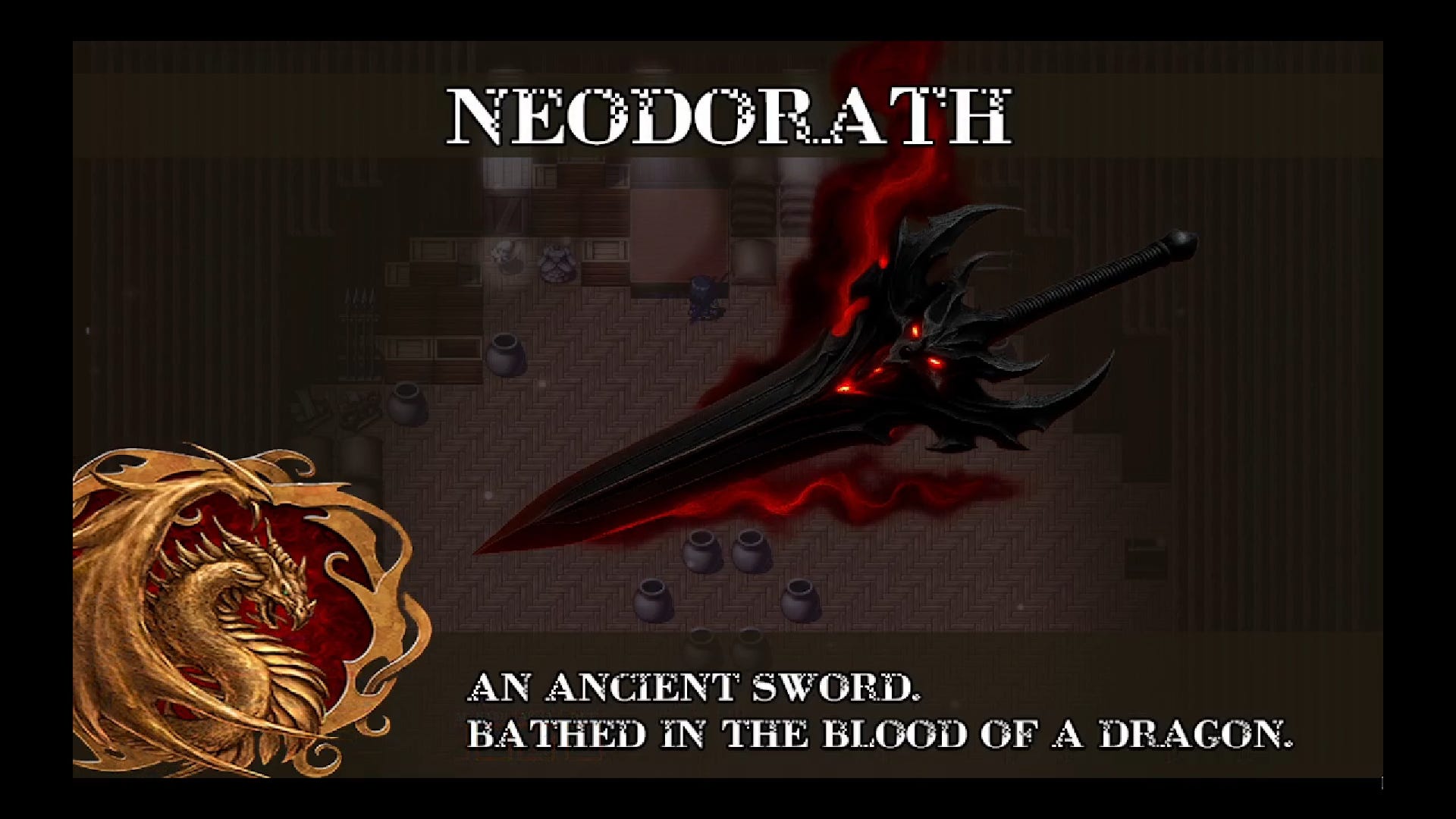
Sadly, the gameplay is brutally obnoxious – the action combat looks like it wants to be Ys but instead of bumping you have to move around on a grid and hit enemies with attacks… attacks which do not have knockback, lock you out of moving, and require you to have moved in the direction of the attack to orient it. What I’m trying to get at is that it’s nearly fucking impossible to hit anything without it immediately hitting you in return, even if you make a good faith effort to only move in for a single attack before retreating. And guess what the first enemies are? Spiders! Spiders that poison you on every hit!
Even before leaving the house after your mother gets kidnapped, you get bounced off the front door with the message ‘I’ve left something behind!’ and you’re forced to go walk around, find and pick up the compass, map, and sword, none of which are specifically called out by the game as things you can even interact with, much less pick up. You get a sprint key but all it does is make your sprite bounce around randomly and doesn’t really help you fight at all.
I am slightly curious how insane Dragonfall gets, and if it can make me laugh out loud as much as when the game forced me to sit through an in-engine cutscene of a boy playing with his dog, but there’s no way in hell I’m enduring this combat for any longer than I already have.
Star Tower
A first-person horror game with PSX graphics, Slenderman-style note-collecting, and some occasional perspective line-up puzzles a la… The Witness? Maybe? You play as a guy who’s been holed up in a remote cabin for two years, slowly losing his mind and will to live, and finally fed up enough to strike out and walk someplace else, when BAM!
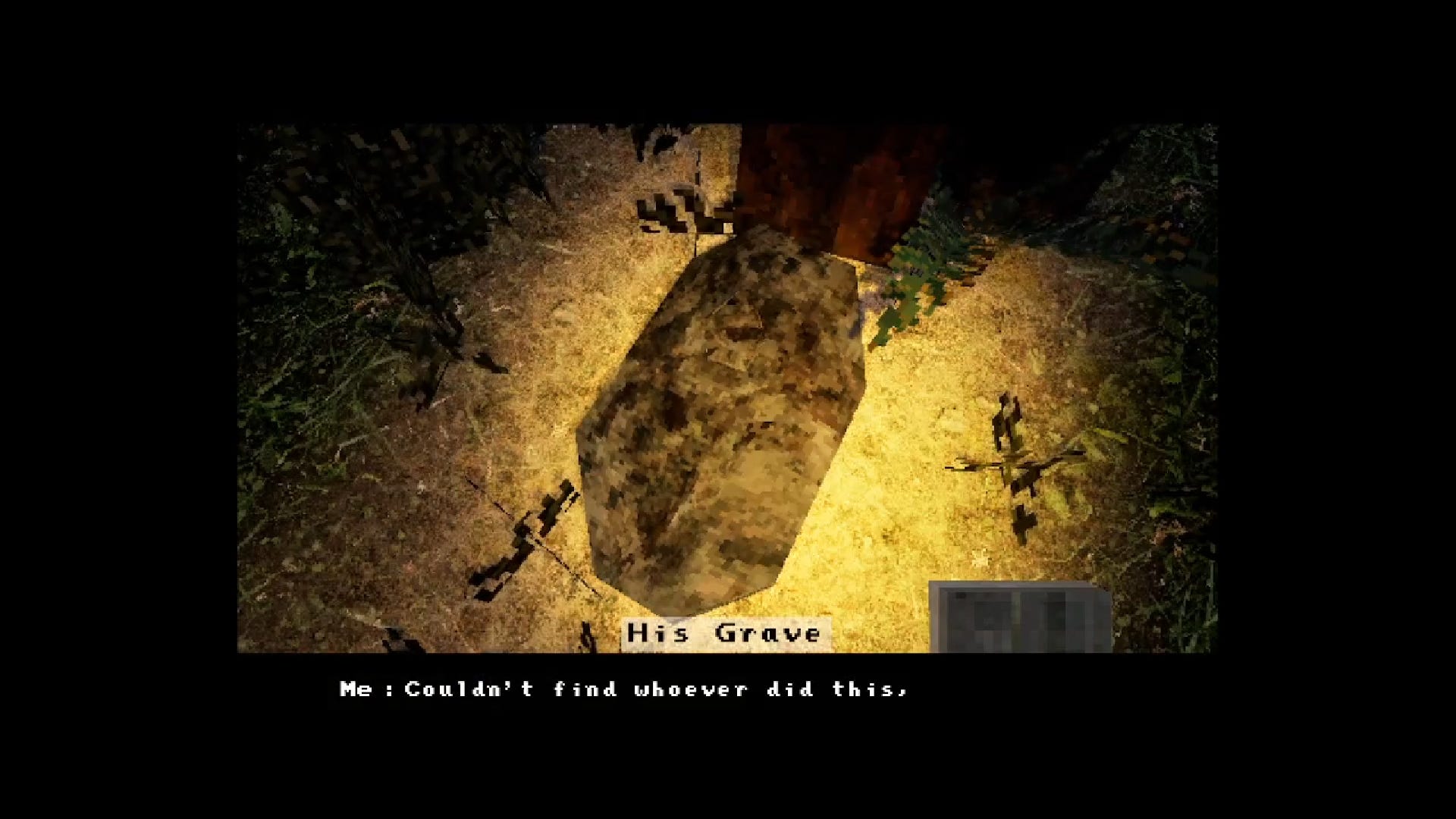
Sudden two-headed burning demon shows up to give him a pop quiz on his journal entries. Since you’ve forgotten all the stuff you’ve said and done up to this point [except for the fact that you eat potatoes every day] you have to walk around collecting the pages of your diary that are scattered around, caught in tree branches, placed on graves, and shoved into debris.
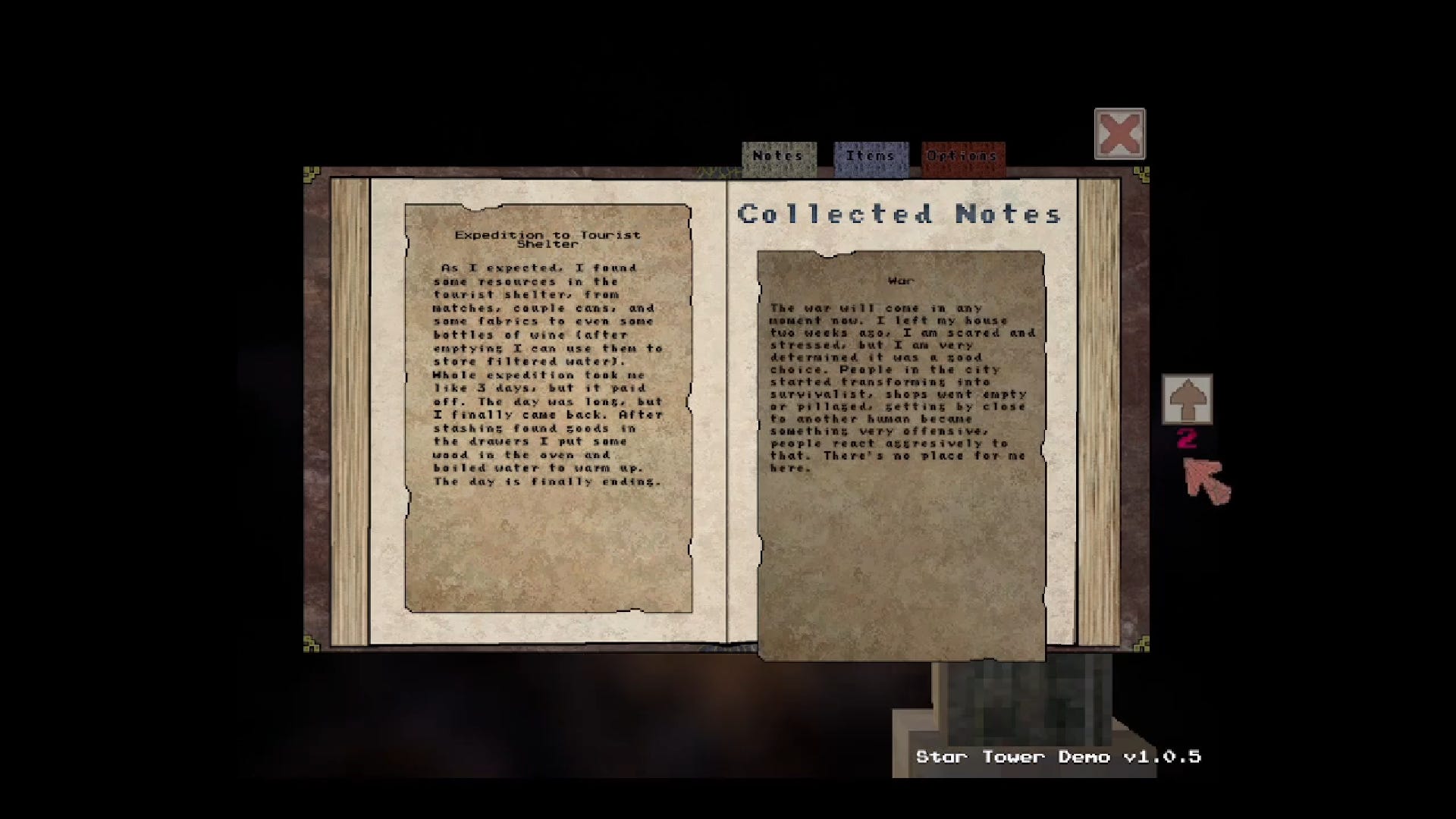
To my surprise, the writing and worldbuilding are genuinely very good – this isn’t just a slapped-together horror pile, there’s no jump scares [that I found] and the atmosphere and setting are creepy and atmospheric but not eye-rolling or corny. The exploration a bit less so – you mostly wander around a big empty forest, keeping your ears tuned for the fluttering of pages or other audio cues before an identifiable landmark emerges from the shadows. I wouldn’t want to play a full game of that, and would hope for more interiors and more clearly defined locations in the full version.
Nobody noticed yesterday that I forgot to change this section from the version I’d copied from the first day. That’s okay, I didn’t have too much to say yesterday. I’m already pretty happy with how the week’s gone, and I’m already several demos past where I thought I’d manage the whole week. I’m keeping a list of things I wanted to try but couldn’t, or tried but wish they’d look or perform better, and if they’re still up once I get home I plan on booting them up so I can see how they are if only for my own satisfaction.